Solar Radiation Storms and Their Impact on Earth
Solar radiation storms are energetic events originating from the sun that can disrupt technology on Earth. Understanding the science behind these phenomena helps us prepare for their arrival.
Solar Radiation Storms and Their Impact on Earth
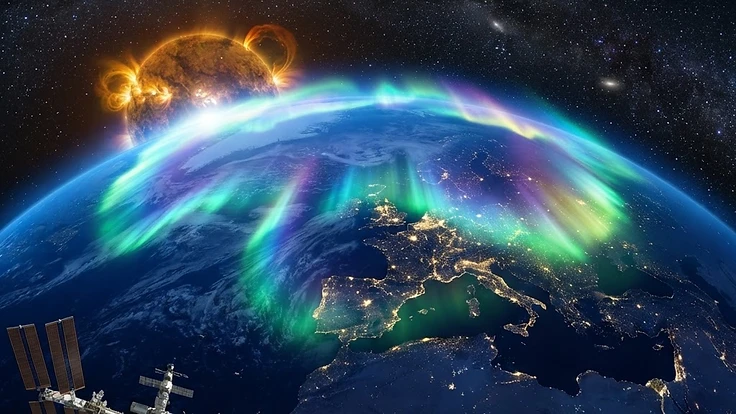
Solar radiation storms represent one of the most intense forms of space weather. They occur when high-energy protons and heavier ions are accelerated by solar flares or coronal mass ejections to extreme speeds, often approaching the speed of light.
These energetic particles permeate the interplanetary medium. When they arrive at our planet, they interact with the magnetosphere and atmosphere, creating potential hazards for spaceborne assets and high-altitude flight operations.
The Science Behind It
The sun operates on a cyclical pattern, with solar activity peaking roughly every eleven years. Solar Cycle 25 began in December 2019, bringing renewed attention to how the sun influences our technological landscape.
When magnetic energy is released on the solar surface, it can propel particles outward. These events are often associated with M-class or X-class solar flares, where an X-class event is at least ten times more powerful than an M-class flare.
While solar wind typically travels at speeds between 400 and 700 kilometres per second, particles from a radiation storm move much faster. These protons can reach our vicinity in minutes to hours, leaving little time for preparation compared to the slower, mass-heavy coronal mass ejections.
Our magnetosphere acts as a primary defence, but it is not impenetrable. You can find detailed solar imagery from observatories like the SDO to better understand how these regions form and evolve before they erupt.
Real-World Implications
The most immediate impact is observed in near-Earth space. Satellites in high orbits, particularly those at geostationary altitudes, are vulnerable to the intense ionizing radiation during a peak storm.
These particles can cause single-event upsets in electronics, leading to potential data corruption or instrument failure. To understand how operators manage these risks, read more about how satellites maintain communication during geomagnetic storms.
Flight crews on polar routes may also experience elevated radiation exposure. Airlines often reroute planes to lower latitudes during severe events to shield passengers and sensitive avionics from the influx of charged particles.
While the geomagnetic storm index is often cited regarding power grids, radiation storms focus more on high-energy particle bombardment. This affects radio wave propagation and can disrupt satellite-based navigation and communication systems.
What You Can Do
Monitoring space weather requires consistent observation of solar activity. Tools like our free dashboard provide a central hub for tracking current solar conditions, allowing you to see the health of our space environment in real time.
If you are interested in the visual effects of solar activity, our [local aurora forecast](/aurora-forecast) can help you determine if an auroral display is likely in your area. For those who want to experience the spectacle in person, we recommend booking guided aurora tours in countries such as Iceland, Norway, Canada, or Finland to see the lights under expert supervision.
Advanced users can also embed on your site our live tracking widgets to keep their own audience informed about potential space weather threats. Staying prepared means having the right data at your fingertips before the next storm arrives.
Key Takeaways
Solar radiation storms are powerful events driven by solar eruptions that accelerate particles to relativistic speeds. They pose risks to satellites, high-latitude aviation, and long-range communication systems by bombarding the upper atmosphere.
While we cannot control solar activity, we can improve our resilience by monitoring the glossary of terms to better understand these threats. Consistent tracking allows engineers and operators to safeguard critical infrastructure against the inevitable fluctuations of our host star.
Looking back at past events helps us calibrate our modern systems for future resilience. By staying informed, we bridge the gap between scientific observation and everyday safety.
People Also Ask
How do solar radiation storms differ from geomagnetic storms?+
Solar radiation storms involve high-energy protons bombarding the atmosphere, primarily affecting satellites and high-altitude aviation. Geomagnetic storms, tracked by the Kp index, involve disturbances to the Earth's magnetic field that can impact power grids and cause widespread auroral displays.
Can solar radiation storms affect my smartphone?+
Generally, no. While severe storms can disrupt GPS signals and satellite communications that phones rely on, the devices themselves are protected by the Earth's magnetic field and are not sensitive to the ionizing radiation levels typical of most solar storms.
Are solar radiation storms becoming more frequent?+
Solar activity follows an 11-year cycle. We are currently in Solar Cycle 25, which has seen an increase in solar flares and radiation storms compared to the cycle minimum. This is a natural, predictable pattern rather than a permanent increase in frequency.
Continue Reading
Forecast These Questions
View all →Express your probability on these active forecast questions.