Solar Radiation Storms and Their Impact on Earth
Solar radiation storms occur when the sun accelerates protons to extreme speeds, bathing our planet in high-energy particles that influence technology and the natural beauty of the aurora.
Understanding the Impact of Solar Radiation Storms
Solar radiation storms represent one of the most dynamic interactions between the sun and our immediate space environment. These events occur when the sun accelerates protons to speeds approaching a significant fraction of the speed of light, creating a temporary, high-energy environment around Earth. While our planet possesses a robust magnetic shield that deflects most solar material, the sheer velocity of these particles can penetrate our defences in ways that challenge modern infrastructure.
Understanding these storms moves us beyond simple headlines about solar weather. By looking at the physics involved, we gain a better appreciation for the fragile balance required to maintain our satellite networks and global communication systems. Studying these phenomena allows us to better model how space weather behaves throughout the solar cycle, which began its 25th iteration in December 2019.
The Science Behind It
Solar radiation storms are primarily driven by solar flares and associated coronal mass ejections. When a large flare occurs, the intense energy can accelerate particles into interplanetary space. You can learn more about how these distinct phenomena differ in our guide on understanding the distinction between solar flares and coronal mass ejections.
The particles involved are mostly protons, which arrive at Earth hours or even days after a flare is detected, depending on their energy and the structure of the magnetic field in space. While solar wind typically travels at a speed of 400 to 700 km per second, these energetic radiation events can arrive much faster. Scientists often use the glossary to classify the severity of these events based on the flux of particles measured by satellites orbiting near the Earth.
Real-World Implications
These high-energy protons primarily affect satellites and high-altitude aviation. When particles strike sensitive electronics, they can cause bit flips or degrade the performance of solar panels on spacecraft operating in orbit. The International Space Station, orbiting at an altitude of approximately 408 kilometres, has specific shielding measures designed to protect the crew during high-flux events.
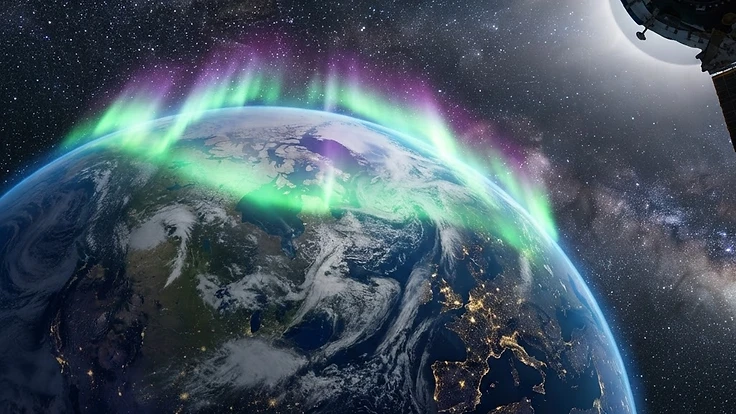
Radio communication can also face significant interference, particularly for flights travelling over polar regions. Because the Earth's magnetic field lines funnel particles toward the poles, communication equipment in these high-latitude areas is most vulnerable. These storms are frequently linked to changes in the Kp index, which helps researchers understand geomagnetic activity.
You can explore the history of such events in our archive to see how past solar cycles have influenced our global systems.
What You Can Do
Staying informed is the most effective way to manage the risks associated with space weather. By using modern tracking tools, you can anticipate periods of heightened solar activity before they impact your local infrastructure. If you are an enthusiast interested in the night sky, you might choose to book [guided aurora tours](/https://vi.me/HuXHi) in destinations like Iceland, Norway, or Alaska, as these radiation events often coincide with spectacular displays of the auroral oval.
Those who run technical websites or hobbyist radio stations can benefit from using embeddable widgets to provide real-time updates to their own audience. Monitoring current solar imagery via tools like the gallery allows you to see active regions on the sun that may pose a risk for future particle storms. Maintaining awareness of these shifts ensures you are never caught unprepared when the sun becomes particularly active.
Key Takeaways
Solar radiation storms are a natural consequence of living near an active star, occurring periodically as the solar cycle waxes and wanes. While they do not pose a direct threat to life on the surface of the Earth, they require constant vigilance from those managing our orbital assets and communication networks. Our technology has become so intertwined with the space environment that understanding these storms is no longer optional for a modern society.
By observing the sun and tracking particle flux, we can mitigate the risks these events present to our critical infrastructure. Whether you are a professional in the telecommunications sector or an observer of the night sky, staying connected to reliable data sources remains the best strategy. Education on these topics helps build a more resilient future as we continue to push further into the space age.
People Also Ask
Can solar radiation storms be dangerous to humans?+
For people on the ground, the Earth's atmosphere and magnetic field provide complete protection from solar radiation. However, astronauts in space or high-altitude aircraft crews are at higher risk during major events. Specialized shielding and flight path adjustments are used to keep their exposure within safe limits.
How often do solar radiation storms occur?+
The frequency of these storms follows the 11-year solar cycle. During periods of solar maximum, when the sun's magnetic activity is at its peak, radiation storms occur much more frequently than during solar minimum. Scientists monitor solar activity continuously to provide forecasts for potential events.
What is the difference between a solar flare and a radiation storm?+
A solar flare is a sudden flash of electromagnetic radiation, including X-rays and UV light, which travels at the speed of light. A solar radiation storm involves the emission of high-energy charged particles, mostly protons, which travel slower than light and take longer to reach the Earth.
Continue Reading
Forecast These Questions
View all →Express your probability on these active forecast questions.