Understanding the Distinction Between Solar Flares and Coronal Mass Ejections
Solar flares and coronal mass ejections are often confused, but they are distinct solar phenomena with different physical processes and impacts on our planet.
Distinguishing Solar Flares from Coronal Mass Ejections
The Sun is a dynamic star that frequently releases immense amounts of energy. Often, reports conflate solar flares with coronal mass ejections, yet these events are physically distinct. Understanding their differences is essential for anyone interested in space weather, especially as Solar Cycle 25 continues to ramp up activity.
Live Space Weather Dashboard
Powered by Flarient — embed this on your site →
While both originate from the Sun, their effects on the Earth are fundamentally different in both nature and timing.
The Science Behind It
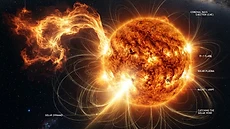
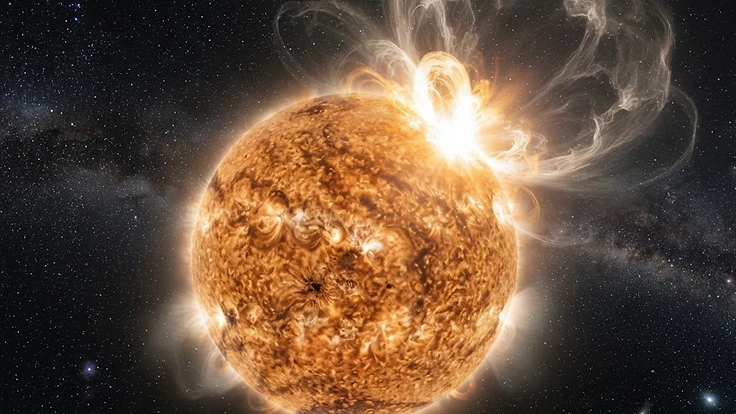
A solar flare is an intense burst of radiation caused by the release of magnetic energy associated with sunspots. These flashes of light travel at the speed of light, reaching Earth in about eight minutes, and are classified by their intensity on a scale from A to X. A flare is essentially a burst of electromagnetic energy spanning the entire spectrum.
In contrast, a coronal mass ejection, or CME, involves a massive cloud of solar plasma and embedded magnetic fields. These clouds are physically launched into space, moving significantly slower than light, typically between 400 and 700 kilometres per second, though some can reach up to 3,000 kilometres per second. If directed toward Earth, these clouds take anywhere from one to three days to arrive.
We often see these phenomena using specialized solar imagery from instruments like those on the SDO. While a flare can be observed in various wavelengths of light, a CME is better seen using a coronagraph. You can explore the glossary for detailed definitions of these terms and how they are monitored by scientists worldwide.
Real-World Implications
Solar flares primarily affect the upper atmosphere and can cause immediate disruption to high frequency radio communications. Because they arrive so quickly, they offer little warning time, and their effects are limited to the sunlit side of the Earth. As discussed in Solar Flares Occur Frequently Throughout the Solar Cycle, these events are standard occurrences for our active star.
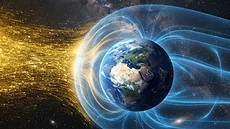
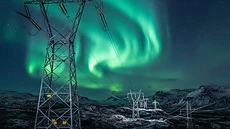
CMEs are the primary drivers of geomagnetic storms. When these plasma clouds interact with the Earth's magnetic field, they can create significant disturbances measured by the Kp index. These storms can induce electrical currents in long-distance power lines, potentially affecting grids.
They are also responsible for driving the aurora to lower latitudes, creating breathtaking displays for observers on the ground.
What You Can Do
Monitoring space weather does not require a degree in astrophysics. You can keep an eye on current solar conditions by using a local aurora forecast to see if activity might be visible from your area. For those planning an adventure, guided aurora tours in countries like Iceland, Norway, Canada, or Alaska provide expert insight into catching the lights when the conditions align.
If you run a website or blog, you can easily embeddable widgets to display real-time space weather data for your audience. Staying informed helps transform an abstract solar event into an opportunity to observe one of nature's most spectacular phenomena safely. Preparedness is the best defence against the unpredictable nature of our space environment.
Key Takeaways
Solar flares are bursts of radiation that travel at the speed of light, while CMEs are physical clouds of plasma that travel much slower. Flares arrive in minutes and affect radio, whereas CMEs take days and trigger geomagnetic storms and auroras. Both phenomena occur frequently during the peak of the solar cycle.
By distinguishing between these two events, you can better interpret space weather updates and anticipate potential impacts. Whether you are tracking a storm on the storm leaderboard or simply watching the aurora, knowing the difference enhances your appreciation of our star. Always remember that while our sun can be volatile, understanding its rhythms remains the key to modern space awareness.
For observers
If this piece raises curiosity about watching sunspots or trying basic solar imaging during eclipses, one compact option for portable capture setups is available. Learn about configurations and accessories at Explore an observation setup.
Ad · Affiliate link. Flarient may earn a commission if you purchase through this link, at no additional cost to you.
People Also Ask
Can a solar flare occur without a CME?+
Yes. Solar flares are intense bursts of electromagnetic radiation that travel at light speed and occur independently of plasma ejections. While powerful flares are frequently associated with CMEs, many flares occur without the release of a massive solar plasma cloud.
How do scientists measure the strength of a solar flare?+
Scientists classify solar flares based on their peak flux of X-rays in the 0.1 to 0.8 nanometre wavelength range. The classification system uses letters A, B, C, M, and X, with each letter representing a tenfold increase in energy output. X-class flares are the most powerful.
What is the Carrington Event?+
The Carrington Event of 1859 was the most intense geomagnetic storm on record. Caused by a massive solar flare and associated CME, it caused telegraph systems worldwide to fail and produced auroras visible as far south as the tropics. It remains the benchmark for extreme space weather.
Continue Reading
Forecast These Questions
View all →Express your probability on these active forecast questions.