Solar Flares Occur Frequently Throughout the Solar Cycle
Solar flares are a standard feature of our star's activity, occurring frequently as part of the 11-year solar cycle. Understanding their impact helps us manage technology in an increasingly connected world.
Solar Flares Occur Frequently Throughout the Solar Cycle
Solar flares are common, yet they remain one of the most misunderstood phenomena in our solar system. As the Sun progresses through its regular eleven-year cycle, these intense bursts of radiation become a frequent feature of space weather. Solar Cycle 25, which began in December 2019, reminds us that our star is dynamic and constantly active.
Live Solar Flare Monitor
Powered by Flarient — embed this on your site →
While the sight of a brilliant aurora can feel like a rare gift, the underlying solar activity is a rhythmic process. Distinguishing between routine space weather and extreme events is essential for modern infrastructure. By looking at the archive of past events, we see that flare frequency fluctuates with the solar magnetic field rather than occurring randomly.
The Science Behind It
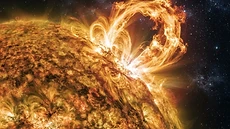
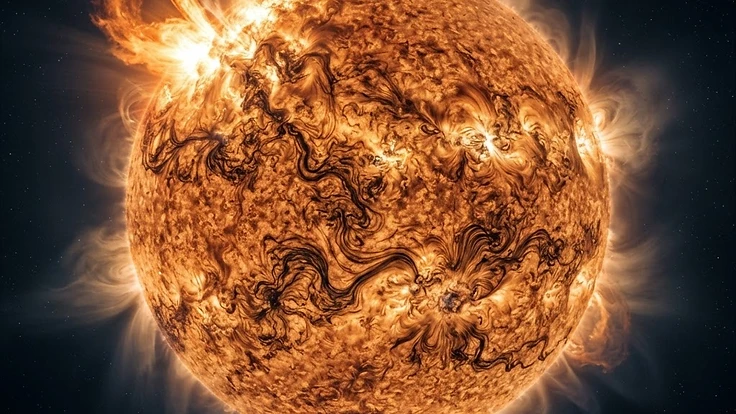
The Sun generates energy through nuclear fusion in its core, creating a complex magnetic field that twists and tangles over time. When these magnetic field lines snap and reconnect, they release a sudden burst of radiation across the entire electromagnetic spectrum.
Scientists classify these events into A, B, C, M, and X classes, with each letter representing a tenfold increase in energy output. An X-class flare is the most potent, capable of causing planet-wide radio blackouts. You can explore solar imagery from satellites like the SDO to see these structures in high resolution.
While light from a flare arrives in eight minutes, the plasma cloud, or Coronal Mass Ejection, travels much slower. These clouds typically move between 400 and 700 kilometres per second, though they can reach speeds up to 3,000 kilometres per second. This delay is what allows us to anticipate potential geomagnetic disturbances.
Real-World Implications
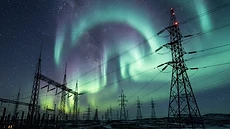
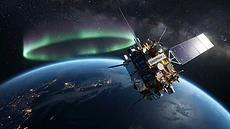
Solar activity affects more than just our atmosphere. It impacts global power grids, satellite communications, and even the precision of GPS systems used by aviation and maritime industries. High-energy radiation can disrupt the ionosphere, which often interferes with long-range radio signals.
We must distinguish between solar flares and other space hazards like a near-Earth asteroid. While an asteroid impact is a physical collision, solar weather is an electromagnetic interaction that we can often predict with increasing accuracy. As we learn more about these events, such as why Solar Flares Influence Global Power Grid Stability, we improve our ability to protect critical services.
Modern electronics are sensitive to the geomagnetic currents induced by these events. Monitoring the K-index helps engineers understand the severity of a storm before it impacts a region. Even though space weather is common, consistent monitoring remains our best form of defence.
What You Can Do
Staying informed about space weather does not require a degree in astrophysics. You can use tools to monitor solar flux and geomagnetic activity from your desktop or phone. If you are interested in witnessing the atmospheric results of this activity, consider guided aurora tours available in regions like Iceland, Norway, Canada, and Finland to safely enjoy the northern lights.
We recommend using resources like a local aurora forecast to determine if conditions are favourable for stargazing in your area. For those managing websites or dashboards, you can even use embeddable widgets to display live data to your audience. Preparedness is simply a matter of having the right information at the right time.
Key Takeaways
Solar flares are a natural and common consequence of the solar cycle. They serve as a reminder that we live within the outer atmosphere of an active star. While they pose challenges for our interconnected technology, our ability to observe and predict them has never been better.
Understanding these cycles helps us live more securely in a space-faring era. Whether you are curious about the mechanics of the Sun or simply want to catch a glimpse of the auroral oval, keeping an eye on the latest data keeps you ahead of the weather. The universe is active, and with the right tools, we can watch it unfold in real-time.
People Also Ask
How often do solar flares reach Earth?+
Solar flares occur continuously throughout the 11-year solar cycle, but their impact on Earth varies. Radiation from flares arrives in minutes, while the associated mass ejections take one to three days. Most flares cause minor ionization, but extreme events that significantly disrupt Earth occur only a few times per cycle.
Can solar flares cause physical damage to Earth?+
Solar flares do not damage the Earth's surface, as our atmosphere and magnetic field provide complete protection. However, they can damage satellites, disrupt radio communications, and induce currents in electrical grids. The primary risk is to our technological infrastructure rather than biological life or the physical planet.
How do scientists track solar flares?+
Scientists use a global network of ground-based observatories and space-based instruments, such as the Solar Dynamics Observatory. By measuring X-ray flux and observing the Sun's surface, they can classify flares by intensity and predict the arrival of geomagnetic storms long before they reach the magnetosphere of the Earth.
Continue Reading
Forecast These Questions
View all →Express your probability on these active forecast questions.