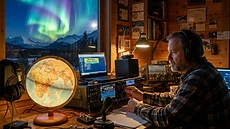
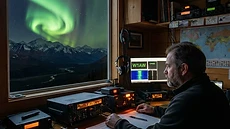
How the Solar Cycle Dictates Radio Communication Conditions
Solar activity directly influences the ionosphere, dictating the range and clarity of high-frequency radio communications globally. Understanding this cycle helps operators predict propagation changes.
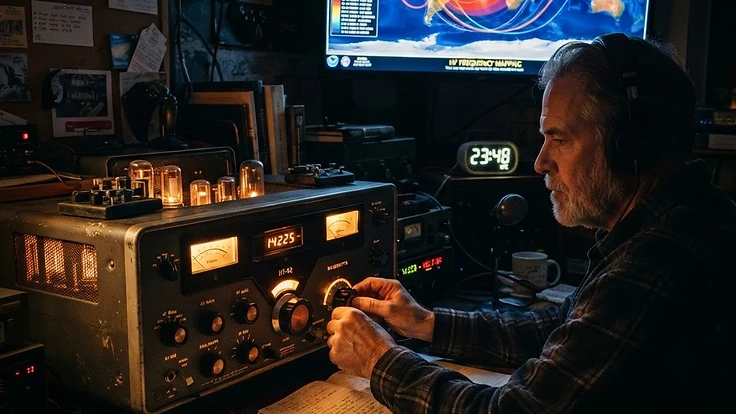
The Solar Cycle Drives Global Radio Conditions
Radio communication, particularly at high frequencies, depends on the ionosphere, a layer of the upper atmosphere that reflects radio waves back to Earth. This layer is not static, as its ability to refract signals changes based on the amount of ultraviolet and X-ray radiation emitted by the Sun.
HF Radio Conditions
Powered by Flarient — embed this on your site →
Because the Sun follows an approximate 11-year cycle of activity, radio operators experience long-term fluctuations in signal propagation. Solar Cycle 25, which began in December 2019, continues to demonstrate how solar flux and geomagnetic activity reshape the landscape of amateur and professional radio operations.
The Science Behind Solar Propagation
The solar cycle is defined by the magnetic activity of the Sun, which fluctuates between solar minimum and solar maximum. During the maximum phase, the Sun releases more intense ultraviolet radiation, which ionises the upper atmosphere and creates a denser reflective layer for radio waves.
When solar activity is high, higher frequencies can be used to communicate over massive distances. Conversely, during solar minimum, the ionosphere becomes less dense, often forcing operators to rely on lower frequencies that are prone to higher noise and absorption levels.
Solar events like flares and coronal mass ejections also introduce disturbances to the geomagnetic field, which scientists track using the Kp index. These events can rapidly alter the ionosphere, leading to improved propagation in some cases or complete signal absorption in others, as explained in our guide on The Reality of Solar Flares and Global Radio Communications.
Real-World Implications for Radio Users
The influence of the Sun is most noticeable in long-distance high-frequency communication. Operators often find that global reach becomes easier during the peak of the solar cycle, allowing for worldwide contacts that are impossible when the Sun is quiet.
However, intense geomagnetic storms can cause major disruptions to these same networks. During a significant storm, the ionosphere can become turbulent, causing signals to fade or shift unexpectedly, which can disrupt vital services across the globe.
This atmospheric variability affects more than just hobbyists, as it impacts aviation, maritime navigation, and satellite operations. Understanding these shifts is essential for anyone relying on radio frequency stability for mission-critical tasks.
Practical Steps for Better Communication
Monitoring solar activity is the best way to plan your operating time. By using modern tools, you can track the current state of the ionosphere and receive alerts when conditions change, which is vital for preparing for potential communication blackouts.
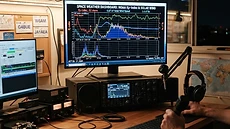
Tools like live dashboards allow you to see the current K-index and solar flux at a glance. You can even use embeddable widgets on your personal websites to display real-time space weather data for your local community or club members.
Beyond basic monitoring, those seeking to experience the physical results of these cycles can plan trips to dark sky locations for observation. If you are interested in witnessing the atmospheric effects firsthand, there are many [guided aurora tours](https://vi.me/HuXHi) in countries like Iceland, Norway, Canada, and Finland that take advantage of peak solar activity.
Key Takeaways for Every Operator
The solar cycle acts as the primary weather vane for radio propagation. While we cannot control the Sun, we can adapt our operations by staying informed about solar flux and geomagnetic conditions.
By keeping an eye on historical archive data, operators can better recognise patterns and improve their success rates. Whether you are a casual listener or a professional communicator, treating space weather as a core element of your setup ensures you remain connected regardless of solar conditions.
People Also Ask
How do solar flares affect radio waves?+
Solar flares emit intense electromagnetic radiation that increases ionization in the lower ionosphere. This causes sudden ionospheric disturbances, which significantly absorb high-frequency radio waves and can lead to temporary communication blackouts on the sunlit side of Earth.
What is the best frequency for long-distance radio communication?+
The ideal frequency depends on the time of day and the current solar cycle phase. Generally, higher frequencies are better during the day and solar maximum, while lower frequencies perform better at night and during solar minimum when the ionospheric layers are less dense.
Can I use radio during a G5 geomagnetic storm?+
During an extreme G5 geomagnetic storm, high-frequency radio communication can become highly unreliable or fail entirely. The severe turbulence in the ionosphere causes rapid signal fading, absorption, and frequency shifts, making consistent communication difficult even for experienced operators.
Continue Reading