Humanity Is Poised to Expand Its Reach Into Deep Space
The future of space exploration is shifting from temporary missions to permanent presence. As we push further into the solar system, understanding the environment around us becomes critical for survival.
Humanity Is Poised to Expand Its Reach Into Deep Space
Human exploration is moving beyond the confines of low Earth orbit. For decades, the International Space Station has served as our primary laboratory, hovering at an altitude of approximately 408 kilometres. This achievement laid the groundwork for longer journeys into the solar system.
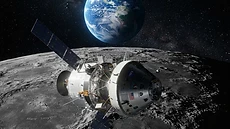
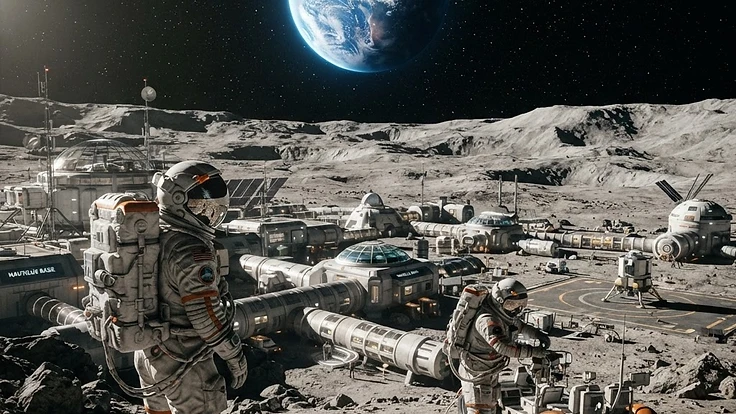
Today, we stand at the precipice of a new era. Plans to return to the Moon and eventually reach Mars indicate that our species is determined to become multiplanetary. This transition requires not just better rockets, but a deeper understanding of the space environment we intend to inhabit.
The Science Behind It
Space is not empty, though it often appears so to the casual observer. It is filled with plasma, magnetic fields, and high energy particles that originate from our sun. Solar cycles occur on a roughly 11 year rhythm, dictating how active our star becomes.
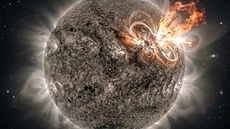
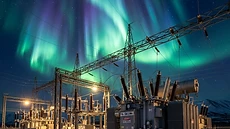
We measure this activity through various metrics, including the Kp index. A solar flare or coronal mass ejection can send particles hurtling toward Earth at speeds reaching 3,000 km/s. When these particles interact with our magnetosphere, they can trigger a geomagnetic storm, which influences everything from satellite drag to power grid stability.
Gravity also defines our future in space. Studying the mechanics of orbital motion is essential for every mission, whether it involves staying in orbit or navigating toward another world. We must master these physical laws to ensure the safety of crews travelling across the vast, harsh vacuum.
Real-World Implications
Our reliance on technology makes us uniquely vulnerable to the whims of the sun. Strong solar events can disrupt GPS signals, radio communications, and even undersea cables. Understanding these risks is as important as the engineering challenges of building spacecraft.
We also monitor the skies for near-Earth asteroids that could pose a threat to our planet. History reminds us of the dangers, such as the Chicxulub event 66 million years ago. Identifying these hazards allows us to develop strategies for planetary defence, ensuring our long term survival.
This interplay between human ambition and solar activity creates a complex environment for future pioneers. By studying these phenomena, we learn how to protect our infrastructure here on Earth while simultaneously preparing to operate safely in the deeper reaches of space.
What You Can Do
Staying informed is the first step toward understanding the space environment. You can monitor live data to see how solar activity fluctuates in real time. Observing the aurora is one of the most visual ways to witness these forces at work, as they serve as a direct indicator of geomagnetic activity.
If you are planning to witness the northern lights, there are many guided aurora tours available in countries like Iceland, Norway, Canada, Finland, Sweden, and Alaska. These experts provide local knowledge that enhances your chances of a successful sighting.
Whether you are a scientist or an enthusiast, using the right tools allows you to engage with the cosmos responsibly.
Integrating space weather data into your daily routine helps you appreciate the scale of the challenges ahead. You might even find it useful to use embeddable widgets on your own site to share these insights with others who are curious about our place in the universe.
Key Takeaways
The future of space exploration depends on our ability to navigate a dynamic and often unpredictable environment. By mastering the science of solar weather and orbital mechanics, we improve our capacity to travel and live among the stars.
We remain a terrestrial species for now, but our gaze is firmly fixed on the horizon. Every mission, whether it stays near Earth or ventures to distant moons, brings us closer to understanding our place in the vast expanse. The journey ahead is long, but we are better equipped than ever to meet it.
People Also Ask
How do solar flares affect spacecraft?+
Solar flares release high-energy radiation that can damage sensitive electronics on spacecraft. Engineers harden hardware against these bursts to prevent data corruption or permanent system failure. Intense radiation can also pose health risks to astronauts during missions, requiring heavy shielding for living quarters.
What is the Kármán line?+
The Kármán line is the internationally recognised boundary between Earth's atmosphere and outer space, situated at an altitude of 100 kilometres. Crossing this line is the standard threshold used to distinguish between aeronautics and astronautics, marking where the atmosphere is too thin to support traditional flight.
How do scientists track near-Earth asteroids?+
Scientists use powerful ground-based telescopes and space observatories to track the orbits of near-Earth asteroids. By calculating their trajectories, experts at agencies like NASA CNEOS can determine if an object poses a collision risk. This constant monitoring is vital for long-term planetary defence strategies.
Continue Reading
Forecast These Questions
View all →Express your probability on these active forecast questions.