
The Artemis Program Establishes a Permanent Presence on the Moon
The Artemis program aims to return humans to the lunar surface and build a sustainable presence. It serves as a testing ground for future missions to Mars and deep space exploration.
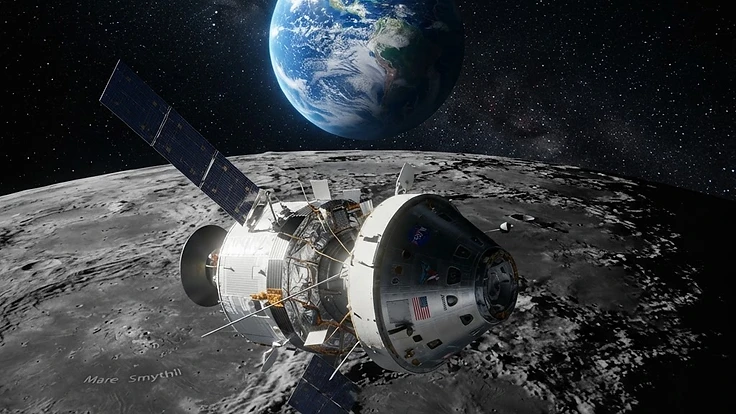
The Artemis Program Establishes a Permanent Presence on the Moon
The Artemis program represents the next great chapter in human space exploration. Led by NASA, this international effort seeks to land the first woman and the first person of colour on the lunar surface, marking a significant evolution in our approach to space travel.
Unlike the fleeting visits of the Apollo era, Artemis focuses on sustainability. The goal is to establish a permanent base of operations near the lunar south pole, where water ice exists in permanently shadowed craters. This initiative is not just about returning to our nearest neighbour, but about creating the infrastructure needed for future deep space exploration.
The Science Behind It
Space exploration relies on complex physics to navigate the void between worlds. To reach the Moon, spacecraft must achieve escape velocity, a speed of approximately 11.2 kilometres per second to break free from Earth gravity.
Artemis utilizes the Space Launch System, a powerful rocket designed to lift heavy payloads into orbit. Once in space, the Orion spacecraft serves as the transport vehicle for the crew. It must survive the harsh conditions of deep space, including high radiation environments and extreme temperature shifts.
The lunar south pole is a target of immense scientific interest due to the presence of lunar volatiles. These resources, particularly water ice, are essential for life support and fuel production. By understanding the composition of the lunar regolith, scientists can better prepare for long-term human habitation.
Real-World Implications
Technological breakthroughs developed for Artemis have clear applications back on Earth. Advancements in recycling, power generation, and robotic systems often find their way into consumer and industrial markets.
Reliable communication is vital for these missions, requiring robust systems that can withstand the interference of space weather. Solar events, often monitored through solar imagery, provide crucial data to ensure the safety of astronauts and sensitive hardware during transit.
Establishing a lunar base serves as a proving ground for the systems we will eventually need to reach Mars. The ability to organise life support and energy management in an environment that is entirely cut off from Earth is a massive engineering challenge. Solving these problems improves our own efficiency and sustainability here at home.
What You Can Do
Staying informed about upcoming launches and space missions helps build public awareness and support. You can track the progress of various initiatives by exploring current space-programs to see how international partners contribute to our collective success.
If you want to understand the environment these missions operate in, learn how to use essential tools for real-time space weather monitoring to track the conditions that affect orbital flight.
You might also find it interesting to read about the growing reality of human-made debris in near-Earth orbit to understand the challenges of modern space traffic management.
Key Takeaways
Artemis is more than a moon mission. It is a fundamental shift in how humanity operates beyond Earth orbit.
By leveraging international collaboration and modern engineering, we are building the skills required for the next century of exploration. The moon is our training ground, our fuel station, and our gateway to the wider solar system. The efforts made today will dictate the scope of human activity in space for generations to come.
Lunar perspective
Artemis also invites a closer look at the Moon that is already visible from Earth, from changing phases to the subtle contrast of cratered terrain. Readers curious to make their own lunar images can explore an observation setup as one accessible route from following lunar exploration to studying our nearest neighbour directly.
Ad · Affiliate link. Flarient may earn a commission if you purchase through this link, at no additional cost to you.
People Also Ask
How does Artemis differ from the Apollo missions?+
While Apollo was focused on short-term exploration and demonstrating capability, Artemis is designed for long-term sustainability. It aims to build a lunar base camp, develop the Gateway station in orbit, and eventually use the Moon as a staging point for human missions to Mars.
Why is the lunar south pole the target for Artemis?+
The lunar south pole is crucial because it contains regions of permanent shadow where water ice has been preserved for billions of years. This water can be harvested for life support, creating oxygen for breathing and hydrogen for rocket fuel, which makes long-term settlement feasible.
How long will the Artemis missions last?+
Artemis is a multi-decade program. Individual missions to the lunar surface are expected to grow from short-duration stays to extended research missions lasting weeks or months. The infrastructure built over these years will support continuous human presence on and around the Moon.
Continue Reading
Forecast These Questions
View all →Express your probability on these active forecast questions.
Related Articles


Humanity Is Poised to Expand Its Reach Into Deep Space
2026-09-30 · 6 min read


Satellite Operators Use Advanced Strategies to Mitigate Space Weather Risks
2026-11-10 · 5 min read


Planetary Science Reveals the Fragile Nature of Earth
2026-11-10 · 8 min read