Noctilucent Clouds Are Found In The Upper Mesosphere
Often confused with the aurora, noctilucent clouds are ethereal, high-altitude displays. Learn where they occur and the unique atmospheric conditions that create them.
Noctilucent Clouds Are Found In The Upper Mesosphere
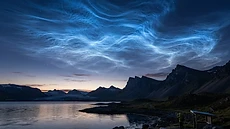
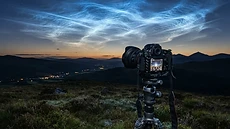
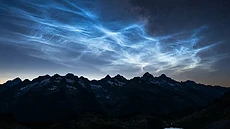
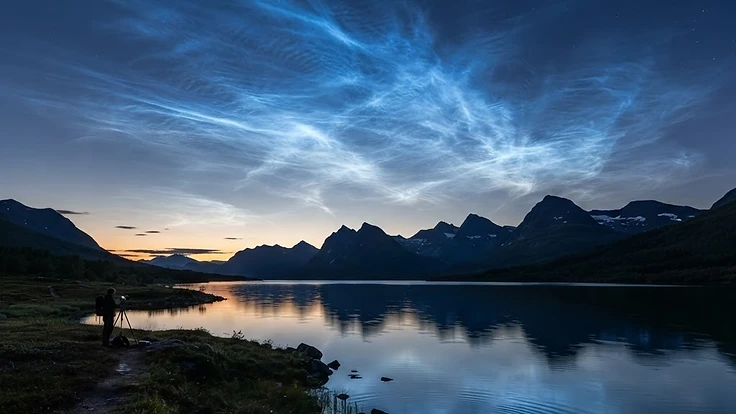
Noctilucent clouds represent one of the most striking phenomena in the night sky. Often referred to as night shining clouds, these formations appear as glowing, silvery streaks against the dark backdrop of the twilight hours.
Unlike traditional weather systems that populate the troposphere, these clouds occupy the extreme altitude of the upper mesosphere. Understanding their location helps observers distinguish them from an aurora, which occurs much higher in the ionosphere.
The Science Behind It
These clouds form at altitudes of approximately 80 kilometres above the surface of the Earth. This region is known as the mesopause, where temperatures can plummet to the coldest levels found anywhere in our atmosphere.
To exist, these clouds require three specific ingredients: water vapour, extremely cold temperatures, and meteoric dust. The dust acts as a nucleus, allowing water vapour to freeze into tiny ice crystals that reflect sunlight even after the sun has dipped below the local horizon.
This process is explained in greater detail in our overview on the atmospheric physics of noctilucent clouds. The phenomenon remains a primary subject of study for researchers interested in climate change, as their frequency can serve as a proxy for atmospheric shifts.
Real-World Implications
While noctilucent clouds are primarily a visual spectacle, they provide essential data for atmospheric science. Their presence informs our understanding of gravity waves and the chemical composition of the mesosphere.
They do not directly impact global communications like a strong geomagnetic storm might. However, they are vital for calibrating satellite instruments and modelling the dynamics of the middle atmosphere.
Researchers often correlate their seasonal appearance with broader patterns, much like tracking a near-Earth asteroid helps us understand the movement of objects within our solar system. Monitoring these clouds allows for a more comprehensive view of how our upper atmosphere reacts to terrestrial and solar changes.
What You Can Do
If you hope to catch a glimpse, you should look toward the horizon during the deep twilight months of summer. Observers in high latitude regions, typically between 50 and 70 degrees, have the best vantage points.
While you prepare for your next skywatching session, you might find it useful to check our local aurora forecast to see if other high-altitude wonders are active in your area. For those seeking even more dramatic light displays, consider planning a trip to see the northern lights through guided aurora tours in countries like Iceland, Sweden, Canada, or Norway.
If you manage a weather or astronomy blog, consider using our embeddable widgets to display live sky conditions for your visitors. Having real-time data at your fingertips makes it much easier to decide when to venture out into the night.
Key Takeaways
Noctilucent clouds are a summer phenomenon occurring at the edge of space, roughly 80 kilometres high. They are visible only when the sun is positioned just below the horizon, allowing it to illuminate the ice crystals from below.
Unlike the fleeting nature of solar events, these clouds can persist for hours across the summer sky. They serve as a gentle reminder of the complex chemistry occurring high above our heads.
By continuing to study these formations, we improve our models of the atmosphere and our appreciation for the night sky. Keep tracking the skies and stay informed about the shifting conditions of our planet, as documented in our comprehensive glossary.
People Also Ask
Can you see noctilucent clouds during the day?+
No, noctilucent clouds cannot be seen during the day because they are too thin to be visible against the bright, sunlit sky. They require the sun to be positioned below the observer's horizon, allowing it to illuminate the clouds from beneath while the ground remains in darkness.
Why are noctilucent clouds only visible in summer?+
These clouds are only visible in summer because the mesopause reaches its lowest temperatures during this season. These extreme cold conditions are necessary for water vapour to condense onto meteoric dust particles, forming the ice crystals that make the clouds visible from the ground.
How are noctilucent clouds different from regular clouds?+
Regular clouds form in the troposphere, which is the lowest layer of the atmosphere, and consist of water droplets or ice crystals influenced by weather. Noctilucent clouds form in the much higher mesosphere, composed of ice crystals formed around meteoric dust, making them distinct in origin and altitude.
Continue Reading
Forecast These Questions
View all →Express your probability on these active forecast questions.