The Atmospheric Physics of Noctilucent Clouds
Noctilucent clouds are rare, electric-blue formations occurring at the edge of space. Discover the science behind these high-altitude wonders and why they shine long after the sun has set.
The Formation of Noctilucent Clouds
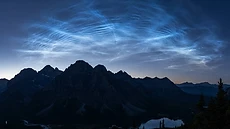
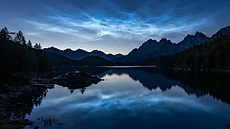
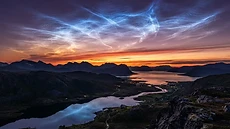
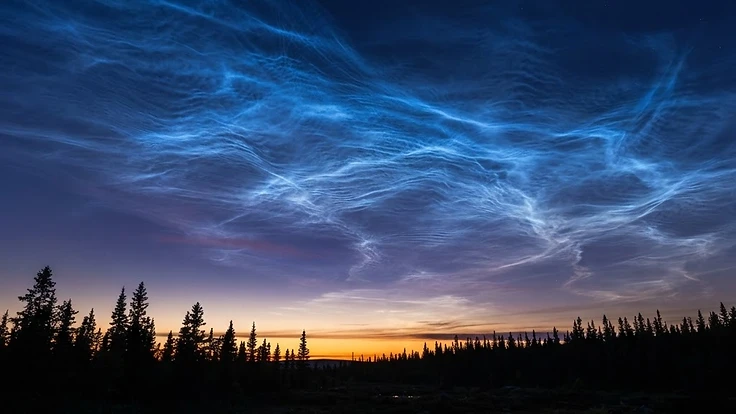
Noctilucent clouds, often called night shining clouds, are among the most elusive phenomena in our atmosphere. These wispy, electric-blue formations appear at altitudes of roughly 80 kilometres, far above the typical cloud layers that produce rain or snow.
They appear only during the deep twilight hours of the summer months at high latitudes. While the sun has dipped below the horizon for observers on the ground, these clouds remain high enough to catch the lingering rays of sunlight, causing them to glow against the dark sky.
The Science Behind It
These clouds are composed of ice crystals that form on fine particles of meteor dust. At such extreme altitudes within the mesosphere, temperatures must drop to below minus 120 degrees Celsius for water vapour to condense into ice.
Water vapour is scarce in this region of the atmosphere, making these clouds a sensitive indicator of upper-atmospheric conditions. Scientists often study them to understand how climate changes in the lower atmosphere affect the delicate balance of the mesosphere.
Real-World Implications
Observing these clouds provides vital data for researchers modelling atmospheric circulation. Because they exist at the boundary of space, they help track waves and turbulence that propagate from the lower atmosphere upwards.
This interaction is similar to how we track solar activity through a glossary or by monitoring the aurora in the polar regions. Understanding these patterns helps improve our general knowledge of how the Earth atmosphere responds to solar inputs and seasonal shifts.
What You Can Do
If you hope to see these clouds, patience and the right location are essential. They are most visible from latitudes between 50 and 65 degrees during the summer season when the sun is between 6 and 16 degrees below the horizon.
Many enthusiasts use the Flarient aurora forecast to keep track of atmospheric transparency and potential sky visibility. While you wait for the next viewing window, consider exploring the archive to learn about historical observations of atmospheric anomalies.
If the science feels daunting, aurora guided tours in Iceland, Norway, Canada and Sweden pair you with experts who watch the oval and the weather so you simply get the show.
Key Takeaways
Noctilucent clouds remain one of the most beautiful sights in the night sky. They remind us that the atmosphere is a complex and dynamic system that reaches well into the domain of space.
By tracking these patterns, we gain a deeper appreciation for the interplay between our planet and the sun. These high-altitude ice clouds serve as a constant reminder of the unseen forces at play just above our heads.
For observers
If you want to try photographing noctilucent clouds, a compact portable setup can make wide field twilight imaging more accessible; See an accessible way to capture the sky.
Ad · Affiliate link. Flarient may earn a commission if you purchase through this link, at no additional cost to you.
People Also Ask
Are noctilucent clouds dangerous?+
Noctilucent clouds are completely harmless. They are simply ice crystals floating at very high altitudes, specifically in the mesosphere. They pose no threat to the surface, aircraft, or the climate, though their increasing frequency is monitored by scientists as a potential sign of changing upper-atmospheric conditions.
How high are noctilucent clouds?+
Noctilucent clouds form in the mesosphere, typically at an altitude of approximately 80 to 85 kilometres above the Earth surface. This puts them well above the Kármán line, which defines the beginning of space, making them the highest cloud formations found in our planet atmosphere.
Can you see noctilucent clouds in winter?+
Noctilucent clouds are almost exclusively a summer phenomenon. They require extremely cold temperatures in the mesosphere, which occur during the summer months due to complex atmospheric circulation patterns. In winter, the mesosphere is actually warmer, which prevents these delicate ice crystals from forming in sufficient numbers.
Continue Reading
Forecast These Questions
View all →Express your probability on these active forecast questions.