Why Noctilucent Clouds Are Rare Atmospheric Wonders
Noctilucent clouds are elusive phenomena that grace the edge of space. Understanding why they remain so rare requires looking at the delicate balance of high-altitude physics.
The Rarity of Noctilucent Clouds
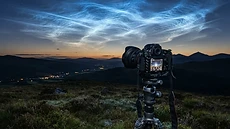
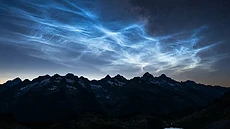
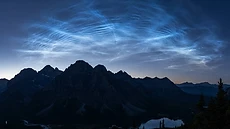
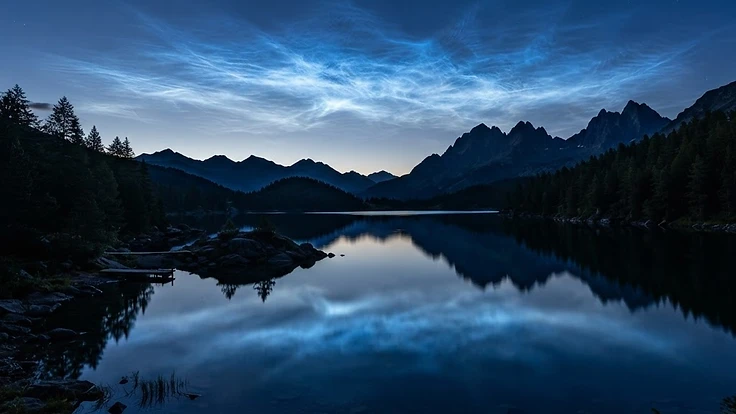
Noctilucent clouds, or night-shining clouds, represent one of the most ethereal displays in our atmosphere. Often appearing as ghostly, silver-blue filaments against the darkened twilight sky, they occur at the very edge of space near the mesopause. These clouds are not merely a meteorological curiosity, as they serve as vital indicators of the state of our upper atmosphere.
Their rarity stems from the narrow window of specific environmental conditions required for their formation.
While common weather clouds inhabit the lower atmosphere, noctilucent clouds thrive at an altitude of approximately 80 metres. At this height, they are illuminated by the sun long after it has set for observers on the ground. Most people go their entire lives without seeing them because they require a perfect convergence of moisture, extremely low temperatures, and suspended dust particles.
Understanding these factors provides a window into the complex interactions between our planet and the vacuum of space, which you can further explore in our glossary.
The Science Behind It
To understand these clouds, we must look to the mesosphere. Noctilucent clouds form when water vapour condenses onto tiny meteoric dust particles to create ice crystals. This process demands temperatures lower than negative 120 degrees Celsius, which occurs primarily during the summer months at high latitudes.
This is contrary to what one might expect, as the upper atmosphere is coldest when the lower atmosphere is at its warmest.
Water vapour is remarkably scarce at such extreme altitudes. It must migrate from the lower atmosphere or form through the chemical breakdown of methane by ultraviolet radiation. This scarcity is the primary reason these clouds remain rare.
For a deeper look into the complex dynamics of our atmosphere and beyond, you can read our insights on astrophysics and the mechanics of our universe.
Real-World Implications
While noctilucent clouds are beautiful, they are also sensitive sensors of atmospheric change. As humans alter the chemical composition of the atmosphere through the emission of methane, scientists have observed an increase in the frequency and brightness of these clouds. This suggests that noctilucent clouds are essentially a canary in the coal mine for climate-related shifts in the upper atmosphere.
Their presence can signal changes in global circulation patterns that we are only beginning to fully analyse.
Furthermore, observing these clouds helps researchers model the transport of energy and matter in the upper atmosphere. This work is crucial for understanding how space weather might affect satellite orbits or communications. Just as we monitor solar activity using solar imagery to prepare for geomagnetic interference, tracking these clouds provides a more holistic view of the delicate environment our technology occupies.
Understanding these broader connections is essential for those who study the network of satellites orbiting our planet.
What You Can Do
If you want to catch a glimpse of these elusive structures, you must be in the right place at the right time. They are best viewed from latitudes between 50 and 70 degrees during the summer months, typically shortly after sunset or before sunrise. Keep your eyes on the northern horizon and look for a faint, electric-blue glow.
If you are planning an expedition to see these or other sky phenomena, consider that many travellers book [guided aurora tours](/blog/the-distinction-between-aurora-borealis-and-aurora-australis) across Sweden, Norway, and Alaska to maximise their chances of witnessing the wonders of the night sky.
Using reliable tracking tools will significantly increase your success rate. While you monitor the skies, remember to stay informed about other high-altitude phenomena like the aurora, which often shares the same twilight horizons. Many observers find that using embeddable widgets on their personal websites helps them keep track of shifting atmospheric data in real time without constant manual searching.
If you'd rather follow a guide than a graph, bookable Northern Lights tours operate in Iceland, Sweden, Canada and Alaska — each with a photographer who knows when the oval will dance.
Key Takeaways
Noctilucent clouds are rare because they occupy a precise environmental niche that only occurs under specific conditions. They act as essential indicators of atmospheric health, linking the chemistry of our lower atmosphere to the extreme environment of the mesosphere. Their increasing frequency serves as a reminder that our impact on the planet extends far beyond the surface.
By observing these clouds, we deepen our connection to the dynamic space-weather environment. Whether you are a casual observer or a dedicated researcher, the night sky offers constant opportunities to learn. Always remember to check your local aurora forecast to ensure you have the best information before heading out to search for these high-altitude treasures.
People Also Ask
Can you see noctilucent clouds from anywhere?+
Noctilucent clouds are primarily visible at latitudes between 50 and 70 degrees North or South. They require the sun to be just below the horizon, allowing it to illuminate the high-altitude ice crystals while the lower atmosphere remains in darkness. Viewing them from the tropics is generally impossible.
Are noctilucent clouds related to aurora borealis?+
No, they are distinct phenomena. Noctilucent clouds are made of ice crystals in the mesosphere, while the aurora is caused by solar particles colliding with gases in the ionosphere. However, both can appear in the same twilight sky, making them frequent companions for high-latitude skywatchers.
Do noctilucent clouds impact the weather?+
Noctilucent clouds do not significantly impact surface weather. They occur at such high altitudes that they have no direct effect on rain, temperature, or wind patterns below. Instead, they act as passive indicators of temperature and chemical changes occurring in the thin air of the upper atmosphere.
Continue Reading
Forecast These Questions
View all →Express your probability on these active forecast questions.