Solar Activity Cycles and the Truth About Flare Intensity
Solar activity ebbs and flows in predictable 11-year cycles. While modern technology makes us more vulnerable to space weather, the underlying solar physics remains consistent over time.
Solar Activity Cycles and the Truth About Flare Intensity
Public interest in space weather often spikes when headlines describe massive solar flares or impending geomagnetic storms. These events are part of a natural, recurring rhythm that has governed our star for billions of years. Understanding whether solar flares are truly intensifying requires looking past the sensationalism and examining the established science of solar cycles.
Live Solar Flare Monitor
Powered by Flarient — embed this on your site →
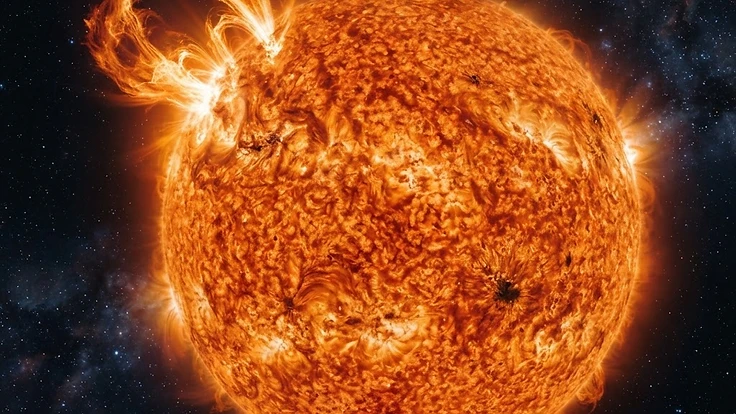
Solar activity operates on a cycle lasting roughly 11 years, characterised by a transition from solar minimum to solar maximum and back again. We are currently navigating Solar Cycle 25, which began in December 2019. While each cycle displays unique variations in peak intensity, there is no scientific evidence suggesting that the Sun is fundamentally becoming more volatile or producing inherently stronger flares than it has in the past.
The Science Behind It
Solar flares are powerful bursts of radiation resulting from the release of magnetic energy associated with sunspots. Astronomers classify these flares using a letter-based system where A, B, C, M, and X represent increasing levels of power, with each class being ten times stronger than the one preceding it. This energy travels through space at the speed of light, reaching Earth in about eight minutes.
Beyond radiation, the Sun occasionally ejects clouds of charged particles known as Coronal Mass Ejections or CMEs. While light travels at nearly 300,000 kilometres per second, these physical clouds of plasma travel much slower, often between 400 and 3,000 kilometres per second. When these particles strike our magnetosphere, they trigger geomagnetic storms, which we measure using the G-scale or the Kp index to determine the impact of these disturbances.
Real-World Implications
Our modern reliance on interconnected infrastructure makes us more susceptible to space weather than our ancestors. During the famous Carrington Event of 1859, a massive solar storm disrupted primitive telegraph lines. Today, a similar event would threaten satellite operations, power grids, and high-frequency radio communications across the globe.
The International Space Station orbits at an altitude of approximately 408 kilometres, placing it well above the Kármán line where space begins. Astronauts on board must monitor solar particle events to protect their health and ensure mission safety. Much like how researchers study the impact of ionospheric disturbances on drone operations, we must proactively harden our electrical networks against potential solar interference.
What You Can Do
Staying informed is the best defence against space weather disruption. You can track solar conditions by consulting NOAA SWPC or by reviewing the historical storm leaderboard to understand past events.
If you are interested in the visual effects of solar activity, remember that many people plan trips to view the aurora across countries like Norway, Iceland, and Canada, where guided aurora tours offer expert navigation through the changing conditions.
Utilising high-quality tools allows for better local planning. Whether you are adjusting your equipment based on a local aurora forecast or simply curious about current solar activity, having real-time data at your fingertips simplifies the process. You can even embed custom widgets on your own website to share these live metrics with your audience, ensuring everyone stays updated on our dynamic environment.
Key Takeaways
Solar flares are not getting worse in a permanent or existential sense, but rather they follow a predictable pattern. Our perception of increasing risk stems largely from our growing dependence on complex, global technology. By distinguishing between solar myths and the reality of the 11-year cycle, we can better appreciate the forces at play in our solar system.
Continuing to monitor solar imagery and understanding the mechanisms behind space weather empowers us to build more resilient infrastructure. While we cannot change the behaviour of the Sun, we can certainly improve our ability to prepare for its natural fluctuations. Knowledge remains our greatest asset in navigating the future of space weather.
For observers
Readers interested in tracking sunspots or trying basic solar imaging with appropriate filters may consider one accessible route, a compact capture setup you can Explore an observation setup.
Ad · Affiliate link. Flarient may earn a commission if you purchase through this link, at no additional cost to you.
People Also Ask
Can solar flares cause earthquakes?+
There is no credible scientific evidence linking solar flare activity to seismic events on Earth. While both involve massive energy releases, the mechanisms are entirely distinct. The idea that solar flares trigger earthquakes is a common misconception that has been debunked by extensive geophysical research over many decades.
How often do massive solar storms occur?+
Severe solar storms that could significantly impact global infrastructure are relatively rare. While the Sun experiences a solar maximum roughly every 11 years, events as powerful as the 1859 Carrington Event are estimated to occur only once every century or more, though smaller, manageable storms occur far more frequently.
Do solar flares affect the health of people on Earth?+
Earth's thick atmosphere and strong magnetic field provide excellent protection against the harmful radiation produced by solar flares. While astronauts in space or passengers on high-latitude, high-altitude flights may face higher radiation exposure, the average person on the ground remains safe from any direct physical harm during these events.
Continue Reading
Forecast These Questions
View all →Express your probability on these active forecast questions.