
Ionospheric Disturbances Pose Risks to Modern Drone Operations
Solar activity and geomagnetic storms can create significant challenges for drone operators. Discover how ionospheric shifts impact GPS accuracy and navigation stability.
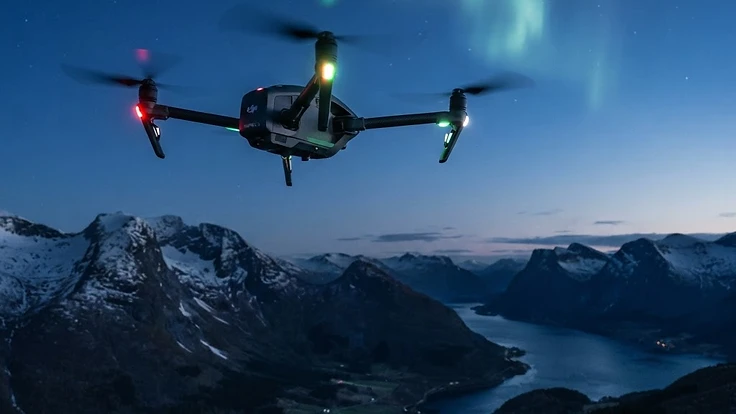
Ionospheric Disturbances Pose Risks to Modern Drone Operations
As the drone industry expands, the reliability of navigation systems becomes paramount. While pilots often focus on weather or battery life, a hidden risk exists in the upper atmosphere. Solar activity can cause ionospheric disturbances that degrade the performance of Global Navigation Satellite Systems, which are essential for stable flight operations.
Understanding these invisible shifts is vital for both recreational pilots and commercial operators. When the ionosphere changes, signal propagation delays occur, leading to positioning errors that can compromise a drone's flight path. This is not merely a theoretical concern, as it directly impacts flight precision and safety in an increasingly crowded sky.
The Science Behind It
The ionosphere is a region of the atmosphere filled with charged particles, heavily influenced by solar radiation. When the sun releases energy, the intensity of these particles fluctuates, often correlated with the solar cycle, which lasts approximately 11 years. Current observations indicate we are deep into Solar Cycle 25, which began in December 2019.
Solar wind, typically travelling at speeds between 400 and 700 kilometres per second, constantly interacts with the Earth's magnetic field. This interaction can trigger a geomagnetic storm, causing the ionosphere to become turbulent or dense. These fluctuations shift the speed and trajectory of radio waves travelling from GPS satellites to your drone.
Because the drone calculates its position based on the time it takes for these signals to arrive, even minor atmospheric delays introduce errors. In severe cases, the signals can lose lock entirely, or the drone may exhibit erratic behaviour while attempting to compensate for inaccurate coordinates. This is similar to how solar activity affects global radio propagation, as explained in our article on how the solar cycle dictates global ham radio propagation.
Real-World Implications
The impact of these disturbances is not limited to long-distance aviation. Drones rely on high-precision GPS to maintain stable flight, especially during autonomous missions or automated landings. A degraded satellite signal can cause a sudden drift, potentially forcing the aircraft into a failsafe hover or, in worst-case scenarios, a controlled descent.
Professional industries like surveying, agriculture, and infrastructure inspection are particularly vulnerable. Precision tasks that require centimetre-level accuracy are frequently disrupted during periods of high solar activity. These challenges are similar to those described in our analysis on solar particle events pose risks to modern infrastructure.
Beyond technical performance, communication links used to control the drone can also be affected. While most modern units operate on robust frequencies, extreme solar events can introduce noise and interference that reduce the effective range. Pilots must recognise that the environment above the clouds is just as dynamic as the one on the ground.
What You Can Do
Staying informed is the best defence against unexpected navigation issues. By monitoring space weather data, you can anticipate periods of elevated risk and adjust your flight plans accordingly. You can use tools like Flarient’s live dashboard to track the current Kp index, which offers a clear indication of geomagnetic stability.
If you are planning to travel for professional photography or surveying, consider looking for local data to understand the conditions in your specific area. Exploring [guided aurora tours](https://vi.me/HuXHi) in countries like Iceland, Norway, or Canada also requires keeping an eye on these same atmospheric indicators, as these displays are essentially the visual manifestation of the exact geomagnetic processes that affect your equipment.
For those who build platforms or run monitoring stations, integrating embeddable widgets onto your own site allows you to keep an eye on real-time solar activity without leaving your workflow. Understanding the glossary of space weather terms will also help you translate complex alerts into actionable decisions for your daily operations.
Key Takeaways
Ionospheric disturbances are an unavoidable reality for modern aerial technology. While a drone may perform perfectly on most days, solar activity introduces a layer of unpredictability that every pilot should account for during their pre-flight planning. A proactive approach to monitoring the space environment significantly reduces the risk of in-flight navigation failures.
By leveraging existing tools to monitor the sun, you can ensure your flight operations remain safe and efficient. Knowledge of these natural phenomena allows for better decision making, whether you are flying for commerce or recreation. Ultimately, the more you understand about the environment above you, the better prepared you are to command the skies.
People Also Ask
How does a geomagnetic storm affect drone GPS?+
Geomagnetic storms ionise the upper atmosphere, causing delays and scattering of satellite signals. Drones rely on the precise timing of these signals to calculate position; when the atmosphere disrupts this timing, the drone may experience significant positioning errors or lose its GPS lock entirely during flight.
Is it safe to fly drones during a solar flare?+
While minor solar activity is usually manageable, large solar flares can trigger significant ionospheric turbulence. This can interfere with the drone's GNSS receiver and communication links. It is generally recommended to avoid critical autonomous missions during periods of high Kp index levels or active geomagnetic storms.
Can I check for space weather before flying?+
Yes, various tools provide real-time updates on space weather conditions. Pilots should monitor the Kp index and solar flux data, which indicate the intensity of geomagnetic activity. If these numbers are high, you should consider postponing drone flights that require high-precision positioning or automated navigation.
Continue Reading
Forecast These Questions
View all →Express your probability on these active forecast questions.
Related Articles

Understanding Ionospheric Disturbances During Geomagnetic Storms
2026-11-08 · 5 min read

How Ionospheric Storms Impact GPS Accuracy
2026-10-12 · 5 min read

Ionospheric Disturbances Pose Risks to Drone Operations
2026-09-30 · 5 min read