Solar Particle Events Pose Risks to Modern Infrastructure
Solar particle events are powerful eruptions from the sun that can disrupt global technology, navigation systems, and satellite operations.
Solar Particle Events Pose Risks to Modern Infrastructure
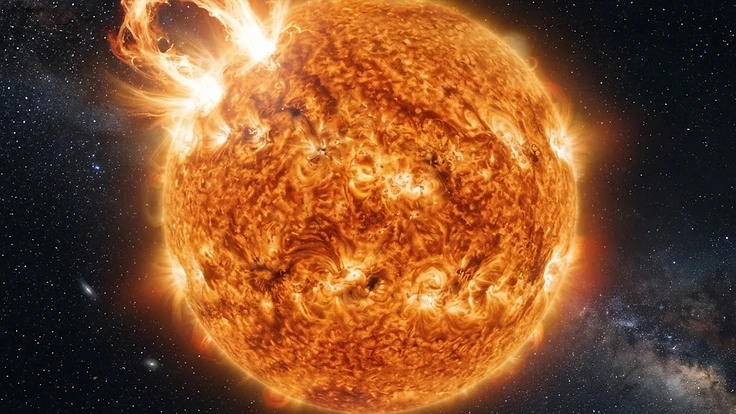
The sun is not merely a steady source of light and warmth. It is a volatile nuclear engine that occasionally launches high-energy particles into space.
These outbursts, known as solar particle events, can travel across the solar system and interact with our planet. Understanding these phenomena is essential for protecting the technology that sustains our modern lifestyle.
The Science Behind It
Solar activity operates on a cycle lasting roughly 11 years. We are currently navigating Solar Cycle 25, which began in December 2019 and brings increased solar activity.
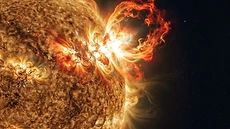
During these periods, the sun produces flares, which are intense flashes of light. These are classified by strength as A, B, C, M, and X, with each level representing a tenfold increase in energy.
While flares arrive at the speed of light, solar particle events involve the release of protons and heavier ions. These particles are often accelerated by coronal mass ejections, which are massive clouds of solar plasma.
These clouds travel much slower than light, typically between 400 and 3,000 kilometres per second. When they strike Earth, they interact with the magnetosphere to create a geomagnetic storm.
This interaction is often measured by the Dst index in nanoteslas, where extreme values signal significant planetary stress. You can explore the archive of such historical events to see how they have impacted our world in the past.
Real-World Implications
Modern infrastructure relies heavily on satellites and long-distance transmission lines. High-energy particles can penetrate satellite shielding and cause hardware degradation or software errors.
These events also interfere with radio signals. For those interested in how this affects aviation or amateur radio, checking the impact on HF radio propagation provides vital context.
Beyond satellite damage, induced currents can flow through power grids on the ground. A severe geomagnetic storm could lead to widespread transformer damage and extended electrical outages.
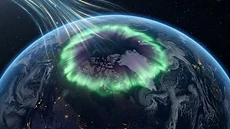
We must also consider the aurora, which is the visible manifestation of these particles hitting our upper atmosphere. While beautiful, these displays often indicate high activity that poses risks to orbital equipment.
What You Can Do
Preparedness begins with awareness of current space weather conditions. You can use Flarient's live dashboard to track the status of solar activity in real time.
If you are planning to witness the northern lights, you might consider booking guided aurora tours in destinations such as Iceland, Norway, Canada, or Finland. Experts can help you time your travel during favourable solar conditions to ensure the best viewing experience.
For those managing technical systems, understanding the glossary of space weather terms is a practical first step. Integrating monitoring tools allows for a proactive rather than reactive stance.
Key Takeaways
Solar particle events are a natural part of our relationship with an active star. While they cannot be stopped, our ability to monitor them has improved significantly.
By leveraging modern data and solar imagery, we can better safeguard our electrical grids and satellite constellations. Awareness remains our best defence against the unpredictable nature of our sun.
People Also Ask
How often do solar particle events occur?+
Solar particle events occur more frequently during the peak of the solar cycle, which repeats roughly every 11 years. While minor events are common, major, high-impact events are rare but can happen multiple times during the active phase of the cycle.
Can solar particles reach the Earth's surface?+
Earth's atmosphere and magnetosphere provide a powerful shield that absorbs most solar particles. However, high-energy particles can reach higher altitudes, potentially exposing astronauts and aircraft flying at polar routes to higher levels of radiation during intense events.
What is the difference between a flare and a CME?+
A solar flare is an intense burst of electromagnetic radiation that travels at the speed of light, arriving in minutes. A coronal mass ejection is a massive cloud of solar plasma and magnetic field that travels much slower, taking one to three days to reach Earth.
Continue Reading
Forecast These Questions
View all →Express your probability on these active forecast questions.