Solar Particle Events and Their Impact on Earth
Solar particle events are powerful bursts of radiation from the sun, but how do they affect people on the ground? We analyse the shielding effects of Earth's atmosphere.
Solar Particle Events and Their Impact on Earth
Solar particle events represent some of the most energetic outbursts in our solar system. These intense releases of protons and heavier ions occur during periods of high solar activity, such as the current Solar Cycle 25 which began in December 2019. While these events can cause havoc for satellites and power grids, many people worry about the risk of radiation poisoning on the ground.
Understanding the reality of these threats requires looking at the natural defence systems provided by our planet.
The Science Behind It
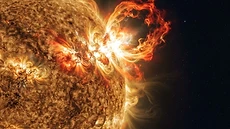
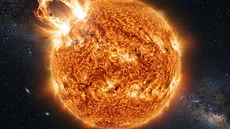
The sun functions in roughly 11-year cycles of magnetic activity. During solar maximum, high-energy particles are accelerated by flares and coronal mass ejections. These particles move through space at significant fractions of the speed of light.
When they reach Earth, they interact with our planet's magnetic field and dense atmosphere.
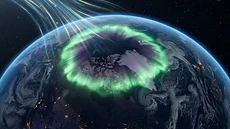
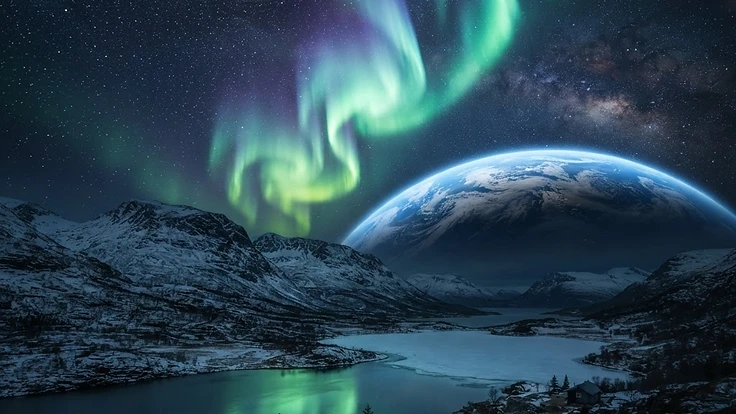
This interaction often results in a beautiful aurora, but the particles themselves rarely penetrate the lower atmosphere.
Our atmosphere acts as a massive shield against cosmic and solar radiation. The Kármán line at 100 kilometres altitude marks the boundary of space, but the protection continues far below that. Even during extreme events, the mass of air above us absorbs almost all solar energetic particles.
Radiation levels at sea level remain negligible, even during severe geomagnetic storms measured on the G-scale.
Real-World Implications
While radiation poisoning is not a threat to the general public, the infrastructure we rely on is vulnerable. Solar storms can induce currents in long-distance power lines, potentially damaging transformers. We have learned much from the archive of past events, such as the Carrington Event of 1859, which remains the benchmark for extreme solar weather.
Modern modelling helps us predict these disturbances, as detailed in recent scientific methods used to explore deep space.
Communications and aviation are the primary sectors affected by these solar emissions. High-frequency radio waves often suffer blackouts during intense bursts, as discussed in our piece on [solar flares causing HF radio blackouts]( /blog/solar-flares-cause-hf-radio-blackouts). Astronauts aboard the International Space Station at 408 kilometres altitude face a higher risk than people on the ground.
They have dedicated shielding to help mitigate their exposure during periods of heightened solar activity.
What You Can Do
Preparedness begins with education and monitoring. You can stay informed by checking the solar imagery from instruments like the SDO to understand what is happening on the sun. If you are interested in witnessing the atmospheric effects of solar particles, consider booking guided aurora tours in destinations like Iceland, Norway, or Northern Canada, where you can safely view the results of solar activity.
These excursions are often timed to catch the best displays.
To make tracking easier, you might consider using embeddable widgets on your own website to show live space weather data. Accessing reliable data is key to cutting through myths and focusing on facts. You can also dive deeper into the technical details by browsing our glossary of space weather terms.
There is no need to fear the sky, provided you understand the mechanics of the environment we live in.
Key Takeaways
Solar particle events are natural phenomena that rarely pose a direct danger to human life on Earth. The protective layers of our atmosphere successfully filter out harmful solar radiation, keeping ground-level exposure well within safe limits. Our technological infrastructure remains the most sensitive component to solar weather fluctuations, requiring constant monitoring and careful engineering.
Focusing on credible sources like NASA and the NOAA SWPC helps to maintain a realistic perspective on space weather. By understanding the cycles of our sun, we can enjoy the spectacle of the aurora without unnecessary alarm. Staying informed is the best way to separate science fact from common misconceptions regarding space safety.
People Also Ask
What is the difference between a solar flare and a CME?+
A solar flare is an intense burst of electromagnetic radiation coming from the release of magnetic energy. A coronal mass ejection, or CME, is a massive cloud of solar plasma and magnetic field lines. Flares travel at the speed of light, while CMEs travel much slower, taking days to arrive.
Do solar storms affect human health?+
Scientific consensus indicates that solar storms do not directly cause health issues for humans on the ground. The atmosphere provides sufficient shielding against the radiation associated with these events. Some studies explore links to biological rhythms, but there is no evidence of radiation poisoning or acute medical danger.
How are solar storms measured?+
Solar storms are measured using the Kp index, which tracks geomagnetic activity on a scale of 0 to 9. The NOAA G-scale classifies storms from G1 to G5 based on their intensity. These indices help researchers and grid operators anticipate potential impacts on satellite communications and electrical distribution networks.
Continue Reading
Forecast These Questions
View all →Express your probability on these active forecast questions.