Solar Particle Events and Their Impact on Earth
Solar particle events are powerful bursts of radiation from the Sun. Understanding these phenomena is essential for protecting our modern technology and infrastructure.
Solar Particle Events and Their Impact on Earth
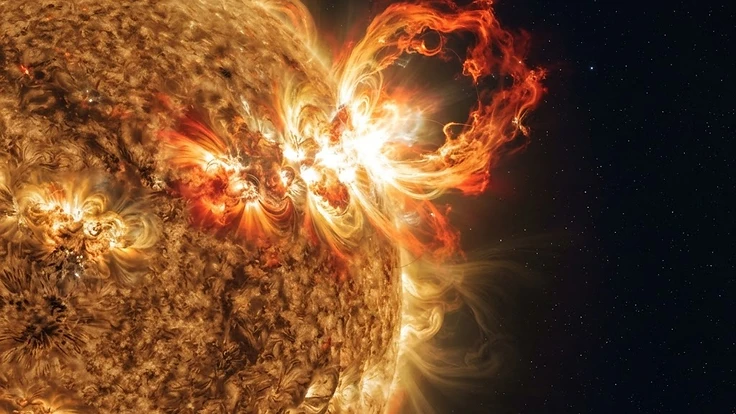
Solar particle events are intense bursts of high energy protons and other subatomic particles emitted from the Sun during periods of high solar activity. While the Sun provides the essential energy for life, it also periodically releases streams of radiation that can interfere with human endeavours in space and on the ground. These events are primarily driven by massive eruptions like solar flares and coronal mass ejections.
Understanding the mechanics behind these outbursts is critical for the maintenance of global communications and the safety of space travel.
The Science Behind It
The Sun operates on an approximately 11 year cycle of magnetic activity. We are currently navigating Solar Cycle 25, which began in December 2019 and brings renewed potential for these energetic events. When magnetic field lines on the solar surface snap and reconnect, they accelerate particles to speeds approaching that of light.
Solar flares are classified by their intensity, ranging from A and B to C, M, and X, with each letter representing a tenfold increase in power. Coronal mass ejections involve the actual release of plasma, which travels through space at speeds reaching 3,000 kilometres per second. When these particles arrive, they interact with the Earth's magnetic field, an effect often measured by the G-scale which classifies geomagnetic storms from G1 to G5.
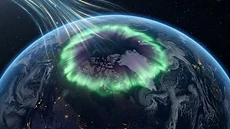
These interactions can create the stunning aurora we see in high latitude skies, but they also signal the potential for technical disruption.
Real-World Implications
Modern infrastructure relies heavily on satellites that are vulnerable to high energy radiation. A strong solar particle event can degrade solar panels, disrupt sensitive electronics, or even cause orbital decay for satellites in low Earth orbit. The ISS orbits at roughly 408 kilometres, well within the reach of these energetic disturbances, requiring constant vigilance from flight controllers.
On the ground, these events threaten the electrical grid, especially the long transmission lines that carry power across continents. A powerful storm can induce currents that overheat transformers, potentially causing widespread outages. Understanding space weather impacts on satellite operations is a growing priority for engineers tasked with hardening our technological systems against the unpredictable nature of our star.
What You Can Do
Preparation is the best defence against the effects of solar activity. Amateur astronomers and professionals alike often use tools to track incoming solar weather, such as the solar imagery provided by space agencies. For those interested in the visual effects of these storms, many enthusiasts enjoy planning trips for guided aurora tours across locations like Iceland, Norway, Canada, and Alaska when solar activity is high.
It is wise to keep an eye on official space weather reports to ensure that your local area is poised for optimal visibility.
You can stay informed by checking live data streams and historical records available on our storm leaderboard. Developing a personal understanding of these patterns helps remove the mystery from solar phenomena and allows you to better appreciate the complex connection between the Sun and Earth. By engaging with these resources, you are better equipped to understand how our environment in space functions.
Key Takeaways
Solar particle events represent a fundamental interaction between the Sun and our planet. While these occurrences can cause significant technical challenges, they are a natural consequence of the solar cycle. By studying past events in the archive, scientists continue to improve our ability to predict and prepare for the next major storm.
As technology grows more integrated into our lives, the importance of monitoring the space environment will only increase, ensuring we remain resilient in the face of solar activity.
People Also Ask
How often do solar particle events occur?+
These events follow the Sun's 11-year solar cycle. Frequency fluctuates significantly, with many minor events occurring during solar maximum and far fewer during solar minimum. While small flares are common, extreme events that threaten global infrastructure are statistically much rarer.
Can solar particle events reach the Earth's surface?+
The Earth's magnetosphere and atmosphere provide a robust shield that protects life on the ground from the vast majority of solar particles. While these events can disrupt high-altitude aviation and satellite communications, they do not pose a direct radiation threat to people at sea level.
What is the difference between a solar flare and a CME?+
A solar flare is a sudden, intense flash of electromagnetic radiation, including X-rays, which reaches Earth in about eight minutes. A coronal mass ejection (CME) is a massive cloud of solar plasma and magnetic fields that takes one to three days to reach our planet.
Continue Reading
Forecast These Questions
View all →Express your probability on these active forecast questions.