Solar Particle Events Pose Risks to Spacecraft and Astronauts
Solar particle events drive intense space weather that can damage satellite electronics and threaten human health. Understanding these phenomena is essential for secure operations beyond our atmosphere.
Solar Particle Events Pose Risks to Spacecraft and Astronauts
Space is not an empty vacuum, as it is filled with constant streams of radiation and magnetic activity from the Sun. When the Sun experiences intense outbursts, it releases a cascade of high-energy particles that can have profound impacts on modern technology and human explorers orbiting far above the protective blanket of Earth’s atmosphere. These events represent one of the most critical challenges for any mission travelling outside our planet.
Understanding how these solar particle events interact with equipment and biology is vital for the future of space exploration. As humanity increases its presence in orbit and beyond, we must rely on data to anticipate and mitigate these natural hazards.
The Science Behind It
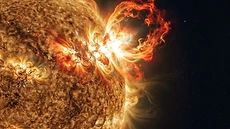
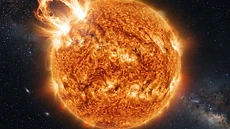
The Sun operates on an approximate 11-year cycle of activity, with Solar Cycle 25 having commenced in December 2019. During peak periods, the Sun produces solar flares and coronal mass ejections that accelerate protons and heavier ions to incredible speeds. While light reaches Earth in just over eight minutes, these charged particles take longer to arrive, often hitting our space environment within hours or days.
These energetic particles can penetrate standard shielding, creating a radiation environment that is significantly harsher than typical background levels. When these events interact with the magnetosphere, they trigger the G-scale indices used by scientists to measure geomagnetic storm intensity. You can see visual evidence of this activity through solar imagery on SDO or by reviewing the gallery of past observations.
Real-World Implications
For satellites, high-energy particles cause single-event upsets, which are random bits of corrupted data that can lead to system resets or permanent hardware failure. As we grow more dependent on orbiting infrastructure, these disruptions can degrade communications and positioning systems essential for daily life on the ground. The threat level is often assessed by checking the storm leaderboard for historical context on how previous storms impacted the grid.
Human crews on the International Space Station, orbiting at roughly 408 kilometres, are partially protected by the Earth’s magnetic field. However, during severe events, astronauts may need to retreat to shielded areas to minimise their exposure to ionising radiation. These risks are detailed in our analysis of solar activity and potential links to human health for those looking to understand the biological impacts.
What You Can Do
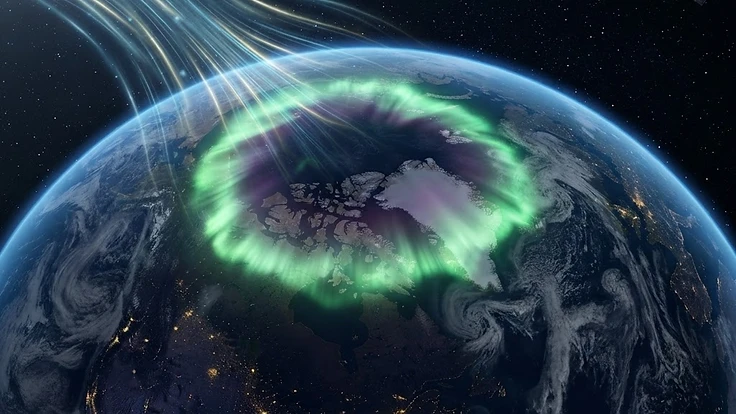
Staying informed is the best defence against the unpredictable nature of solar weather. By monitoring real-time data, you can track the arrival of solar wind and the potential for aurora displays, which are often the visible signature of these incoming particles. If you are planning an expedition to see the lights, there are many guided aurora tours across countries like Iceland, Norway, Canada, and Finland that prioritise safety and visibility forecasts.
For those managing technical projects or interested in amateur radio, you can embed on your site our customisable widgets to receive live alerts. These tools provide a clear window into current solar conditions, allowing for proactive planning. Consistent monitoring ensures you are never caught off guard by a sudden shift in space weather.
Key Takeaways
Solar particle events are an inherent reality of our sun-dominated environment. While they present significant challenges for sensitive satellite electronics and human biological safety, our ability to forecast these events has improved drastically over recent decades. By utilising data from the NOAA SWPC, researchers and the public alike can better prepare for the dynamic nature of our star.
Maintaining a vigilant eye on space weather data is not just for scientists, as it is a necessary part of modern space-faring life. We encourage you to continue learning about these phenomena by exploring our glossary or reading more articles in our blog to deepen your understanding of the forces that shape our celestial neighbourhood.
People Also Ask
What is a solar particle event?+
A solar particle event is a burst of high-energy protons and ions released from the Sun during intense solar activity, such as flares or coronal mass ejections. These particles travel through space and can disrupt satellite electronics and increase radiation exposure for astronauts in orbit.
How do we measure space weather intensity?+
Space weather is measured using several indices, most notably the Kp index, which tracks global geomagnetic activity on a scale of 0 to 9. For more extreme events, the G-scale is used to categorise geomagnetic storms from G1, which is minor, to G5, which is considered extreme.
Are astronauts safe from solar radiation?+
Astronauts in low-Earth orbit are partially protected by the Earth’s magnetic field. However, during major solar particle events, they may face increased radiation risks. To stay safe, crews often monitor incoming particle data and move to heavily shielded sections of the spacecraft until the event passes.
Continue Reading
Forecast These Questions
View all →Express your probability on these active forecast questions.