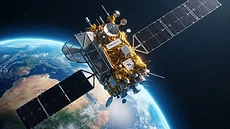
Space Debris Frequently Re-enters the Earth Atmosphere
Space debris falling to Earth is a physical reality of modern orbital mechanics. Understanding how objects survive re-entry helps distinguish between rare ground impacts and common atmospheric burn-up.
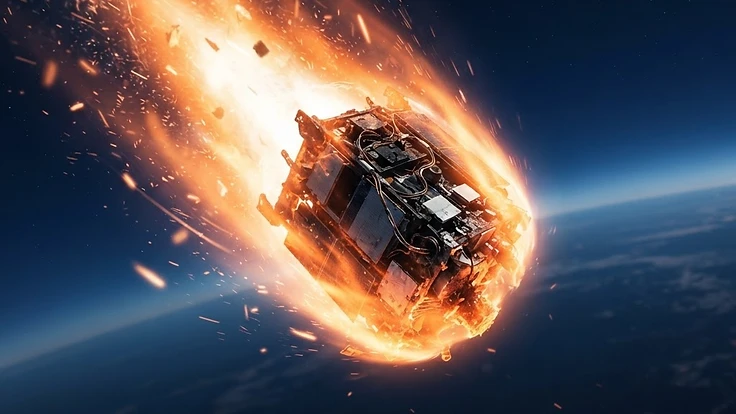
Space Debris Frequently Re-enters the Earth Atmosphere
Human activity in space has created a crowded orbital environment. Thousands of satellites and spent rocket stages now circle our planet, and occasionally, these man-made objects fall back toward the ground. While the prospect of debris falling from the sky sounds alarming, it is a well-understood aspect of orbital mechanics.
Most objects burning up in the upper atmosphere go unnoticed. The vast majority of space debris is small, fragile, or composed of materials that vaporise completely upon contact with the dense air at lower altitudes. Understanding the incredible velocity of orbital debris is key to seeing why re-entry is such an intense physical process for any man-made structure.
The Science Behind It
Objects remain in orbit because they travel at speeds sufficient to miss the Earth as they fall. To stay in a stable orbit near the ISS at roughly 408 km, an object must travel at several kilometres per second. When an object loses this speed, it begins to drop into the thicker layers of our atmosphere.
As the object hits denser air, it experiences extreme friction. This kinetic energy transforms rapidly into heat, creating the bright streaks we identify as meteors. Most man-made satellites are not built to survive these temperatures.
They typically disintegrate long before reaching the surface of the planet, which serves as a natural shield against orbital clutter.
Only very large, dense, or heat-resistant components reach the ground intact. NASA and other space agencies use sophisticated models to calculate the risk of ground impact for every mission. These agencies ensure that, whenever possible, de-orbiting manoeuvres are targeted toward remote areas of the ocean.
You can learn more about how orbits work by checking our glossary for technical definitions.
Real-World Implications
While the risk to any individual person is statistically microscopic, space debris poses a genuine challenge for space operators. The integrity of our communications infrastructure depends on keeping clear lanes in orbit. Collisions or uncontrolled re-entries can cause significant disruptions to satellite-based services like GPS, an effect comparable to how solar flares disrupt GPS accuracy.
If you are interested in the wider context of objects in space, it is useful to track different phenomena. Beyond man-made junk, we must also consider the near-Earth asteroid population. Monitoring these objects provides vital data for long-term planetary defence strategies, helping us predict potential close approaches with much higher accuracy than in the past.
What You Can Do
You do not need to be an aerospace engineer to monitor the sky. Staying informed about what is happening above your head is easier than ever with the right tools. You can use our embeddable widgets to keep track of space weather and orbital conditions directly on your own website or dashboard.
If you want to understand the current state of our environment, look at the storm leaderboard to see how past events have shaped our current data sets. These resources help build a clearer picture of how active our space environment truly is. Knowledge remains the best way to separate scientific fact from common public misconceptions.
Key Takeaways
Space debris is a natural consequence of a space-faring civilisation. While items do re-enter the atmosphere, the vast majority vanish due to the intense heat of atmospheric friction. The global space community prioritises safe disposal to keep the skies as clear as possible.
By engaging with the data and understanding the mechanics behind these events, you gain a better appreciation for our place in the solar system. Whether you are tracking satellites or waiting for the next geomagnetic storm to paint the sky, the tools are available to keep you informed. Keep exploring the science to stay prepared for the future of space travel.
People Also Ask
How often does space debris actually hit the ground?+
It is extremely rare for space debris to cause damage on the ground. Most debris is too small to survive the heat of re-entry. When pieces do reach the surface, they usually land in uninhabited areas like the ocean, which covers over 70 percent of the planet.
What is the Kármán line?+
The Kármán line is the internationally recognised boundary between the Earth's atmosphere and outer space. It is located at an altitude of 100 kilometres above mean sea level. Crossing this line is the common threshold used to define where space flight officially begins for astronauts and vehicles.
Does solar activity affect satellite re-entry?+
Yes, increased solar activity can cause the Earth's atmosphere to expand, creating more drag on satellites in low Earth orbit. This drag slows them down, causing them to lose altitude faster than they would during solar minimums, which can accelerate the timing of their eventual atmospheric re-entry.
Continue Reading
Forecast These Questions
View all →Express your probability on these active forecast questions.