How Solar Flares Disrupt GPS Accuracy and Satellite Navigation
Solar flares impact the ionosphere, creating signal delays that degrade GPS precision. Learn how space weather shifts affect the satellites we rely on for modern navigation.
Solar Flare Impacts on Satellite Navigation
Modern infrastructure relies heavily on Global Positioning System technology for everything from aviation routing to precise agricultural machinery control. When the Sun releases intense bursts of radiation known as solar flares, the resulting changes in Earth's upper atmosphere can interfere with these signals.
Live Solar Flare Monitor
Powered by Flarient — embed this on your site →
Understanding how these solar events interact with our satellite systems is vital for engineers and everyday users alike. While we often take seamless connectivity for granted, the space environment is dynamic and frequently turbulent.
The Science Behind It
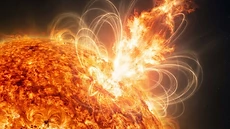
Solar flares emit intense bursts of X-rays and ultraviolet radiation that travel at the speed of light to reach Earth. This energy impacts the ionosphere, a layer of charged particles in our atmosphere that facilitates long distance radio communication and satellite signal propagation.
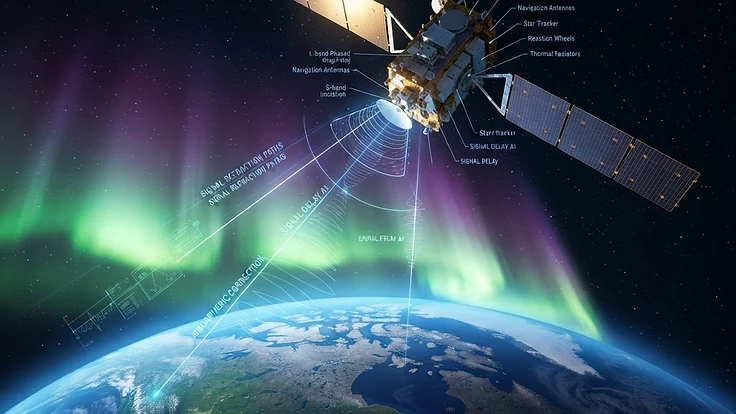
When radiation from a flare hits this layer, it causes sudden ionization that alters electron density. GPS signals must travel through this electrified soup before reaching a receiver on the ground.
Because the speed of a signal depends on the density of the medium it travels through, these atmospheric shifts cause the signals to slow down or bend. This creates a delay that the GPS receiver interprets as a longer distance between the satellite and the ground.
Even a delay of a few nanoseconds leads to positional errors that can range from a few metres to several hundred metres. Understanding these fluctuations is crucial for monitoring solar storms to protect satellite infrastructure.
Real-World Implications
Precision is the backbone of modern logistics, and even small errors can cause significant downstream issues. Aviation and maritime industries require high levels of reliability to ensure safe transit across the globe.
During periods of high solar activity, classified by the [G-scale](/ #kp), the accuracy of standard receivers can fluctuate. This creates challenges for industries like precision agriculture, which uses GPS to guide tractors through fields with centimetre-level accuracy.
When the ionosphere is agitated, signals lose lock or drift, rendering precise automated farming impossible. Beyond agriculture, emergency services and civil engineering rely on constant high fidelity location data to perform their essential duties.
Severe disturbances can occasionally cause widespread signal degradation across large geographic regions. For a deeper look at the space hardware sustaining these systems, explore the network of satellites orbiting our planet.
What You Can Do
Staying informed is your best defence against unexpected signal loss. By keeping track of the current [Kp index](/ #kp), you can anticipate periods when ionospheric instability might hamper your navigation equipment.
Serious enthusiasts and professionals often utilise live tracking tools to stay ahead of the weather. You can easily view real-time data using the Flarient live dashboard to observe flare activity or monitor the strongest storms on record in our archives.
If you are planning outdoor activities during times of high solar activity, having a manual backup or map is always a sensible precaution. You can even check our [local aurora forecast](/ #local) to see if increased solar activity might lead to visible displays in your area, which often correlates with ionospheric disturbance.
If planning around Kp and cloud cover feels like work, guided aurora tours in Norway, Finland and Iceland remove the guesswork — a guide watches the data while you stay warm until it's time to move.
Key Takeaways
Solar flares act as a complex variable in the reliability of our satellite infrastructure. By altering the ionospheric environment, they introduce timing errors that degrade the precision of GPS systems worldwide.
While we cannot stop solar activity, monitoring the environment allows us to mitigate the risks to our technology. Keeping an eye on solar imagery and space weather indices remains the gold standard for maintaining operational awareness. Use these tools to navigate the unpredictable nature of our Sun with confidence.
People Also Ask
Can solar flares cause a complete GPS blackout?+
While solar flares rarely cause a complete, global shutdown of GPS, they can induce significant local or regional signal degradation. High levels of ionospheric turbulence can lead to loss of signal lock, resulting in temporary inaccuracies or a complete inability to calculate a fix in specific affected areas.
How long do solar flare disruptions last?+
Disruptions caused by the initial X-ray burst from a solar flare typically last from a few minutes to several hours. However, if the flare is associated with a coronal mass ejection, geomagnetic disturbances may persist for several days as the plasma cloud interacts with Earth's magnetic field.
Do all solar flares affect GPS accuracy?+
Not every solar flare affects GPS. The impact depends on the flare's intensity, usually classified as C, M, or X class, and the orientation of the solar activity relative to Earth. Only significant flares that cause enough ionization in the upper atmosphere typically create noticeable errors in satellite navigation.
Continue Reading
Forecast These Questions
View all →Express your probability on these active forecast questions.