The Growing Reality of Human-Made Debris in Near-Earth Orbit
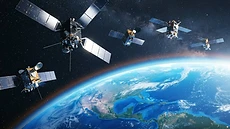
Near-Earth orbit is becoming increasingly cluttered with defunct hardware, spent rocket stages, and fragments from past collisions. Understanding this debris environment is essential for the future of space exploration and satellite infrastructure.
The Growing Reality of Human-Made Debris in Near-Earth Orbit
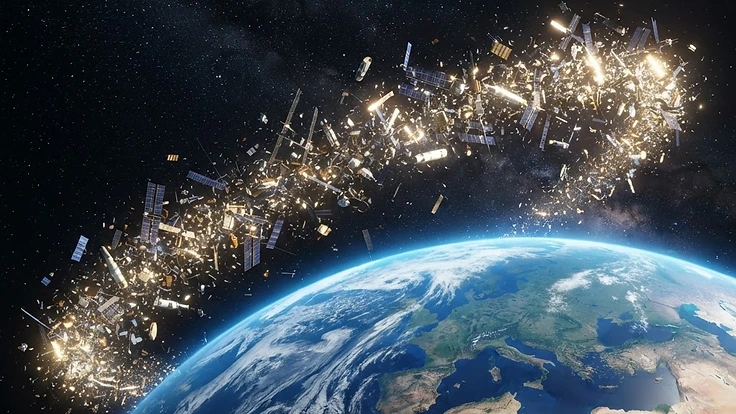
Humanity has spent decades launching satellites, probes, and crewed missions into the space surrounding our planet. This era of exploration has left behind a complex legacy in the form of orbiting junk, ranging from tiny paint flecks to massive discarded rocket bodies. As we continue to rely on space for global communication and navigation, tracking this orbital population has become a primary task for space agencies.
Near-Earth Asteroid Watch
Powered by Flarient — embed this on your site →
Everything in orbit travels at immense speeds, often exceeding seven kilometres per second. At these velocities, even a small object can carry enough kinetic energy to cause catastrophic damage to an active spacecraft or the International Space Station, which maintains a steady altitude of approximately 408 kilometres. This environment is dynamic, constantly changing as new objects are launched and existing ones occasionally collide.
The Science Behind It
Space debris is not a uniform cloud but a dispersed collection of objects following specific trajectories. Most of this material occupies low Earth orbit, an area reaching up to 2,000 kilometres above the Kármán line. Because there is no atmosphere to create drag at these altitudes, objects can remain in orbit for decades or even centuries before their natural decay occurs.
Collisions create a cascading effect known as the Kessler syndrome, where each impact produces thousands of new, smaller fragments. This makes the environment self-sustaining and increasingly difficult to map. We use ground-based radar and optical telescopes to monitor these objects, helping operators anticipate potential close approaches to high-value assets.
Monitoring this traffic requires precise modelling of orbital paths and gravitational influences. While some objects originate from human activities, we also track natural near-Earth asteroids that occasionally pass within the sphere of influence of our planet. Understanding the distinction between man-made junk and natural cosmic hazards is a fundamental part of maintaining space situational awareness.
Real-World Implications
Our modern lives depend on a robust satellite infrastructure that exists in a crowded lane. GPS navigation, weather forecasting, and high-speed internet relay all rely on a clear path through the orbital environment. When debris increases the risk of collision, mission planners must perform complex manoeuvres to move their satellites out of harm's way, which consumes fuel and shortens their operational lifespans.
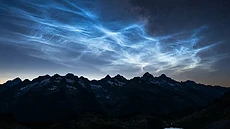
This risk extends to the ground as well, though the atmosphere acts as a protective shield for most smaller debris. Objects that are not large enough to survive atmospheric entry burn up, occasionally creating light shows that are sometimes mistaken for aurora phenomena. Keeping our orbital paths clear ensures that we can continue to rely on the technological services provided by our space-based assets.
What You Can Do
Awareness is the first step toward responsible space management. You can track current orbital activity and satellite positions using various digital tools that simplify complex radar data. By engaging with resources like Flarient, you can monitor space-programs and learn how various environmental factors affect our orbital environment in real time.
If you are interested in the broader context of what happens above us, you might also consider tracking satellites across the night sky as an amateur observer. Understanding the mechanics of our immediate space environment provides a clearer picture of why space debris is a topic of concern for scientists and engineers worldwide.
Rather someone else chase the oval for you? Guided Northern Lights trips run in Norway, Finland, Alaska and Greenland — the guide tracks the data and drives you to the gap in the clouds.
Key Takeaways
The accumulation of space debris is a direct consequence of our rapid expansion into the cosmos. While the orbital environment is vast, the most useful regions are becoming increasingly dense with active and defunct hardware. Protecting these lanes requires ongoing monitoring and international cooperation to manage how we launch and retire our spacecraft.
By staying informed through reliable data, we can better understand the challenges facing our orbital infrastructure. Future missions must focus on sustainable practices to ensure that the region near our planet remains a viable resource for generations. Maintaining a clear orbit is not just about protecting current technology, but about securing our collective future in the stars.
People Also Ask
How do scientists track space debris?+
Scientists track space debris using a global network of ground-based radar systems and optical telescopes. These instruments monitor thousands of known objects in orbit, calculating their trajectories to predict potential collisions. This data is then used to create models that help space agencies manage satellite paths safely.
Does all space debris eventually fall back to Earth?+
Eventually, most debris in low orbits will succumb to atmospheric drag and fall back toward Earth. However, at higher altitudes where the atmosphere is incredibly thin, debris can remain in orbit for decades or even centuries. Only objects with sufficient mass and structural integrity typically survive re-entry to reach the ground.
Can space debris damage the International Space Station?+
Yes, even tiny pieces of debris, such as paint flecks or small metal shards, can cause damage to the International Space Station due to their extreme orbital speeds. The station is equipped with specialized shielding to protect critical modules, and it occasionally performs manoeuvres to avoid larger, tracked pieces of debris.
Continue Reading
Forecast These Questions
View all →Express your probability on these active forecast questions.