The Reality of Noctilucent Clouds and Atmospheric Safety
Noctilucent clouds are a stunning spectacle of the upper atmosphere, but they pose no threat to life on Earth. Explore the science behind these electric-blue displays.
Noctilucent Clouds Are Harmless Atmospheric Phenomena
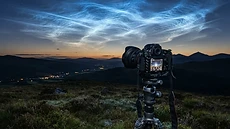
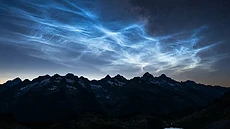
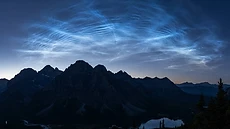
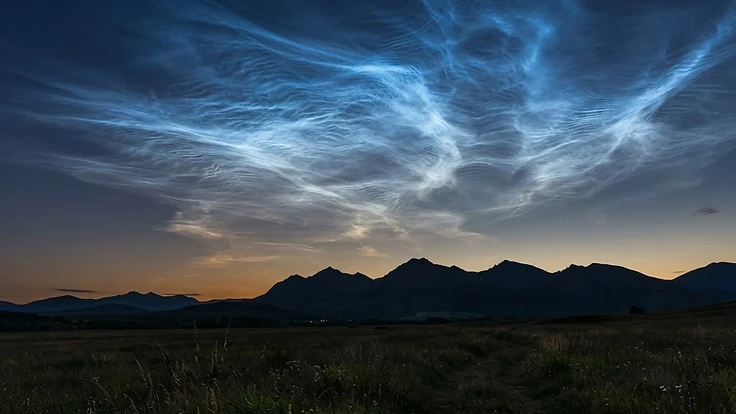
Noctilucent clouds, often called night shining clouds, are thin, electric blue wisps that appear in the upper atmosphere long after the sun has set. While their eerie glow might seem otherworldly, they are entirely benign and present no physical danger to people or property on the ground.
These clouds reside in the mesosphere, roughly 80 kilometres above the surface of the planet. They exist far above the weather systems that shape our daily lives, making them silent witnesses to the edge of space.
The Science Behind It
To understand these clouds, one must look toward the extreme cold of the mesosphere during the summer months. At these altitudes, temperatures drop low enough for water vapour to freeze onto fine particles of meteor dust, forming tiny ice crystals that catch the light of the sun while the lower atmosphere remains in darkness.
Unlike an aurora, which is caused by the interaction of solar wind with Earth's magnetic field, noctilucent clouds are a purely meteorological event. They depend on specific combinations of temperature, moisture, and dust, often observed in the summer latitudes between 50 and 70 degrees.
Researchers monitor these clouds to study the state of the upper atmosphere, as their presence is linked to atmospheric waves and global climate changes. They provide a window into the middle atmosphere that is otherwise difficult to access without specialized sensors.
Real-World Implications
Because noctilucent clouds exist at such extreme altitudes, they do not interact with terrestrial weather or aviation. They do not signal the arrival of a geomagnetic storm, nor do they impact radio communications or power grids.
They are, however, a reminder of the fragility of our environment. Their increased visibility over the last century has prompted scientific inquiry into whether changes in greenhouse gases or methane are encouraging their formation in more southern latitudes.
Monitoring these clouds does not require the same vigilance as tracking a near-Earth asteroid or extreme solar weather. They remain a subject of fascination for atmospheric physicists rather than a matter of public safety or infrastructure defence.
What You Can Do
If you enjoy observing the night sky, keep an eye out for these structures during twilight hours in the summer. If you want to experience the best views of the night sky, consider joining [guided aurora tours](https://vi.me/HuXHi) across places like Iceland, Norway, Canada, and Finland to see how the atmosphere behaves at higher latitudes.
Tools like Flarient can help you understand the broader context of what is happening in the sky above. You can use our local aurora forecast to determine if atmospheric conditions are right for night sky viewing in your region, or explore our glossary to learn more about the terminology scientists use to label these celestial events.
Key Takeaways
Noctilucent clouds are natural, safe, and beautiful manifestations of high-altitude ice crystals. They serve as a vital indicator for scientists studying the upper reaches of our atmosphere, but they are not a cause for concern.
As with any interest in the heavens, the more you understand about the mechanics of our sky, the more rewarding your observations become. Whether you are watching for wisps of ice or the onset of space weather, informed observation is the best way to enjoy the night.
For observers
If reading this makes you want to try spotting or photographing noctilucent clouds, one accessible route is a compact, portable astrophotography setup suited to twilight sky work. See an accessible way to capture the sky
Ad · Affiliate link. Flarient may earn a commission if you purchase through this link, at no additional cost to you.
People Also Ask
Can noctilucent clouds be seen from anywhere?+
Noctilucent clouds are primarily visible at higher latitudes between 50 and 70 degrees north or south. They are most commonly spotted during the summer months when the sun remains at an angle that illuminates the high-altitude ice crystals while the observer is in twilight.
Are noctilucent clouds caused by pollution?+
While these clouds have natural origins involving meteor dust, some research suggests their increasing frequency and brightness may be linked to rising levels of methane in the atmosphere, which contributes to the formation of water vapour at high altitudes.
Do noctilucent clouds affect planes?+
No, noctilucent clouds do not affect aircraft. They form in the mesosphere at an altitude of approximately 80 kilometres, while commercial aircraft typically fly in the troposphere at altitudes between 10 and 13 kilometres, meaning they pose no threat to aviation safety.
Continue Reading
Forecast These Questions
View all →Express your probability on these active forecast questions.