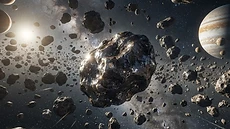
Asteroids Are Officially Classified As Minor Planets
While the term asteroid is used colloquially, the scientific community officially classifies these rocky bodies as minor planets. Discover the history and nomenclature behind these celestial objects.
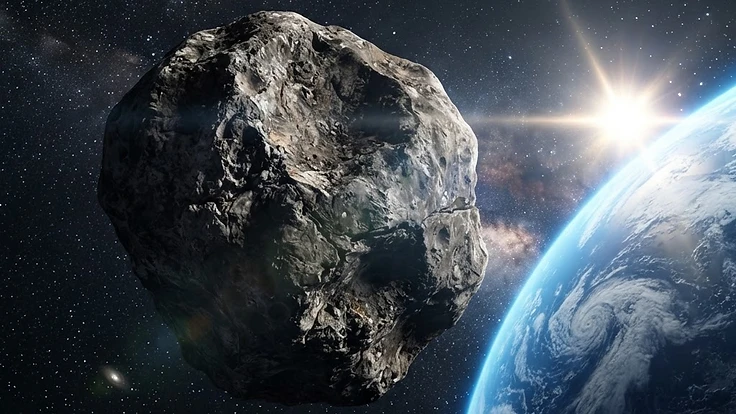
Asteroids Are Officially Classified As Minor Planets
For centuries, astronomers have observed small, rocky objects orbiting the Sun. While many refer to these as asteroids, the formal astronomical designation for the vast majority of these bodies is minor planet.
Near-Earth Asteroid Watch
Powered by Flarient — embed this on your site →
This distinction helps researchers maintain clarity in a crowded solar system. Understanding the terminology is essential for anyone interested in how we define the space around us, from the smallest rocks to the largest near-Earth asteroid that warrants scientific tracking.
The Science Behind It
The term minor planet was adopted by the International Astronomical Union to describe any object in direct orbit around the Sun that is neither a planet nor a comet. This broad category covers a huge range of objects, from tiny dust grains to large bodies like Ceres.
When astronomers track a newly discovered object, they must first determine its orbital characteristics. You can explore the fascinating mechanics of how asteroids reach Earth to understand why some orbits are more stable than others.
Size alone is not the primary factor for classification. It is the object's dynamical behaviour and its relationship with the Sun that truly matters. These objects are distinct from planets because they do not have sufficient mass to clear their orbital paths of other debris.
Real-World Implications
Classifying these objects correctly is vital for planetary defence programmes. Accurate catalogues allow us to identify potential risks long before an object reaches our vicinity, which is exactly why identifying asteroids that pose a threat to Earth remains a primary goal for space agencies like NASA.
Beyond immediate threats, these objects act as time capsules. They contain raw material from the birth of our solar system, offering clues that you can read more about in the [history and science of Earth asteroid impacts](blog/the-history-and-science-of-earth-asteroid-impacts). Studying their composition helps us model the evolution of our planetary neighbours.
What You Can Do
Staying informed about the objects in our solar neighbourhood is easier than ever. You do not need a professional telescope to participate in space science.
You can use our live dashboard to keep track of celestial events and space weather. By checking the latest close approach data, you can learn about the passing objects that define our modern understanding of orbital dynamics.
Many enthusiasts also choose to share this data with their own audiences. Using our embeddable widgets is a straightforward way to bring live scientific tracking to your own personal website or blog.
Key Takeaways
The classification of minor planets provides a structured framework for cataloguing the myriad objects in our solar system. While the word asteroid remains a popular label for rocky bodies, the technical accuracy of minor planet ensures that we correctly identify objects based on their orbital physics.
As we continue to observe the skies, this precision allows us to better understand our cosmic environment. Whether you are tracking a distant rock or monitoring a solar flare, keeping accurate data is the cornerstone of modern space exploration.
People Also Ask
What is the difference between an asteroid and a minor planet?+
There is no difference in the technical classification. Asteroid is a common, descriptive term for rocky bodies, while minor planet is the formal, scientific term used by the International Astronomical Union to designate any solar-orbiting object that is not a major planet or a comet.
Are all minor planets asteroids?+
Not all minor planets are asteroids. The minor planet category also includes objects in the Kuiper Belt and other trans-Neptunian objects. While many minor planets are rocky, others are icy or composed of different materials depending on their location in the solar system.
Who defines the names of objects in space?+
The International Astronomical Union (IAU) is the governing body responsible for naming and classifying celestial objects. They establish the standards for nomenclature and define criteria for planets, minor planets, and other astronomical entities to ensure global consistency in scientific communication.
Continue Reading
Forecast These Questions
View all →Express your probability on these active forecast questions.