Asteroids Cannot Surpass Earth in Size
While asteroids populate our solar system, they are fundamentally smaller than Earth. Understanding their scale helps clarify why planets are distinct from these rocky remnants.
Asteroids Cannot Surpass Earth in Size
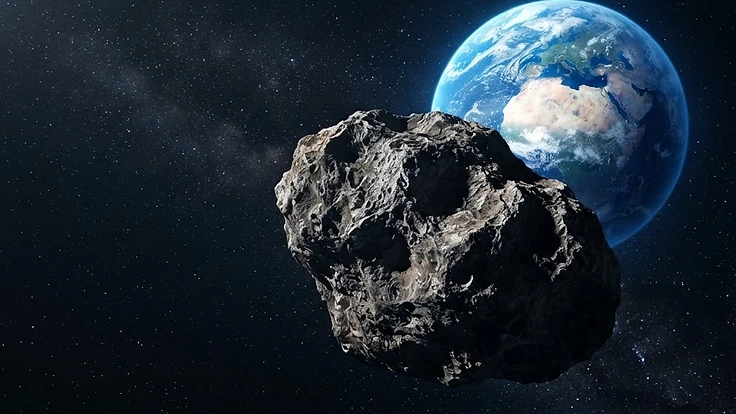
Space is filled with celestial objects ranging from tiny dust grains to massive gas giants. Among these, asteroids hold a unique position as the leftovers from the formation of our solar system. People often wonder if an asteroid could ever grow larger than our own planet.
Near-Earth Asteroid Watch
Powered by Flarient — embed this on your site →
The short answer is no because of the way gravity and planetary formation work in space.
Planets like Earth are formed through a process called accretion where matter gathers under gravity over millions of years. This process allows them to gain enough mass to become spherical and clear their orbits. Asteroids are simply the fragments that never managed to join a planet, keeping them small and irregular in shape.
The Science Behind It
Gravity is the defining factor in determining the size and shape of a celestial body. As an object accumulates enough mass, its gravity pulls material toward the centre, forcing it into a sphere. This transition happens at a specific threshold, which is why all major planets are round.
Asteroids lack the mass to achieve this hydrostatic equilibrium, which is why they appear as lumpy, potato shaped rocks.
If an object were truly bigger than Earth, we would classify it as a planet, not an asteroid. Even the largest asteroids like Ceres are far smaller than our moon, let alone Earth. Ceres is about 940 kilometres in diameter, while Earth spans nearly 12,742 kilometres.
Scientists use the glossary to define these distinctions precisely so we do not confuse a minor body with a full planet.
Real-World Implications
While asteroids are not larger than Earth, they still pose potential risks if they get too close. Astronomers constantly track any near-Earth asteroid that crosses our path to ensure we have an accurate understanding of the orbital dynamics. Understanding the difference between a planet and an asteroid is crucial for calculating the gravitational influence each object exerts on the other.
Events like the impact 66 million years ago that involved a 10 kilometre wide object show that even small bodies can cause massive destruction. Researching these bodies helps us assess the real threat of assessing the real threat of asteroids hitting Earth. By modelling their paths, we can maintain the safety of our orbital infrastructure and prevent catastrophic events.
What You Can Do
Staying informed about the space environment does not require a degree in astrophysics. You can use online resources to monitor space weather or look for data on potential close approaches. If you are interested in the broader context of our cosmic neighbourhood, checking the The Cosmic Origins of Asteroids provides excellent background on how these rocks formed.
If you run your own website or blog, consider using embeddable widgets to display real-time space data to your readers. These tools make complex information accessible and visual. Being prepared means knowing where to look for data, so keep an eye on scientific sources to stay ahead of any news regarding our orbital environment.
Key Takeaways
Earth remains significantly larger than any asteroid because of the fundamental physics of planetary formation. Asteroids are the leftovers, not the building blocks that grew into planets. They lack the gravity to pull themselves into a spherical shape or clear their orbital paths.
While they are smaller, their presence remains a vital area of study for scientists. Keeping track of them is a matter of long-term safety and scientific curiosity. Whether you are observing the sky or following more articles on space science, understanding the size difference between planets and asteroids is a essential lesson in how our solar system functions.
People Also Ask
Why are asteroids not spherical?+
Asteroids are not spherical because they lack sufficient mass to generate the gravity required to pull their material into a round shape. They are often shaped like potatoes or irregular chunks of rock because their internal gravity is too weak to overcome the structural strength of their constituent materials.
What is the largest known asteroid?+
Ceres is officially classified as the largest asteroid in the inner solar system and is now also considered a dwarf planet. It has a diameter of approximately 940 kilometres, which is still massive compared to other asteroids, yet it remains significantly smaller than the Earth's moon.
How do scientists track asteroids?+
Astronomers use ground-based telescopes and radar systems to detect and monitor the positions of asteroids. By observing them over time, they calculate their orbital paths to predict any potential close approaches to Earth, which are then compiled into public databases managed by agencies like NASA and the ESA.
Continue Reading
Forecast These Questions
View all →Express your probability on these active forecast questions.
Will a near-Earth object pass within 1 Lunar Distance this quarter?
35%
Community
Will a newly discovered asteroid larger than 10m pass within 5 LD this month?
5%
Community
Will a near-Earth object pass within 1 Lunar Distance this quarter?
35%
Community
Will a near-Earth object pass within 5 Lunar Distances this month?
5%
Community