The Magnetic Nature of Asteroids
Discover whether asteroids hold magnetic fields and what their composition reveals about the early history of our solar system.
Asteroids Possess Intrinsic Magnetic Properties
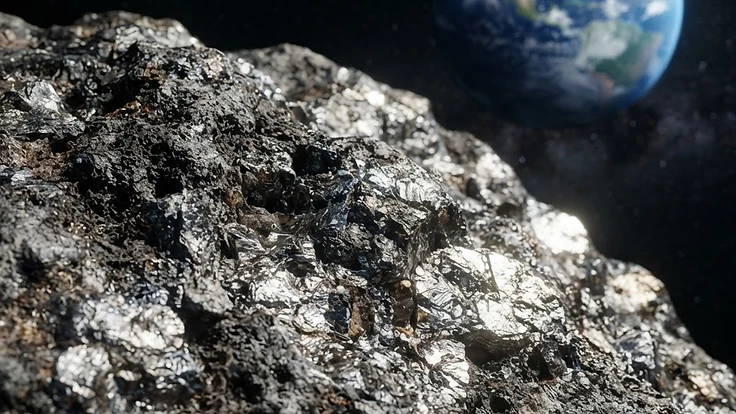
Many small bodies drifting through our solar system contain magnetic minerals. While these asteroids lack the massive, liquid metallic cores that generate planetary magnetic fields, they often carry a magnetic signature frozen into their rock during their formation billions of years ago.
Near-Earth Asteroid Watch
Powered by Flarient — embed this on your site →
Studying these remnants provides scientists with a unique lens into the high energy environment of the early solar nebula. Much like studying the cosmic origins of asteroids, we can piece together how magnetic fields influenced the accretion of primitive materials into the planets we recognise today.
The Science Behind It
Asteroids are essentially primordial rubble piles that have remained largely unchanged since the birth of the solar system. Their magnetism usually stems from iron and nickel alloys trapped within their mineral structures, particularly in metallic or stony-metallic bodies.
When these materials cooled from a molten state in the presence of an external magnetic field, they acquired a process known as thermoremanent magnetisation. This is effectively a permanent magnetic record preserved in solid rock.
Scientists analyse these magnetic signatures using specialised magnetometers on space probes. These measurements help differentiate between magnetic fields generated by internal dynamos in ancient, larger protoplanets and those caused by external solar processes. Understanding these mechanics is as crucial as grasping [the orbital mechanics governing asteroid motion in space](/blog/the-orbital-mechanics-governing-asteroid-motion-in-space) to predict their future trajectories.
Real-World Implications
While a stray magnetic asteroid will not disrupt the Kp or trigger a geomagnetic storm, they represent a significant variable for future space exploration. Spacecraft attempting to land on or orbit a metallic near-Earth asteroid must account for local magnetic anomalies that can interfere with sensitive navigation instruments.
Furthermore, the metallic content of such asteroids makes them prime targets for future resource extraction. Mapping their magnetic fields is the first step in identifying concentrations of valuable ores that could support deep-space manufacturing.
These magnetic signatures also inform our models of space weather. While solar flares and coronal mass ejections are the primary drivers of geomagnetic activity, understanding the composition of all bodies in the solar neighbourhood helps us refine our defensive models and assess the real threat of asteroids hitting Earth more accurately.
What You Can Do
Staying informed about the dynamic environment of near-Earth space is easier than ever. You can monitor the status of our immediate cosmic neighbourhood by keeping track of incoming objects and solar activity through available scientific resources.
If you find yourself intrigued by the intersection of space weather and planetary science, you might also consider viewing the aurora as a testament to the electromagnetic connection between the Sun and our planet. For those eager to witness these light displays, guided aurora tours in countries like Iceland, Norway, Canada, Finland, Sweden, and Alaska provide the best chance to see the phenomenon in person.
Always ensure you are using reliable data when tracking celestial events. Whether you are interested in rock magnetism or the next solar cycle, grounding your curiosity in verifiable data is the best way to separate scientific fact from speculation.
Key Takeaways
Asteroids are magnetic, but their magnetism is a fossilised record rather than a living field. They provide a vital link to the conditions of the early solar system, offering data that we simply cannot obtain from Earth-based experiments.
As we push further into space, our ability to characterise these bodies will dictate the success of our missions. Monitoring these objects, alongside understanding solar phenomena through tools like solar imagery, ensures we remain prepared for the challenges of a dynamic solar system.
People Also Ask
Can asteroids be deflected by magnets?+
Technically yes, but only with immense energy. While an asteroid has a magnetic field, it is far too weak to be manipulated by standard electromagnetic fields at a distance. Deflection would require kinetic impactors or gravity tractors to change the object's momentum on its orbital path.
Are all asteroids made of metal?+
No, asteroids vary significantly in composition. They are categorised primarily into C-type (carbonaceous/stony), S-type (silicaceous/stony), and M-type (metallic). M-type asteroids contain the highest concentrations of iron and nickel, which is why they are often the most magnetic.
Do asteroids have a magnetic north pole?+
Most asteroids do not have a defined magnetic north or south pole like Earth. Earth has a liquid outer core that generates a global dipole field. Asteroid magnetism is usually localised, resulting from the specific arrangement of magnetic minerals within the rock, creating a complex, non-uniform field.
Continue Reading
Forecast These Questions
View all →Express your probability on these active forecast questions.
Will a near-Earth object pass within 1 Lunar Distance this quarter?
35%
Community
Will a newly discovered asteroid larger than 10m pass within 5 LD this month?
5%
Community
Will a near-Earth object pass within 1 Lunar Distance this quarter?
35%
Community
Will a near-Earth object pass within 5 Lunar Distances this month?
5%
Community