Cosmology and Astronomy: Distinguishing the Study of the Universe
While astronomy explores the objects within our universe, cosmology seeks to understand the origins and evolution of the universe itself.
Cosmology and Astronomy: Distinguishing the Study of the Universe
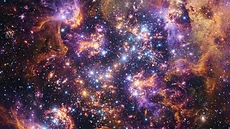
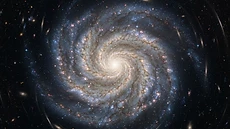
Astronomy and cosmology are two fields that often appear together, yet they serve distinct roles in our exploration of existence. Astronomy focuses on the observation and analysis of celestial bodies like planets, stars, and galaxies. Cosmology takes a step back to view the entire universe as a single, evolving entity.
Understanding these differences provides a clearer picture of how we map the heavens.
Astronomers identify specific phenomena, ranging from a distant near-Earth asteroid to the complex life cycles of stars. Cosmologists, meanwhile, investigate the physics governing the expansion of space and the origins of matter. These fields rely on one another, as the detailed data collected by telescopes feeds the theoretical models developed by cosmologists.
The Science Behind It
Astronomy is the observational foundation of our knowledge about space. It involves measuring the composition, position, and motion of objects through the use of solar imagery and advanced telescope technology. When astronomers track the solar wind, they are observing the direct output of our local star to understand how it behaves.
Cosmology is inherently more theoretical. It applies the laws of physics to the universe on the largest possible scales. Cosmologists model the early universe to explain why galaxies are distributed in their current patterns.
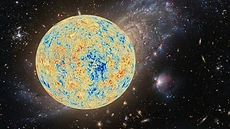
They look at the cosmic microwave background to infer the conditions that existed shortly after the Big Bang.
Real-World Implications
Distinguishing between these disciplines helps us better manage our place in space. Astronomy provides the data needed to track potential hazards and understand solar phenomena that drive the Kp index. This helps ground-based infrastructure prepare for geomagnetic activity.
Cosmology provides the intellectual framework for deeper physics. By understanding the birth of the universe, we develop technologies that eventually manifest as advancements in navigation and materials science. Both fields remain essential for ensuring humanity continues to expand its reach, as discussed in our look at the strategic expansion of human activity in cislunar space.
What You Can Do
If you want to track the current state of our cosmic neighbourhood, start by exploring the tools available on your home screen. You can monitor real-time data using the Flarient live dashboard to see how solar activity currently influences our magnetic environment. These resources provide the same data used by professionals to anticipate space weather.
For those interested in the history of these fields, check the archive for records of past events. Engaging with these resources helps bridge the gap between abstract cosmic theories and the reality of living on a planet within an active solar system.
Always ensure your information comes from verified sources like NASA.
Key Takeaways
Astronomy observes the parts, while cosmology theorises about the whole. Astronomy relies on tools and direct observation to catalogue the contents of space. Cosmology uses those observations to build mathematical models of the universe throughout time.
Both disciplines are vital for our understanding of reality. By maintaining this balance, we can continue to advance our technology while appreciating the scale of the cosmos. Keep learning through our blog to stay current with ongoing developments in space science.
From theory to sky
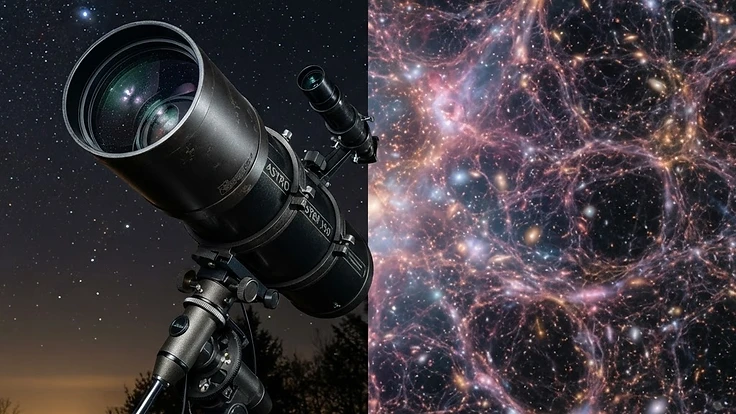
The article’s distinction becomes tangible when readers turn from models of the universe to the objects astronomers actually observe, such as stars and galaxies. For those interested in making that connection themselves, explore a compact capture setup for documenting the night sky.
Ad · Affiliate link. Flarient may earn a commission if you purchase through this link, at no additional cost to you.
People Also Ask
Can you be an astronomer and a cosmologist?+
Yes, many scientists work in both fields. An astronomer might use observational data to test a cosmological theory. Because the fields rely on each other, a career in one often involves substantial training and research in the other to fully understand the universe.
Do cosmologists use telescopes?+
Yes, cosmologists frequently use data from large telescopes and satellites. While they are theorists, they need high-quality data from observatories to validate their models of the universe. This ensures that their mathematical frameworks align with the actual light and matter detected in deep space.
Which field is older, astronomy or cosmology?+
Astronomy is one of the oldest human disciplines, dating back to ancient civilisations tracking stars for navigation. Cosmology, as a rigorous scientific study based on physics and the Big Bang theory, developed much later, primarily during the twentieth century as technology enabled deeper observations.
Continue Reading
Forecast These Questions
View all →Express your probability on these active forecast questions.