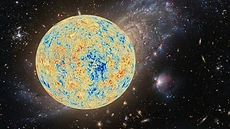
Dark Matter Is the Invisible Foundation of Our Universe
Dark matter makes up most of the universe's mass, yet it remains hidden from our view. Understanding this invisible substance is crucial to grasping how galaxies form and stay together.
Dark Matter Is the Invisible Foundation of Our Universe
Most of what we see in the night sky accounts for only a small fraction of the total matter in existence. Planets, stars, and galaxies are mere islands of visible light floating in a vast ocean of invisible substance known as dark matter. While we cannot see it, detect it with conventional telescopes, or touch it, this mysterious component acts as the gravitational scaffolding for the entire cosmos.
Without dark matter, the universe would look fundamentally different. It provides the hidden weight necessary to hold galaxies together against the forces that would otherwise tear them apart. Understanding this invisible influence is essential for any serious study of cosmology and space science, as it dictates the motion of stars and the structure of large scale systems.
The Science Behind It
Dark matter does not emit, absorb, or reflect electromagnetic radiation. It remains completely invisible to all our sensors, whether they look for visible light, X-rays, or radio waves. We know it exists only because of its gravitational pull on visible matter, such as stars and galactic gas clouds.
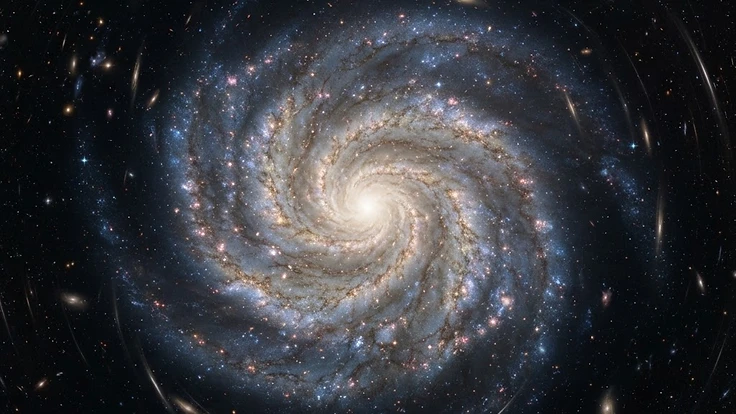
Astronomers first noticed discrepancies when observing the rotation speeds of galaxies. Stars on the outer edges of galaxies were moving much faster than expected based on the mass of visible matter present. This phenomenon suggests that a massive, invisible halo surrounds these galaxies, providing the extra gravity needed to maintain their orbital speeds.
This gravitational effect is similar to how we track solar activity through its impact on the local environment.
Just as we monitor the Kp index to understand geomagnetic storms that ripple through our atmosphere, scientists measure the rotational curves of distant galaxies to quantify the presence of dark matter.
It is a game of inference, where the unseen is defined entirely by the behaviour of the seen.
Real-World Implications
Dark matter exerts a profound influence on the evolution of our universe. It dictates the distribution of galaxies and influences the very structure of the cosmic web. By understanding how this matter clusters, we gain insight into the history of the universe and its future trajectory.
While dark matter does not directly impact the geomagnetic storms that we track here on Earth, it provides the essential environment for the life cycles of stars. These stars produce the light and energy that eventually generate the solar phenomena we observe today. Studying dark matter helps us refine our models of how solar systems form and survive over billions of years.
Much like how we must remain vigilant regarding near-Earth asteroids that could alter our planetary fate, scientists remain focused on identifying the particle nature of dark matter. Its discovery would redefine our understanding of physics. It would bridge the gap between our current grasp of gravity and the quantum world, potentially unlocking secrets that have remained hidden for as long as we have looked at the stars.
What You Can Do
Keeping track of the vast, changing landscape of space can feel overwhelming, but tools are available to help you stay informed. You can explore the glossary to better understand the technical terms used by professional astronomers, or visit the archive to see how our understanding of the universe has evolved over time.
If you find yourself captivated by the wonders of the cosmos, remember that observing the night sky is the best way to develop a personal connection with these concepts. Whether you are chasing the northern lights or simply studying the stars, having reliable data is key. You can use various embeddable widgets on your own site to display live space weather data, keeping your community updated on the phenomena that bridge the gap between our planet and the deeper reaches of space.
If planning around Kp and cloud cover feels like work, guided aurora tours in Norway, Finland and Iceland remove the guesswork — a guide watches the data while you stay warm until it's time to move.
Key Takeaways
Dark matter is the invisible majority of our universe, acting as the silent architect that keeps galaxies intact. While it avoids direct detection, its gravitational fingerprint is unmistakable in the movement of stars and the structure of the cosmos. We cannot see it, yet we owe our existence to its stability.
Continuing to study the mysteries of space, from dark matter to the strongest storms on record, ensures we remain prepared for the future. We are only just beginning to map the invisible threads that hold reality together. By staying curious and utilising the right tools, everyone can participate in the ongoing journey of human discovery.
From theory to sky
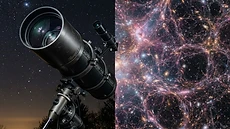
If this article leaves you curious to see the galaxies and star fields that reveal dark matter's influence, one accessible route is to try compact astrophotography equipment. See one way to get started.
Ad · Affiliate link. Flarient may earn a commission if you purchase through this link, at no additional cost to you.
People Also Ask
Is dark matter the same as dark energy?+
No, they are distinct phenomena. Dark matter acts as an attractive force, pulling matter together to form galaxies, whereas dark energy is a repulsive force that acts to accelerate the expansion of the universe across vast distances.
How do we know dark matter is real if we cannot see it?+
We detect dark matter through its gravitational effects. Scientists observe that galaxies rotate faster than expected based on the visible matter alone, and light from distant objects bends around unseen mass, indicating that a significant amount of invisible material is present.
What is dark matter made of?+
Scientists have not yet identified the specific particles that make up dark matter. Leading theories suggest it consists of undiscovered subatomic particles that do not interact with electromagnetic radiation, meaning they do not emit light or interact with ordinary matter except through gravity.
Continue Reading
Forecast These Questions
View all →Express your probability on these active forecast questions.