The Big Bang Theory Remains the Foundation of Modern Cosmology
The Big Bang Theory explains the origin and expansion of our universe. Discover the fundamental evidence supporting this model, from cosmic background radiation to the movement of distant galaxies.
The Big Bang Theory Explains Our Universal Origins
The Big Bang theory describes the birth of the universe from an incredibly hot, dense state approximately 13.8 billion years ago. It is not an explosion in the traditional sense, but rather the rapid expansion of space itself.
Understanding this theory helps us grasp why the universe behaves the way it does today. By studying astrophysics reveals the mechanics of our universe, we piece together a narrative that spans eons.
The Science Behind It
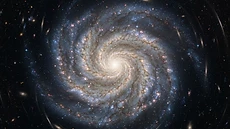
The most compelling evidence for the Big Bang comes from the observation that galaxies are moving away from us. Edwin Hubble first noticed this, finding that the light from distant objects shifts toward the red end of the spectrum.
This redshift indicates that space is expanding. If we reverse this expansion in our models, all matter must have originated from a single, infinitely dense point.
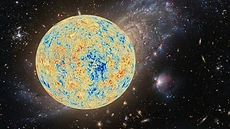
Another pillar of evidence is the Cosmic Microwave Background radiation. This is a faint glow of light that fills the entire sky, acting as the afterglow of the early, hot universe.
Scientists have mapped this radiation with precision, confirming it matches the predictions of the Big Bang model. It serves as a thermal snapshot of the cosmos when it was only 380,000 years old.
Real-World Implications
While the Big Bang occurred in the deep past, its influence dictates how we monitor our current cosmic environment. Our understanding of how matter formed allows us to track phenomena like the [near-Earth asteroid](/ #asteroids) populations that drift through our solar system.
Physics informs everything from satellite navigation to communication networks. For example, how solar flares disrupt GPS accuracy and satellite navigation highlights our reliance on space weather data.
When we understand the fundamental laws of gravity and light, we build better technology. We track space weather with tools like the [K-index](/ #kp) to protect the infrastructure orbiting our planet.
What You Can Do
Public interest in space science is at an all-time high. You can deepen your knowledge by consulting a [glossary](/ #glossary) of terms to familiarise yourself with the language of cosmologists.
Many amateurs now use [embeddable widgets](/ #widgets) on their own websites to share live space data with their communities. Tracking these metrics helps us appreciate our place in a vast, expanding system.
If you want to visualise these concepts, you can explore detailed [solar imagery](/ #gallery) to see how energy travels through space. Studying the universe is a journey of discovery that is open to everyone.
Key Takeaways
The Big Bang theory remains our most robust explanation for the existence of the universe. It is supported by consistent evidence, including galaxy redshift and the cosmic microwave background radiation.
While the theory addresses the distant past, the physics involved informs our daily interaction with space. By staying informed, we bridge the gap between abstract science and our modern technological life.
We live in an era where data from space is readily accessible. Continued study of these cosmic mechanics ensures we remain prepared for the challenges of our future in the solar system.
People Also Ask
Was the Big Bang an explosion?+
No, the Big Bang was not an explosion in space. It was the rapid expansion of space itself. Before this event, there was no space or time in the way we currently understand those dimensions.
What is the cosmic microwave background?+
The cosmic microwave background is the residual thermal radiation left over from the early universe. It provides a snapshot of the cosmos as it was about 380,000 years after the Big Bang, appearing as a uniform glow across the entire sky.
Is the universe still expanding?+
Yes, observations confirm that the universe is not only expanding but that the expansion is accelerating. This discovery led to the concept of dark energy, which acts as a repulsive force driving galaxies away from one another at increasing speeds.
Continue Reading
Forecast These Questions
View all →Express your probability on these active forecast questions.