Determining the Age of the Universe
Modern science places the age of our universe at approximately 13.8 billion years. We explore the precise observational methods used to reach this number.
Measuring the Age of the Universe
Determining the age of the universe represents one of the most profound achievements in modern cosmology. Scientists have arrived at a widely accepted figure of 13.8 billion years through decades of observation and mathematical modelling.
This number is not a guess, but a result derived from observing the remnants of the early universe. By understanding how the cosmos expands and cools, researchers trace the history of existence back to its singular point of origin.
The Science Behind It
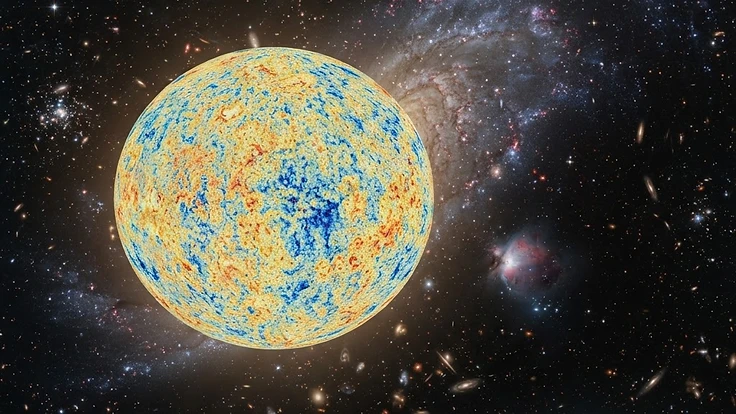
The primary tool for this measurement is the cosmic microwave background radiation. This faint glow of light fills the entire sky, acting as a snapshot of the universe just 380,000 years after the Big Bang.
Instruments like the Planck satellite have mapped these temperature fluctuations with incredible precision. By analysing the patterns in this light, cosmologists calculate the Hubble constant, which dictates the rate of expansion.
Another method involves observing the oldest objects in existence. By studying the life cycles of globular clusters, which are dense groups of ancient stars, astronomers establish a minimum age for the cosmos.
These star clusters provide a floor for our calculations, as the universe must be older than the oldest stars it contains. Combining stellar evolution data with expansion rates creates a robust consensus in the scientific community.
Real-World Implications
Understanding the age of the universe informs every aspect of our physical models, from the formation of galaxies to the lifecycle of stars. This framework is essential for researchers studying space weather phenomena like the geomagnetic storm, as it provides the context for how energy propagates through the void.
Knowing the timeline of the universe allows us to model the chemical evolution of galaxies. This helps scientists understand why our solar system contains heavy elements essential for life, such as iron and silicon.
This knowledge also influences our approach to planetary defence. By mapping the history of cosmic structures, we better comprehend the frequency and trajectories of near-Earth asteroid threats.
What You Can Do
To engage with these concepts, keep an eye on current cosmic activity using our dashboard. Observing the sky allows you to connect directly with the processes that have shaped our universe for billions of years.
You can dive deeper into the history of space phenomena by browsing our archive of past events. This gives you a tangible sense of how the Sun and Earth interact in real time.
If you want to track how specific space weather events impact our technological infrastructure, our glossary provides clear definitions for complex scientific terminology. It turns high-level research into accessible facts for everyone.
Key Takeaways
The age of the universe, established at 13.8 billion years, is a triumph of collective human inquiry. We rely on observational data from light remnants and ancient star clusters to confirm these figures.
This work remains ongoing, as new telescopes continue to refine our measurements of the expansion rate. By staying informed through resources like our blog, you stay connected to the evolving story of our cosmos.
People Also Ask
How do we measure the age of the universe?+
Scientists use the cosmic microwave background radiation to measure the expansion rate of the universe. By combining this with data on the ages of the oldest globular star clusters, they can calculate the time elapsed since the Big Bang with high precision.
Is the age of the universe changing?+
The age estimate of 13.8 billion years is based on current observational data from missions like Planck. While new measurements occasionally cause slight adjustments in the Hubble constant, the overall scale of billions of years is well-supported by multiple independent scientific methods.
What is the Hubble constant?+
The Hubble constant is the unit of measurement used to describe the rate at which the universe is expanding. It is a critical factor in determining the age of the universe, as it allows cosmologists to rewind the expansion to reach the initial starting point.
Continue Reading
Forecast These Questions
View all →Express your probability on these active forecast questions.