
Evidence Suggests Biological Potential on Other Solar System Worlds
Life may exist beyond Earth. Scientists investigate subsurface oceans and chemical signatures across our solar system to determine if we are truly alone.
Evidence Suggests Biological Potential on Other Solar System Worlds
For centuries, humanity has looked at the night sky and wondered if we are the only living beings in the universe. While Earth is currently the only place where we have confirmed the existence of life, our solar system contains several environments that could theoretically support biological processes. Scientists focus their search on locations where liquid water, a source of energy, and essential chemical building blocks coincide.
Understanding where to look requires a rigorous definition of habitability. We no longer rely solely on the idea of a Goldilocks zone where temperatures must be perfect for surface liquid water. Modern exploration targets extreme environments that challenge our traditional biological assumptions.
The Science Behind It
Astrobiology relies on the principle that life needs three core components: a solvent like water, energy to fuel metabolism, and organic compounds. Mars remains a primary target because it once possessed rivers and lakes on its surface. While the planet is now cold and arid, subsurface reservoirs might still harbour ancient microbial life.
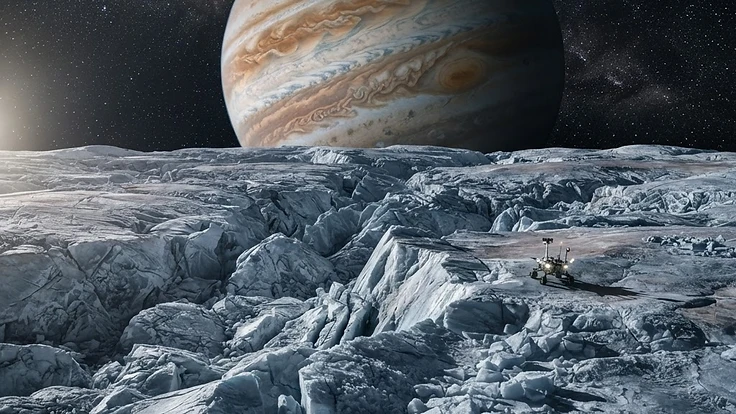
Moons like Europa, Enceladus, and Titan offer even more compelling cases. Europa orbits Jupiter and hides a vast, salty ocean beneath a thick crust of ice. Tidal heating from the massive gravity of the gas giant likely keeps this water liquid, potentially creating hydrothermal vents on the ocean floor.
Similar dynamics appear on Enceladus, a moon of Saturn that sprays water vapour into space through cryovolcanoes. These plumes allow researchers to sample material from the interior without landing a probe on the surface. Understanding these environments requires us to study how energy, such as solar wind or geomagnetic storm activity, might influence atmospheres over long periods.
Real-World Implications
Finding even the simplest microscopic life beyond Earth would fundamentally alter our scientific and philosophical worldview. It would prove that the transition from non-living matter to biology is a natural consequence of planetary evolution. This discovery would shift how we conduct space missions and prioritise our long-term objectives for human exploration.
Technological progress in tracking satellites in real time and managing deep space data has already improved our ability to identify life-supporting conditions. We use complex models to analyse data from planetary probes, similar to how we monitor the auroral oval to protect orbital assets. These tools help scientists distinguish between abiotic chemical reactions and potential biological signatures.
We must also remain vigilant about protecting other worlds from terrestrial contamination. Planetary defence initiatives are already looking into near-Earth asteroid impacts, and similar care is required to ensure we do not inadvertently transport Earth bacteria to pristine alien environments. Strict international protocols govern these efforts to ensure scientific integrity remains uncompromised.
What You Can Do
Engaging with current space exploration does not require a degree in astrophysics. You can familiarise yourself with the latest findings by exploring the glossary to understand how scientists define the signatures of life. Keeping track of mission updates from NASA allows you to follow the development of new sensors and telescopes designed to detect chemical imbalances in alien atmospheres.
If you have an interest in the conditions that define life and the environment of space, you might find that studying atmospheric phenomena is a rewarding hobby. For those who enjoy travelling to see the results of space weather in person, many experts suggest booking guided aurora tours in countries like Iceland, Norway, or Canada to experience the interaction between solar energy and our magnetosphere firsthand.
Key Takeaways
The search for life is no longer a matter of science fiction. It is a systematic investigation of the chemistry and geology of our planetary neighbours. Whether we discover microbial life in the depths of an icy moon or fossilised records in the dust of Mars, the impact will be profound.
By continuing to study the mechanisms that shape our solar system, we gain a deeper appreciation for the unique conditions that allowed life to thrive on Earth. Every mission adds a piece to a much larger puzzle about our origins. We are in a golden age of exploration that will likely answer the oldest question of all within our lifetime.
For observers
If this article makes you want to view the planets and their moons, one accessible option is a portable astrophotography rig for photographing planetary detail and bright lunar regions. Explore a compact capture setup
Ad · Affiliate link. Flarient may earn a commission if you purchase through this link, at no additional cost to you.
People Also Ask
Why is Europa considered a candidate for life?+
Europa has a massive saltwater ocean hidden beneath its icy shell. Scientists believe tidal heating from Jupiter keeps this water liquid, while potential hydrothermal vents on the seafloor could provide the chemical energy necessary for life to thrive in total darkness.
Could life exist on Mars today?+
While the Martian surface is harsh and irradiated, evidence of ancient water suggests life may have existed there billions of years ago. Modern research focuses on finding protected subsurface niches where liquid water or dormant microbial life might still persist despite the planet's cold and dry conditions.
What is the biggest challenge in finding alien life?+
The primary challenge is the sheer distance between planets and the difficulty of conducting non-intrusive sampling. We must develop instruments capable of detecting subtle biological markers without contaminating the environment, all while navigating the extreme radiation and thermal conditions found on icy moons and planetary surfaces.
Continue Reading
Forecast These Questions
View all →Express your probability on these active forecast questions.
Related Articles

The Possibility of Extraterrestrial Life Within Our Solar System
2026-11-06 · 5 min read

Astrobiologists Define the Habitable Zone Through Planetary Equilibrium
2026-10-16 · 6 min read


Astrobiology: Exploring the Origins and Future of Life in the Universe
2026-10-13 · 5 min read