Finding Reliable Data for Noctilucent Cloud Observation
Tracking elusive noctilucent clouds requires a blend of atmospheric science and patience. Learn how to source reliable data to improve your chances of catching these rare, high-altitude displays.
Tracking Elusive Noctilucent Clouds
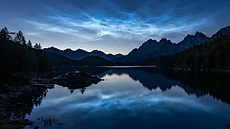
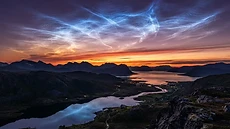
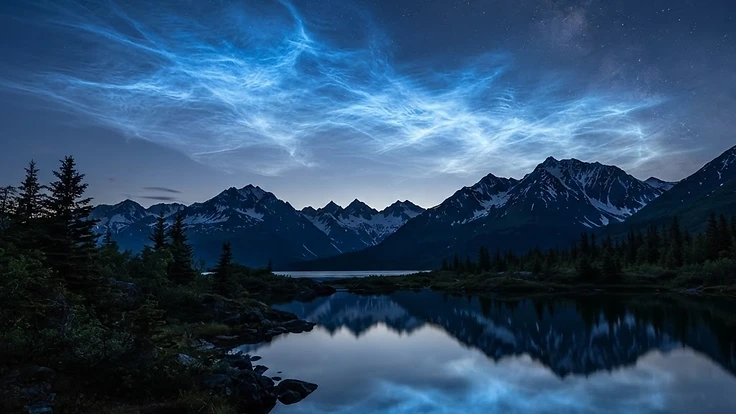
Noctilucent clouds appear as shimmering, electric-blue wisps against the darkening twilight sky. These polar mesospheric clouds reside at the very edge of space, sitting about 80 kilometres above the Earth surface.
Because they only form under precise conditions involving meteor dust and water vapour, spotting them is an exercise in timing. Relying on generalised weather apps rarely provides the accuracy needed to identify these high-altitude events.
The Science Behind Atmospheric Ice
Noctilucent clouds form in the mesosphere during the summer months when the upper atmosphere is coldest. While the surface temperature might be balmy, the mesosphere reaches temperatures low enough for ice crystals to accumulate on microscopic particles of space dust.
These tiny crystals scatter sunlight from below the horizon, creating the distinctive glow that defines them. Unlike a standard geomagnetic storm which relies on solar activity, noctilucent clouds depend entirely on terrestrial atmospheric dynamics.
Scientists monitor these formations to better understand the reality of noctilucent clouds and atmospheric safety in our changing climate. They act as sensitive indicators of changes in the mesosphere that are otherwise invisible from the ground.
Real World Implications
Monitoring high-altitude clouds provides more than just aesthetic pleasure for photographers. They serve as valuable data points for meteorologists who study global circulation patterns in the upper layers of our atmosphere.
Significant shifts in cloud frequency can signal changes in greenhouse gas concentrations at high altitudes. While they do not pose a direct threat to the power grid like a major solar event might, they remain a crucial subject for atmospheric science.
Understanding the conditions that lead to these displays helps researchers bridge the gap between space weather and terrestrial weather. It reminds us that our atmosphere is a dynamic, interconnected system that reaches far beyond the clouds we see on a rainy day.
What You Can Do
To predict these events, look for specialised atmospheric modelling data rather than standard daily forecasts. Most mainstream weather platforms simply do not track the mesospheric moisture or thermal layers required for these clouds to form.
Instead, use dedicated satellite imagery feeds or atmospheric research portals that specialise in polar mesospheric conditions. If you are also interested in space-based phenomena, you can explore [guided aurora tours](https://vi.me/HuXHi) across regions like Iceland, Norway, Canada, and Alaska, which often provide expert local guidance on spotting various high-latitude atmospheric wonders.
You can also integrate embeddable widgets into your own projects to track wider space weather data that sometimes correlates with atmospheric anomalies. Having a consistent local aurora forecast available on your personal dashboard allows you to keep a close eye on the sky regardless of the season.
Key Takeaways
Noctilucent clouds represent the extreme edge of our atmosphere, requiring specific conditions to become visible. They are best viewed during deep twilight hours, usually in the weeks surrounding the summer solstice.
Reliability in tracking comes from moving away from generic apps and toward specialised meteorological datasets. By focusing on upper-atmosphere data, you transition from simple luck to an informed approach in your sky-watching journey.
Keep your expectations realistic, as these clouds are notoriously fickle. When you do catch them, the view serves as a vivid reminder of the complex chemistry occurring high above our heads every single night.
Observation note
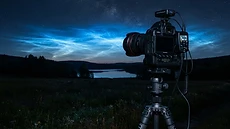
If you want to try photographing noctilucent clouds, a portable astrophotography rig can make twilight fieldwork easier. For readers interested in a compact option, See an accessible way to capture the sky.
Ad · Affiliate link. Flarient may earn a commission if you purchase through this link, at no additional cost to you.
People Also Ask
What is the best time of year to see noctilucent clouds?+
Noctilucent clouds are most commonly observed during the summer months, specifically between late May and early August. During this period, the mesosphere reaches the extremely low temperatures necessary for ice crystals to form on meteor dust particles, allowing the clouds to glow in the twilight sky.
How high are noctilucent clouds in the atmosphere?+
These clouds form in the mesosphere at an altitude of approximately 80 to 85 kilometres above the Earth surface. This is far above the troposphere where typical weather clouds reside, placing them near the edge of space, just below the Kármán line which marks the boundary of outer space.
Are noctilucent clouds becoming more frequent?+
Research suggests that the frequency and brightness of noctilucent clouds may be increasing. Scientists believe this change is linked to rising levels of methane in the atmosphere, which leads to increased water vapour concentration in the mesosphere when it reaches those high altitudes, providing more material for ice crystals.
Continue Reading
Forecast These Questions
View all →Express your probability on these active forecast questions.