Global Teams Track Near-Earth Asteroids
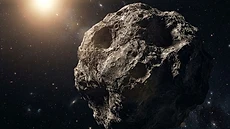
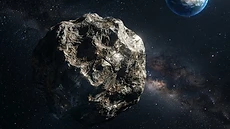
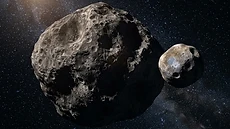
Space agencies and independent observers work together to catalogue thousands of near-Earth asteroids, ensuring we maintain a watchful eye on our cosmic neighbourhood.
Global Teams Track Near-Earth Asteroids
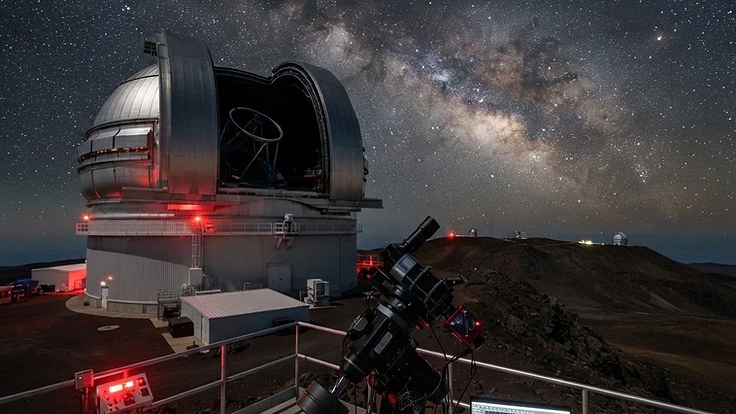
Space is vast, but our immediate orbital neighbourhood is surprisingly crowded. A network of dedicated telescopes and professional observatories works around the clock to track every known near-Earth asteroid that could potentially cross our path.
Near-Earth Asteroid Watch
Powered by Flarient — embed this on your site →
This planetary defence system is not the work of a single nation, but a collaborative global effort. Experts across the globe systematically scan the heavens to identify and catalogue objects that might pose a risk to Earth, much like the event 66 million years ago that famously left the Chicxulub crater.
The Science Behind It
Tracking these objects relies on precise optical surveying and long-term orbital modelling. Astronomers take repeated images of the same patch of sky to identify faint, moving dots against the static background of distant stars.
Once an object is spotted, multiple observatories confirm its position to establish a reliable orbit. By analysing these observations, researchers can calculate the object’s trajectory with remarkable accuracy for decades into the future.
Mathematical models account for gravitational perturbations from planets, allowing scientists to rule out impacts centuries in advance. This rigorous glossary of data is centrally coordinated by organisations such as NASA CNEOS, which maintains the definitive list of potential close approaches.
Real-World Implications
While the risk of a major impact is statistically remote, monitoring remains a fundamental necessity for planetary security. Space agencies, including the ESA Space Weather office, focus on understanding the physical composition of these bodies, from icy rubble piles to solid metallic cores.
This data informs long-term civil defence planning and our understanding of orbital dynamics. Accurate tracking is critical not only for asteroid mitigation but also for protecting the delicate infrastructure of satellites that power our global communication networks, often discussed in our blog.
If you want to understand how other cosmic forces like solar energy interact with our planet, read our overview on how solar flares impact Earth and our technological infrastructure. Knowing what is happening in the sky requires understanding the full range of space phenomena, including the geomagnetic conditions measured by the Kp index.
What You Can Do
Public interest and amateur contributions continue to play a role in this effort. You can stay informed about the latest movements in our celestial backyard by using digital tools designed to aggregate complex orbital data into accessible formats.
Flarient offers a dedicated tracking dashboard that helps you keep tabs on near-Earth asteroid encounters in real-time. By engaging with these data feeds, you gain a better perspective on the frequency of these objects passing near our planet, stripping away the mystery and replacing it with verifiable data.
For those managing their own projects, you can use our embeddable widgets to bring live space-tracking data directly to your own audience. Staying informed is the first step toward understanding our place in the solar system.
Key Takeaways
Planetary defence is a mature, data-driven field that bridges the gap between pure astronomy and civil safety. By combining sophisticated ground-based telescopes with international data sharing, humanity has reached a point where we can predict potential close approaches years, if not decades, in advance.
We are no longer blind to the contents of our orbital neighbourhood. Staying connected with these findings remains the best way to maintain a grounded, scientific perspective on the nature of our dynamic solar system. For further reading, check out our blog to explore more about the forces shaping our cosmic environment.
Field note
For readers interested in observing or imaging brighter near Earth or main belt asteroids, one accessible route is a compact portable imaging setup for taking repeated exposures to detect motion. Make your own observation.
Ad · Affiliate link. Flarient may earn a commission if you purchase through this link, at no additional cost to you.
Continue Reading
Forecast These Questions
View all →Express your probability on these active forecast questions.
Will a near-Earth object pass within 1 Lunar Distance this quarter?
35%
Community
Will a near-Earth object pass within 1 Lunar Distance this quarter?
35%
Community
Will a newly discovered asteroid larger than 10m pass within 5 LD this month?
35%
Community
Will a near-Earth object pass within 5 Lunar Distances this month?
45%
Community