Identifying Asteroids That Pose a Threat to Earth
Near-Earth asteroids remain a focus of global scientific monitoring. Understanding the orbital dynamics and potential risks of these objects is essential for long-term planetary defence.
Identifying Asteroids That Pose a Threat to Earth
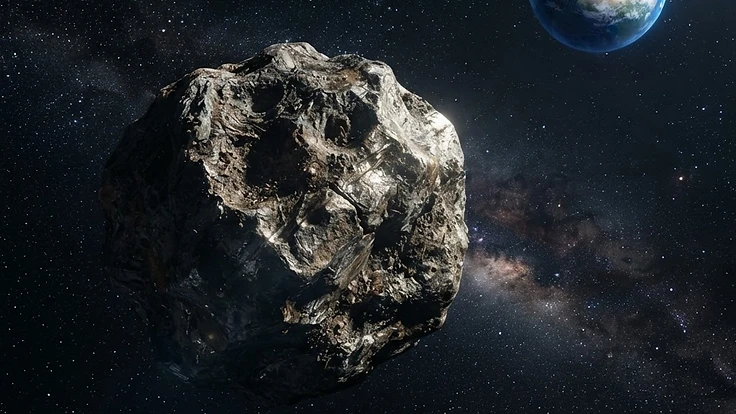
Humanity resides in a cosmic neighbourhood filled with debris left over from the formation of our solar system. Most of these rocky remnants orbit peacefully between Mars and Jupiter, but a subset known as a near-Earth asteroid follows trajectories that occasionally bring them into our local vicinity. While the risk of a catastrophic impact is statistically low in the short term, the potential consequences make constant vigilance a scientific imperative.
Near-Earth Asteroid Watch
Powered by Flarient — embed this on your site →
By tracking these objects, experts can ensure we are not caught off guard by unexpected visitors from the deep solar system.
The Science Behind It
Asteroids are classified based on their orbits and proximity to Earth. A rock is generally labelled an object of interest if its path brings it within 1.3 astronomical units of the sun.
Astronomers use ground-based telescopes and space-based sensors to calculate these precise orbital paths.
By measuring the reflected light and orbital velocity, they determine whether an object will experience a close approach in the coming decades or centuries.
Gravity plays the most significant role in changing these paths. As an asteroid swings past planets like Jupiter or Earth, the gravitational tug can alter its trajectory in ways that are difficult to predict over long periods. This makes constant observation necessary, as even a tiny change in a path millions of kilometres away can result in a significant shift when the object returns to our corner of space years later.
You can learn more about how experts track these movements by exploring our glossary for key orbital definitions.
Real-World Implications
Large impacts have occurred throughout geological history, with the most famous example being the Chicxulub object that struck Earth sixty-six million years ago. That event, estimated to be ten kilometres wide, fundamentally altered the climate and biosphere of our planet. Modern planetary defence programmes focus on identifying smaller rocks that could still cause significant regional damage, even if they lack the energy to cause a global extinction event.
Technological infrastructure and human populations are now more concentrated than at any point in history. Even a modest airburst from an asteroid a few hundred metres across could cause immense disruption to communications and power grids in the affected area. This is why agencies like NASA monitor the skies for any object that meets the criteria of a potential hazard.
Tracking these bodies helps us understand the wider context of our solar system, much like how we study scientific methods used to explore deep space to learn about our environment.
What You Can Do
Public awareness is the first line of defence in maintaining an informed society. You do not need to be an astronomer to participate in the conversation or stay updated on current research. Many enthusiasts use digital tools to monitor the latest data releases from space agencies, which helps demystify the science behind these flybys.
Flarient provides a dedicated space where you can view data on recent close approach events, allowing you to see which objects are currently being tracked by global observatories.
If you represent an organisation or a community group, consider how you can share this information with others. Our platform offers embeddable widgets that allow you to display live space data on your own website, ensuring your audience remains informed with accurate, real-time updates. By keeping the public educated about the difference between a routine flyby and a genuine concern, we reduce panic and foster a culture of rational, science-based preparedness.
Key Takeaways
Planetary defence is a long-term commitment that requires international cooperation and decades of persistent observation. While the risk of a major impact remains extremely small, the methodology used to track these objects is a testament to our capacity for self-preservation. By supporting space agencies and utilising reliable data sources, we ensure that we can detect and respond to any legitimate threats well in advance.
Our understanding of the solar system continues to grow, and with it, our ability to keep our planet safe from the vagaries of the deep, dark void.
People Also Ask
What is the difference between an asteroid and a meteor?+
An asteroid is a large, rocky body orbiting the sun, primarily found in the belt between Mars and Jupiter. A meteor occurs when a small piece of asteroid or comet debris enters Earth's atmosphere and burns up, creating a bright streak of light often called a shooting star.
How does NASA track potentially hazardous asteroids?+
NASA uses a network of ground-based and space-based telescopes to scan the sky for moving objects. By collecting multiple observations over time, they determine the object's precise orbit, allowing experts to calculate its future path and assess if it will pass near Earth in the coming century.
Can we prevent an asteroid from hitting Earth?+
Yes, several methods are being researched to mitigate impact risks. These include kinetic impactors, which involve crashing a spacecraft into an asteroid to alter its speed and trajectory, or gravity tractors, which use a spacecraft to gently pull an asteroid off its collision course over several years.
Continue Reading
Forecast These Questions
View all →Express your probability on these active forecast questions.
Will a near-Earth object pass within 1 Lunar Distance this quarter?
35%
Community
Will a near-Earth object pass within 1 Lunar Distance this quarter?
35%
Community
Will a newly discovered asteroid larger than 10m pass within 5 LD this month?
35%
Community
Will a near-Earth object pass within 5 Lunar Distances this month?
45%
Community