How Scientists Discover and Study Exoplanets
Discovering worlds beyond our solar system requires immense precision. Astronomers use light, gravity, and clever mathematics to find planets orbiting distant stars.
Discovering Worlds Beyond Our Solar System
For centuries, humanity looked at the night sky and wondered if other stars hosted their own families of planets. We now know that our galaxy is teeming with these worlds, which are known as exoplanets. Discovering them is a monumental challenge because stars are incredibly bright compared to the tiny, dim planets orbiting them.
Astronomers have developed ingenious methods to detect these hidden bodies by observing their effects on their parent stars.
Studying exoplanets allows us to understand our place in the universe. It helps us answer fundamental questions about the formation of planetary systems and the conditions necessary for life. As our technology improves, we can move beyond simply finding these planets to analysing their atmospheres and searching for chemical signatures that might indicate biological processes.
The Science Behind It
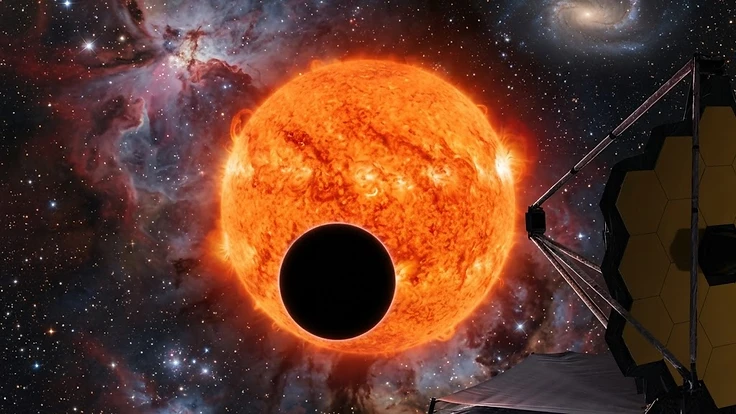
The most successful method for finding exoplanets is the transit method. This involves watching a star for a periodic dip in its brightness caused by a planet passing in front of it from our perspective on Earth. The amount of light lost tells us the size of the planet relative to its star.
Another core technique is the radial velocity method, often called the wobble method. A planet exerts a gravitational pull on its host star, causing the star to move in a tiny orbit. By analysing the light spectrum of the star, astronomers can detect the minute redshift and blueshift caused by this movement.
Direct imaging is a much more difficult approach. This requires blocking the intense glare of a star to capture the faint light reflected from a planet. It is usually reserved for large planets that orbit far away from their host stars, much like how we monitor near-Earth asteroid paths today.
Scientists also utilise gravitational microlensing. This occurs when a distant star aligns with a closer star, using the foreground star as a magnifying glass to bend the light. If a planet is orbiting the foreground star, it creates a distinct spike in the magnification curve.
Real-World Implications
Learning about exoplanets drives innovation in optics and sensor technology. The data gathered from deep space surveys requires advanced software to process and interpret signals. These same image processing techniques are frequently applied to terrestrial challenges, including medical imaging and satellite monitoring.
Studying these diverse systems also helps us refine our models of planetary development. By comparing exoplanet systems to our own, we learn why some planets remain gaseous while others become rocky. This context is vital when we look at our own planet and consider potential threats from space or past events that shaped our solar system.
Understanding the conditions on other worlds provides a broader context for space weather. Just as we monitor the geomagnetic storm levels that affect our modern power grids, scientists analyse how stellar activity affects exoplanet atmospheres. This research informs our knowledge of how life survives under different stellar environments.
What You Can Do
You do not need a professional observatory to start your journey into space exploration. Many amateur astronomers contribute to the field by monitoring variable stars and participating in data crowdsourcing projects. You can begin by learning to identify constellations and tracking the movement of objects that are visible to the naked eye.
Resources are available to help you stay connected with current space activities. You can read more about space phenomena in our blog to deepen your understanding of how light travels through the vacuum of space. Learning about the physics of our universe is the first step toward appreciating the complexity of the cosmos.
Using accessible digital tools allows anyone to follow data streams from active satellites. You can even find embeddable widgets to display current space information directly on your own website or personal dashboard. Engaging with these resources makes the abstract science of exoplanets feel much closer to home.
Key Takeaways
Exoplanet discovery relies on indirect observations, measuring subtle changes in light and motion to reveal hidden worlds. Each detection method provides different data, from a planet's size to its orbital period and atmospheric composition.
While finding planets is a major achievement, the future of the field lies in characterising these distant environments. Every new discovery adds a piece to the puzzle of how planetary systems evolve. As we continue to refine our methods, we draw closer to answering the question of whether we are alone in the universe.
People Also Ask
Can we see exoplanets with a backyard telescope?+
Most exoplanets are too small and dim to be seen directly with backyard telescopes. They are usually discovered using high-precision instruments that measure slight dips in a star's brightness or tiny wobbles in its movement, which are beyond the capabilities of consumer-grade amateur equipment.
What is the habitable zone for an exoplanet?+
The habitable zone, often called the Goldilocks zone, is the orbital range around a star where conditions might allow liquid water to exist on a planet's surface. It is neither too hot nor too cold, depending on the star's size, temperature, and the planet's atmospheric composition.
How many exoplanets have been discovered so far?+
As of recent years, astronomers have confirmed thousands of exoplanets. This number grows steadily as space missions like Kepler, TESS, and the James Webb Space Telescope provide new data. Most of these detections are within our own Milky Way galaxy, reflecting a small fraction of the total population.
Continue Reading
Forecast These Questions
View all →Express your probability on these active forecast questions.