How Solar Wind Shapes Earth's Magnetosphere
Discover how the constant stream of solar particles interacts with our planet's magnetic shield and why it matters for modern technology.
Solar Wind Shapes Earth's Magnetosphere
Earth is a fragile island drifting through an electric ocean. The sun continuously exhales a stream of charged particles known as solar wind, which travels across the solar system at speeds typically between 400 and 700 kilometres per second.
Live Space Weather Dashboard
Powered by Flarient — embed this on your site →
This invisible flow constantly pushes against our planet. Without the protective magnetic field generated by our molten iron core, the solar wind would have stripped away our atmosphere billions of years ago.
The Science Behind It
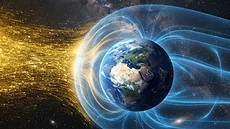
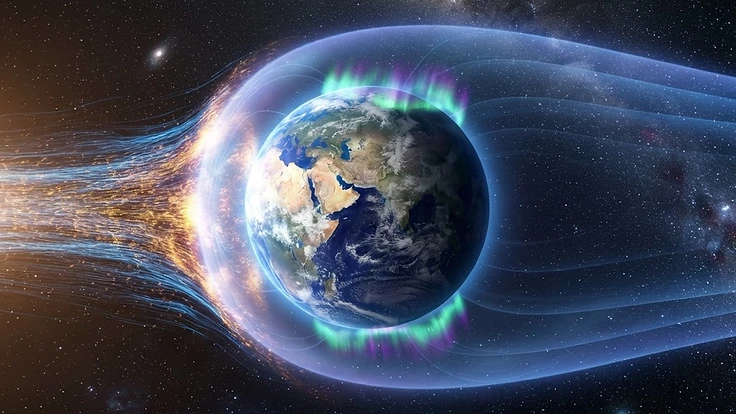
The solar wind carries its own magnetic field, which links up with the Earth's magnetic environment. This interaction creates a teardrop-shaped bubble known as the magnetosphere, which shields us from high-energy radiation.
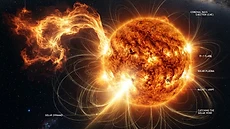
When the sun undergoes periods of high activity, such as during the peak of the 11-year solar cycle, the solar wind becomes much more turbulent. A sudden burst of material, called a coronal mass ejection, can travel at speeds reaching 3,000 kilometres per second, slamming into the magnetosphere with immense force.
This impact causes the magnetic field lines to reconnect, injecting energy into the upper atmosphere. Scientists track the severity of these events using the Kp index, a scale from 0 to 9 that describes the intensity of geomagnetic disturbances.
These events can cause the aurora to expand from polar regions toward the equator, painting the sky with vivid colours. For those interested in historical context, checking the archive allows you to compare current activity against legendary events like the Carrington Event of 1859.
Real-World Implications
Modern technology relies on the stability of near-Earth space. When intense solar weather strikes, it induces electrical currents in long conductors like power grids, which can lead to significant infrastructure damage.
Satellite operators face a constant challenge as well. Increased drag from a swollen atmosphere can alter the orbits of objects in low Earth orbit, where the ISS maintains its post at 408 kilometres, forcing engineers to perform careful orbital corrections.
Communications are also susceptible to disruption, particularly in the high-frequency radio bands. As discussed in our blog, space weather impacts radio signals, which can cripple navigation systems if not properly monitored.
What You Can Do
Staying informed is the best defence against the unpredictability of space weather. You can monitor live solar conditions by tracking the G-scale intensity through real-time data feeds, which helps in predicting if a geomagnetic storm will disrupt local technology.
For those who love to witness nature's light show, there are many guided aurora tours in countries like Iceland, Norway, and Canada that help travellers catch the phenomenon safely. Ensuring you have access to reliable local visibility data is essential for planning a successful trip.
If you manage a website, consider using our embeddable widgets to provide your own audience with live space weather metrics. Understanding these trends helps everyone, from hobbyists to infrastructure managers, stay prepared for the next solar cycle.
Key Takeaways
The magnetosphere acts as our first line of defence against the sun's volatile outbursts. While solar wind is a constant presence, significant geomagnetic storms can affect our power, satellite connectivity, and navigation systems.
By leveraging modern data and solar imagery, we can better anticipate these cosmic impacts. Though we cannot stop the sun from releasing energy, our ability to monitor these events ensures that we can protect the essential infrastructure that keeps our modern world moving.
People Also Ask
What is the Kp index?+
The Kp index is a global geomagnetic activity index used to describe the magnitude of geomagnetic storms. It ranges from 0 to 9, where 0 represents quiet conditions and 9 indicates an extreme geomagnetic storm that could affect power grids and satellite communications.
How fast does solar wind travel?+
Solar wind typically travels at speeds between 400 and 700 kilometres per second. During significant space weather events, such as a coronal mass ejection, particles can be accelerated to much higher speeds, sometimes reaching up to 3,000 kilometres per second as they move through interplanetary space.
What is a G-scale storm?+
The G-scale, or geomagnetic storm scale, classifies the intensity of magnetic disturbances on Earth. It ranges from G1, which is minor, to G5, which is extreme. These ratings are linked to the Dst index and reflect the potential impact on power systems, satellite operations, and radio navigation.
Continue Reading
Forecast These Questions
View all →Express your probability on these active forecast questions.