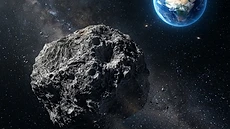
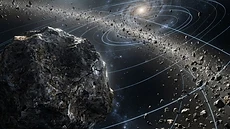
Humanity Has Successfully Landed on Multiple Asteroids
Exploring the history of space missions to asteroids, detailing the successful landings and sample return efforts that have deepened our understanding of the solar system.
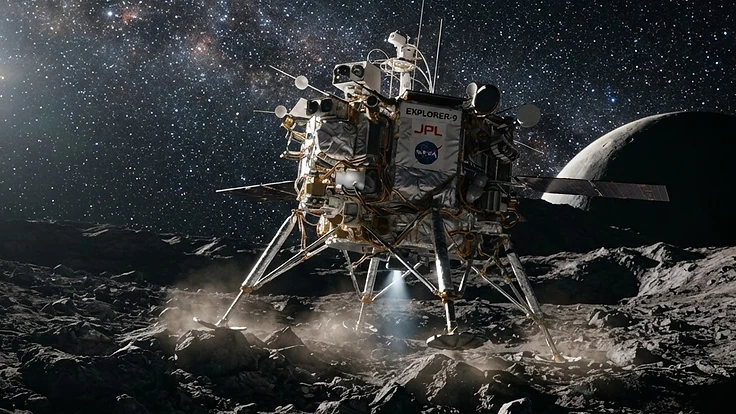
Humanity Has Successfully Landed on Multiple Asteroids
For decades, humanity has looked to the stars, but our most ambitious missions have involved travelling to the jagged remnants of early planetary formation. Landing on a near-Earth asteroid represents one of the most complex feats in modern space exploration due to the microgravity environments and unpredictable surface compositions of these space rocks.
Near-Earth Asteroid Watch
Powered by Flarient — embed this on your site →
These missions provide us with a rare glimpse into the primordial materials that built our solar system. By analysing these ancient bodies, researchers can unravel the history of our cosmic neighbourhood and assess the long-term impact of a potential close approach by a hazardous object.
The Science Behind It
Landing on an asteroid is fundamentally different from landing on a planet or moon. Because these objects possess extremely low mass, they exert a negligible gravitational pull, meaning spacecraft cannot simply land in the traditional sense of descending and stopping.
Instead, engineers must use precise thruster burns to hover or touch down, often anchoring the craft to prevent it from drifting away into the void. This technique requires modelling the irregular gravity fields and non-uniform shapes of asteroids with extreme accuracy.
NASA, ESA, and other international agencies have successfully targeted several asteroids. These include 433 Eros, which was the first to receive a landing from the NEAR Shoemaker probe, followed by the groundbreaking missions to Itokawa, Ryugu, and Bennu. Each successful landing offers a tangible look at the cosmic origins and formation of asteroids that are otherwise difficult to study from Earth.
Real-World Implications
While landing on an asteroid might seem like a distant academic endeavour, it has profound implications for planetary defence and resource management. Knowing the composition of these bodies helps us understand how they might respond if we ever needed to deflect one to protect Earth.
Researching these objects also informs our broader understanding of solar weather and its influence on our planetary environment. The data gathered during these missions complements what we monitor through the lens of space weather, where we track shifts in the magnetic field and the potential for a solar storm to disrupt satellite infrastructure or power grids.
Studying asteroid surfaces acts as a window into the evolution of our system, mirroring the way scientists use telemetry to track solar cycles. Just as we monitor the Kp index or current geomagnetic storm activity on Flarient to anticipate shifts in the magnetosphere, we use these asteroid samples to calibrate our models of solar system history.
What You Can Do
If you find yourself captivated by the mechanics of these missions, you can follow the latest space science news using accessible digital tools. Keeping track of mission milestones is a great way to stay informed about how we are securing our future against potential threats.
For those interested in how these objects move through the void, you can monitor the status of known objects through professional databases like NASA CNEOS. You may also find it useful to check the glossary for detailed definitions of technical terms used by engineers during these landing operations.
Tracking these phenomena is made easier when you use embeddable widgets on your own site to display real-time data. These resources provide a clearer picture of how our local space environment is constantly changing, connecting our daily experience to the broader cosmic landscape.
Key Takeaways
Landing on an asteroid is a triumph of engineering that allows us to sample the raw materials of planetary history. These missions are critical for refining our defence strategies and deepening our knowledge of the solar system.
Understanding these distant rocks provides a necessary context for the space weather and planetary science we engage with every day. As we continue to advance our capabilities, these achievements ensure that we remain prepared for whatever the cosmos might bring our way.
People Also Ask
What was the first asteroid to have a spacecraft land on it?+
The NEAR Shoemaker spacecraft performed the first successful landing on an asteroid when it touched down on 433 Eros in February 2001. Although it was not designed as a lander, the probe successfully sent back data from the surface before its mission concluded.
Why is it difficult to land on an asteroid?+
Asteroids have very low gravity, which makes traditional landing manoeuvres impossible. Spacecraft must use thrusters to hover or gently tag the surface, as there is no significant gravitational force to hold them down, and the irregular shapes of asteroids create complex, unpredictable gravity fields.
Have we ever returned samples from an asteroid?+
Yes, several missions have successfully collected and returned asteroid samples to Earth. Examples include the Japanese Hayabusa and Hayabusa2 missions, which returned material from Itokawa and Ryugu, and NASA's OSIRIS-REx mission, which brought back a significant sample from the asteroid Bennu in 2023.
Continue Reading
Forecast These Questions
View all →Express your probability on these active forecast questions.
Will a near-Earth object pass within 1 Lunar Distance this quarter?
35%
Community
Will a near-Earth object pass within 1 Lunar Distance this quarter?
35%
Community
Will a newly discovered asteroid larger than 10m pass within 5 LD this month?
35%
Community
Will a near-Earth object pass within 5 Lunar Distances this month?
45%
Community