Asteroid Impacts And The Threat Of Tsunami Generation
Could a space rock cause a massive wave? We explore the physics of oceanic asteroid impacts and the potential risks they pose to coastal regions.
Asteroid Impacts And The Threat Of Tsunami Generation
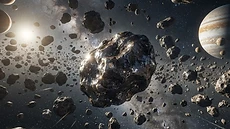
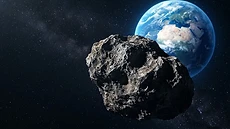
Space is not as empty as it appears from the surface of our planet. Thousands of objects orbit the sun in paths that bring them into our celestial neighbourhood, a topic often explored in the context of the economic and scientific potential of asteroid mining. While the risk of a catastrophic collision is low, the potential for an impact to trigger a tsunami remains a subject of serious study among geophysicists and planetary scientists.
Near-Earth Asteroid Watch
Powered by Flarient — embed this on your site →
Water covers over seventy percent of the Earth, making the ocean the most statistically likely target for any incoming bolide. When a large object enters the atmosphere and strikes the sea, it releases an immense amount of kinetic energy instantaneously. This article examines how these events translate into waves and what that means for global safety.
The Science Behind It
When a [near-Earth asteroid](/ #asteroids) strikes the ocean, the process is fundamentally different from a seismic earthquake. A subduction zone earthquake displaces massive sections of the seabed, whereas an asteroid impact involves the rapid transfer of energy from a high-velocity solid body into a fluid medium.
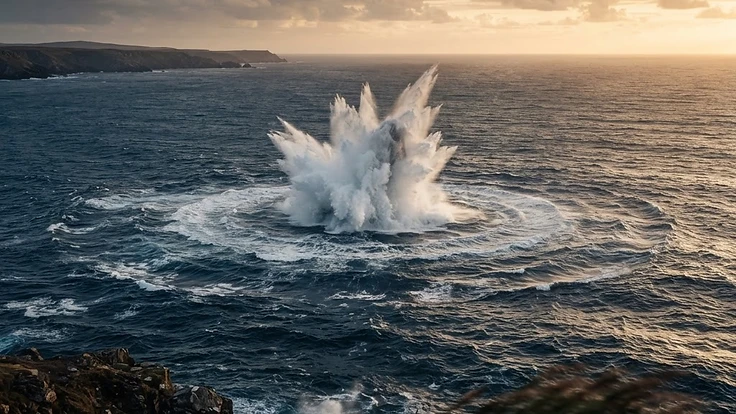
Upon impact, the object creates a massive cavity in the water column, essentially punching a hole into the sea. As the surrounding water rushes inward to fill this void, it creates a powerful upward surge, generating waves that radiate outwards from the centre of the impact.
Because the ocean is deep, this energy does not dissipate immediately. Unlike wind waves that only affect the surface, an asteroid impact creates a displacement of the entire water column, allowing the resulting waves to travel long distances with significant momentum.
However, these waves lose height quickly as they propagate away from the source. While an impact in deep water might create a massive splash, the wave height significantly diminishes before it reaches a shoreline unless the impact occurs on the continental shelf.
Real-World Implications
Infrastructure near the coast is primarily designed to withstand storm surges and seismic tsunamis. An asteroid-generated event would differ in terms of warning time, as there is currently no global detection system capable of providing a multi-hour alert for a surprise impact from a small, dark object.
Beyond the immediate wave, an impact of sufficient size would inject vast quantities of water vapour and debris into the atmosphere. This could trigger short-term climate anomalies or localised weather changes, further complicating the emergency response for coastal communities already dealing with flooding.
It is helpful to remember that most [near-Earth objects](/ #asteroids) are monitored by NASA and other space agencies. Scientists use orbital data to calculate the probability of a close approach, allowing us to identify potentially hazardous rocks years or even decades before they reach our vicinity.
Understanding the frequency of these events is part of our broader study of space risks, much like how we track solar activity or monitoring solar storms to protect satellite infrastructure. Preparedness relies on maintaining this vigilance and refining our impact modelling techniques.
What You Can Do
Public awareness is the best form of preparedness for any low-probability, high-consequence event. You can stay informed by tracking planetary science updates through official channels like NASA CNEOS, which maintains comprehensive records of known objects.
If you want to understand the environment around us, start by exploring the tools available on Flarient. While solar weather is more frequent than asteroid impacts, keeping an eye on our live dashboard helps you grasp the scale of the space weather events we actually face on a daily basis.
You might also consider using our embeddable widgets on your own website or blog to help educate your community about the realities of space safety. Knowledge is a buffer against alarmism, and learning about the mechanics of our solar system is a great way to stay grounded.
Key Takeaways
Asteroids definitely have the potential to cause tsunamis if they land in the ocean. However, the probability of such an event occurring in our lifetime is extremely low, and the wave energy dissipates rapidly in deep water.
Focusing on the long-term monitoring of space objects is the most effective strategy for mitigation. By supporting space agencies and engaging with accessible scientific data, we ensure that humanity remains prepared for whatever the cosmos might throw our way.
Remember that while the sky above holds many mysteries, we are currently better equipped to identify potential threats than at any point in history. Stay curious, stay informed, and continue to look at the stars with a blend of wonder and scientific rigour.
People Also Ask
How often do asteroids hit the Earth?+
Small objects hit the Earth's atmosphere daily, most burning up as meteors. Large, dangerous asteroids that could cause significant damage are extremely rare, occurring on timescales of thousands or millions of years. NASA actively monitors space for any objects that pose a credible threat to our planet.
What happens if an asteroid hits the ocean?+
An asteroid impact in the ocean creates a massive cavity and vertical surge of water. This initial displacement creates a tsunami that radiates outward. However, the energy density decreases rapidly as the wave travels, meaning the danger is highest for coastlines located near the specific point of impact.
How does NASA track potential asteroid threats?+
NASA's Planetary Defense Coordination Office uses a global network of telescopes and radar to identify near-Earth objects. By calculating their orbits, astronomers can predict potential close approaches decades in advance, allowing for the classification of objects based on their size and trajectory relative to the Earth.
Continue Reading
Forecast These Questions
View all →Express your probability on these active forecast questions.