Identifying Noctilucent Clouds in the Summer Sky
Learn to identify the ethereal glow of noctilucent clouds, the highest clouds in our atmosphere, and discover why these electric blue displays occur.
Observing Noctilucent Clouds in the Night Sky
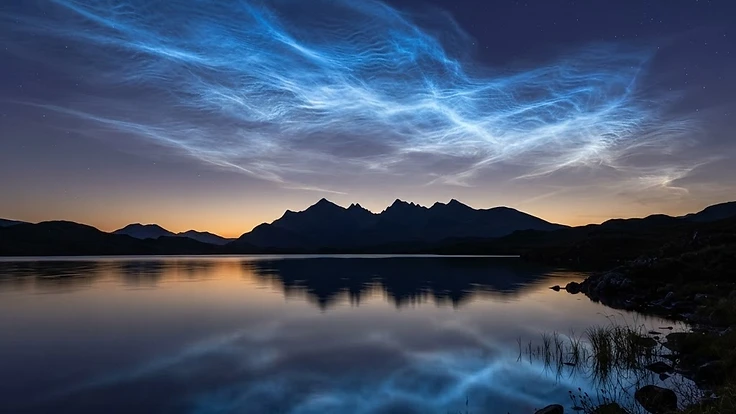
Noctilucent clouds, often called night shining clouds, represent one of the most spectacular atmospheric phenomena visible to the naked eye. These wispy, electric blue streaks appear against the dark backdrop of a summer night, lingering long after the sun has dipped below the horizon. Unlike common weather patterns, these formations exist at the very edge of space, providing a unique bridge between our atmosphere and the vacuum beyond.
Catching a glimpse of these clouds requires patience and knowledge of the twilight hours. They are not merely pretty lights in the sky but are dynamic indicators of the complex state of our upper atmosphere. Recognising them helps observers distinguish between standard high-altitude cirrus and these rare, ice-laden structures.
The Science Behind Noctilucent Clouds
These clouds form in the mesosphere, roughly 80 kilometres above the surface of the Earth. At this extreme altitude, temperatures plummet to levels cold enough for water vapour to freeze into ice crystals around microscopic meteor dust and smoke particles. This height places them well above standard weather systems, near the boundary where we observe the aurora dance.
They only become visible when the sun is between 6 and 16 degrees below the horizon. At this specific geometry, the sun illuminates the clouds from beneath while the ground remains in darkness. If you wish to learn more about the terminology used to describe such high-altitude occurrences, you can consult our glossary for detailed definitions.
Real-World Implications of Upper Atmosphere Research
Studying these clouds provides critical data on climate change and the composition of the mesosphere. Because they rely on precise temperature and moisture conditions, their frequency and brightness can act as a proxy for long-term changes in the upper reaches of our atmosphere. Scientists use them to model atmospheric circulation patterns that affect the entire planet.
Additionally, the presence of such delicate structures reminds us of the interconnected nature of our environment. Monitoring the atmosphere helps us understand how space weather, such as geomagnetic storm events or solar wind, might influence even the highest layers of our sky. Our blog contains further information on how various atmospheric disturbances impact modern infrastructure.
What You Can Do to Spot Them
To spot noctilucent clouds, look towards the poleward horizon during the nautical twilight months of your local summer. You will need a clear view unobstructed by trees or buildings. If you are travelling through regions like Iceland, Norway, Canada, or Alaska, consider joining guided aurora tours which often provide expert local guidance on navigating the night sky in diverse environments.
Utilise reliable local aurora forecast tools to ensure you are looking at the right time. You can also explore our gallery to compare your sightings with confirmed images. Many enthusiasts also use embeddable widgets on their own websites to share current atmospheric conditions with their local community.
Key Takeaways for Amateur Astronomers
Noctilucent clouds serve as a stunning reminder of the beauty hidden in plain sight. By understanding their formation in the mesosphere and the specific lighting conditions required to see them, anyone can participate in the act of amateur atmospheric observation. Keep your eyes on the horizon as the summer evenings grow dark.
Continued interest in these phenomena encourages a deeper appreciation for the physics governing our planet. Whether you are tracking the latest solar activity or simply enjoying a clear night, the sky always has something new to offer. Always remember to document your findings and share your observations with others to build a collective understanding of our skies.
For observers
If you want to try photographing noctilucent clouds yourself, one compact option to explore is a portable astrophotography setup that can run from a roadside observing spot and handle twilight exposures. See an accessible way to capture the sky
Ad · Affiliate link. Flarient may earn a commission if you purchase through this link, at no additional cost to you.
People Also Ask
What time of year are noctilucent clouds most visible?+
Noctilucent clouds are primarily visible during the summer months in both the Northern and Southern Hemispheres. Observers should look toward the poleward horizon during the late evening or early morning hours when the sun is positioned between 6 and 16 degrees below the horizon.
How high are noctilucent clouds compared to normal clouds?+
While typical weather clouds exist in the troposphere below 15 kilometres, noctilucent clouds form in the mesosphere at an altitude of approximately 80 kilometres. This extreme height allows them to catch sunlight long after the sun has set for observers on the ground.
Are noctilucent clouds related to the aurora?+
Noctilucent clouds and auroras are both high-altitude phenomena, but they have different origins. Auroras are caused by solar wind particles colliding with the atmosphere, whereas noctilucent clouds are physical ice crystal formations that occur when water vapour freezes around dust particles in the cold mesosphere.
Continue Reading
Forecast These Questions
View all →Express your probability on these active forecast questions.