Noctilucent Clouds Are More Common Than You Might Think
Noctilucent clouds are glowing, high-altitude phenomena that captivate observers in summer. While often called rare, they are becoming increasingly frequent.
Noctilucent Clouds Are More Common Than You Might Think
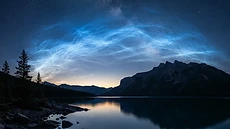
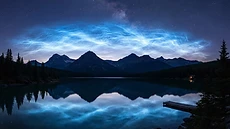
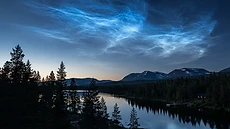
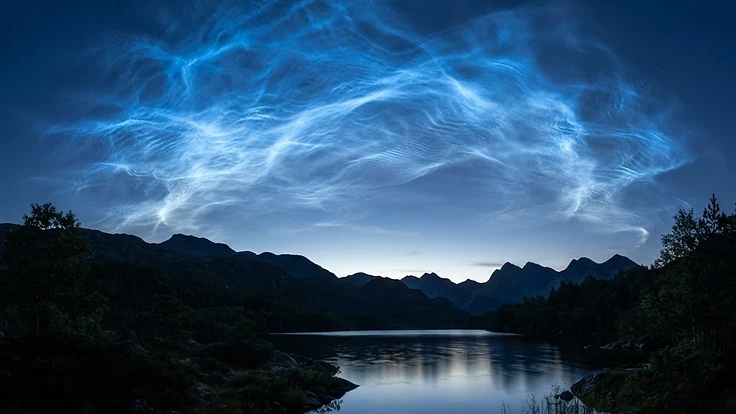
Noctilucent clouds, or night shining clouds, offer a breathtaking spectacle for those who know where to look. These luminous displays appear as electric blue streaks against the twilight sky, lingering long after the sun has dipped below the horizon. While they are frequently labelled as rare, modern observations suggest that these clouds are appearing with increasing regularity during the summer months.
Understanding their presence helps us appreciate the delicate balance of our upper atmosphere. They serve as a unique indicator of conditions at the edge of space, providing researchers with data that is otherwise difficult to collect. By observing them, we gain insight into the complex layers that protect our planet from cosmic interference, much like how we study the aurora to understand geomagnetic activity.
The Science Behind It
These clouds form in the mesosphere, roughly 80 kilometres above the Earth surface, which makes them the highest clouds in our atmosphere. They consist of ice crystals that gather around microscopic meteoric dust or smoke particles. Because they sit so high, they catch the light of the sun even when the observer on the ground is in total darkness.
This phenomenon requires three specific ingredients: extremely cold temperatures, water vapour, and tiny particles to act as nuclei for ice formation. During the summer solstice period, the mesosphere paradoxically reaches its coldest point, allowing these ice crystals to persist. This creates the characteristic silvery glow that defines their appearance, often mimicking the visual impact of an aurora on the horizon.
Real-World Implications
While they are primarily a visual wonder, noctilucent clouds act as a sentinel for changes in the upper atmosphere. Scientists have noticed a correlation between the frequency of these clouds and rising levels of greenhouse gases. As methane concentrations increase, they break down into water vapour in the upper atmosphere, providing more fuel for these clouds to form.
This shift highlights how human activity leaves a fingerprint far above the Kármán line. Monitoring these clouds allows us to track subtle shifts in atmospheric composition. It provides a visual, real-time warning system that complements our study of solar wind and its impact on the aurora borealis, as discussed in our deep dive on The Physics Behind How Aurora Borealis Are Made.
What You Can Do
If you want to catch these elusive displays, timing and location are everything. They are best viewed from latitudes between 50 and 70 degrees during the summer months when the sun is between 6 and 16 degrees below the horizon. You do not need expensive equipment, just a clear view of the northern sky and a bit of patience.
For those chasing the best night sky spectacles, our guided aurora tours in countries like Iceland, Norway, and Canada offer expert perspectives on finding celestial wonders in any climate. While waiting for a display, you can use Flarient tools to monitor the local aurora forecast or check the current K-index to see if other space weather events might be enhancing your night view.
Integrating these observations into your routine makes identifying atmospheric events much easier.
Key Takeaways
Noctilucent clouds remind us that the atmosphere is a dynamic and interconnected system. They are not as rare as the history books once suggested, and their growing frequency signals meaningful changes in our environment. By paying attention to these high-altitude displays, we develop a deeper connection to the space surrounding our planet.
Whether you are a seasoned observer or a newcomer to sky-watching, there is always more to learn. Exploring the glossary can help clarify complex terms, while our archive of past atmospheric events provides context for what you might see tonight. Keep looking up, because the sky is constantly telling us a story about the world beneath it.
Twilight field note
These high altitude clouds turn summer twilight into a distinctive observational subject, especially for readers interested in photographing unusual sky phenomena. Explore a compact capture setup as one way to record their changing shapes and colors from the ground.
Ad · Affiliate link. Flarient may earn a commission if you purchase through this link, at no additional cost to you.
People Also Ask
At what altitude do noctilucent clouds form?+
Noctilucent clouds form in the mesosphere, which is approximately 80 kilometres above the Earth's surface. This altitude is significantly higher than typical weather clouds, placing them near the boundary of space where the atmosphere is thin and temperatures drop to extreme lows.
What is the best time of year to see them?+
These clouds are best observed during the summer months, specifically between late May and August in the Northern Hemisphere. They require the sun to be at a specific angle below the horizon, which occurs most reliably during these peak summer weeks.
Do noctilucent clouds affect radio communication?+
Generally, noctilucent clouds do not directly disrupt radio communications. However, they are related to ionospheric conditions that can influence signal propagation. Researchers study them to better understand the chemical processes occurring in the high atmosphere, which indirectly aids in our broader space weather monitoring efforts.
Continue Reading
Forecast These Questions
View all →Express your probability on these active forecast questions.