Noctilucent Clouds Pose No Threat to Life on Earth
Noctilucent clouds are a beautiful atmospheric phenomenon that occur high in the sky. While they shimmer with an ethereal light, they are entirely harmless to people, technology, and the environment.
Noctilucent Clouds Pose No Threat to Life on Earth
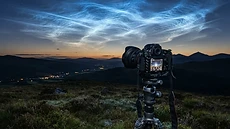
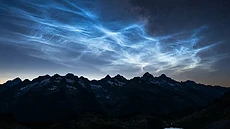
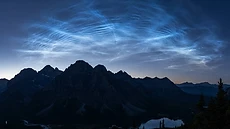
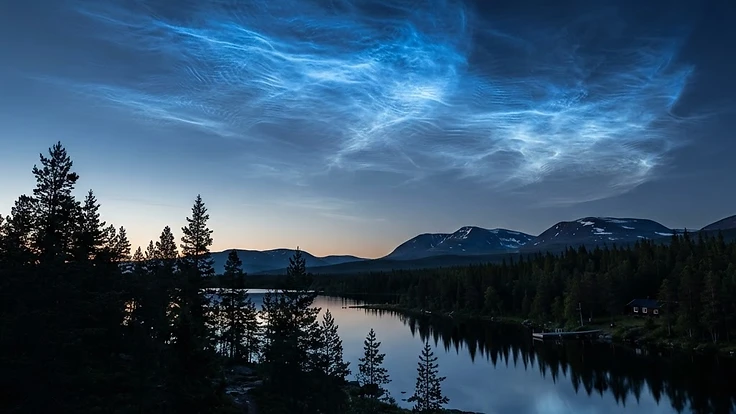
High above the surface of the Earth, sometimes during the deep twilight of summer, thin ribbons of electric blue light streak across the sky. These are noctilucent clouds, or night shining clouds, which form at the extreme edge of our atmosphere. People often wonder if these shimmering displays indicate some hidden danger from space or atmospheric instability.
It is important to clarify that these clouds are a purely physical phenomenon. They present absolutely no risk to human health or the stability of our planet. They are as harmless as a standard summer mist or a cirrus cloud, simply occurring at a much higher altitude where the sun can still illuminate them long after it has set for observers on the ground.
The Science Behind It
Noctilucent clouds form in the mesosphere, roughly 80 kilometres above the surface of the Earth. This region is significantly colder than the layer where our weather typically occurs. For these clouds to manifest, they require three ingredients: cold temperatures, water vapour, and tiny particles, usually from meteoroid smoke, to serve as nuclei for ice crystals to grow.
These clouds are most commonly observed at high latitudes during the summer months. As the sun dips below the horizon for observers on the ground, the sunlight still reaches these high altitude layers, reflecting off the ice crystals and creating a distinct, glowing appearance against the dark sky. You can find more detail on how these clouds form in our previous piece titled Noctilucent Clouds Glow in the High Atmosphere.
Unlike an intense geomagnetic storm, which can disrupt electrical grids and satellite operations, noctilucent clouds are static atmospheric structures. They do not interact with the solar wind or the magnetic field in a way that generates harmful energy. They are a passive optical effect of light interacting with ice in the upper atmosphere.
Real-World Implications
Because these clouds reside so high in the atmosphere, they do not impact the weather we experience daily. They have no bearing on air travel, communications, or the space weather conditions that affect our satellite operations.
Their presence does not signify a change in the magnetosphere or an incoming solar event.
Some observers have incorrectly linked their increased frequency to climate change. While scientists continue to model how changing water vapour levels in the upper atmosphere might influence their appearance, the clouds themselves are not a precursor to catastrophe. They are merely a diagnostic tool for researchers studying the dynamics of the mesosphere.
If you find yourself worried about the state of the sky, it helps to distinguish between atmospheric phenomena and genuine space threats. Understanding the glossary of space terms can help you separate harmless optical events from the real solar activity that NASA monitors daily to protect our critical infrastructure.
What You Can Do
Instead of fearing these clouds, consider them an invitation to appreciate the scale of our atmosphere. If you enjoy sky watching, you might also be interested in catching a display of the aurora when solar activity is high. For those planning a trip, booking guided aurora tours in locations like Iceland, Norway, Canada, or Alaska is an excellent way to see the night sky in all its glory.
If you want to keep track of what is happening above you, make use of digital tools that demystify space events. You can monitor local aurora forecast data or explore our solar imagery to see the sun in real time. Staying informed through reliable data is the best way to maintain perspective on the wonders of the natural world.
Key Takeaways
Noctilucent clouds are a spectacular byproduct of ice crystals at the edge of space. They are completely safe and do not represent any hazard to your daily life or technology. They do not correlate with solar flares or other dangerous space events that might otherwise require public preparedness.
By learning to identify these clouds, you gain a deeper connection to the upper atmosphere. Take the time to observe the night sky with a sense of wonder rather than alarm. When you know the science behind what you are seeing, you can better appreciate the complex, beautiful, and ultimately safe mechanics of our home planet.
Twilight observation
Noctilucent clouds are best appreciated as a patient twilight observation, especially from higher latitudes during summer. Readers who want to document these delicate structures can explore a compact capture setup for recording unusual scenes in the sky.
Ad · Affiliate link. Flarient may earn a commission if you purchase through this link, at no additional cost to you.
People Also Ask
Can noctilucent clouds affect radio signals?+
Noctilucent clouds do not directly impact standard radio communication. While the mesosphere contains the ionosphere, which is critical for radio wave propagation, these ice-crystal clouds are not dense enough or electrically charged enough to cause signal degradation or interference for terrestrial or satellite communications.
Why are noctilucent clouds only visible in summer?+
These clouds require extremely cold temperatures, often below -120 degrees Celsius, to form. During the summer, the mesosphere actually cools down significantly at high latitudes, allowing water vapour to condense around meteoritic dust and form ice crystals. This specific temperature profile is rarely met during the winter months.
Are noctilucent clouds linked to solar cycles?+
Noctilucent clouds are primarily driven by atmospheric dynamics rather than solar cycles. While solar activity influences the density of the upper atmosphere through heating, the occurrence of these clouds is more closely tied to seasonal cooling patterns and the amount of water vapour reaching the mesosphere.
Continue Reading
Forecast These Questions
View all →Express your probability on these active forecast questions.