
Space Weather Impacts on Satellite Operations
Space weather poses significant challenges to orbital assets. Learn how solar events interact with satellites and what operators do to stay protected.
Space Weather Impacts on Satellite Operations
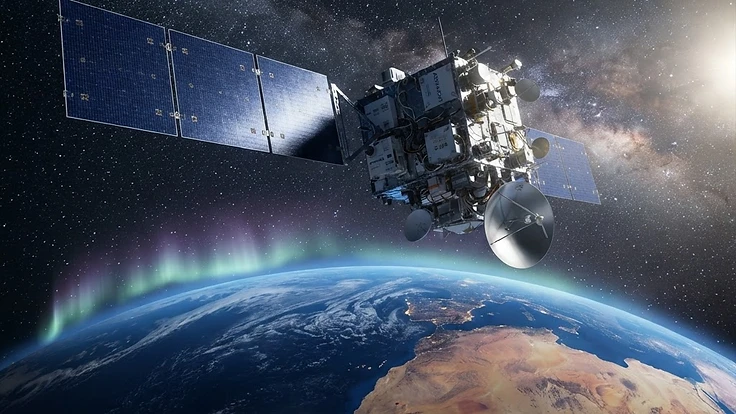
Modern society relies heavily on a fleet of orbiting satellites to facilitate global communications, navigation, and environmental monitoring. These delicate instruments operate in an environment far more volatile than the vacuum of space suggests. When the Sun exhibits increased activity, it sends waves of plasma and radiation cascading toward Earth.
This interaction can degrade performance, corrupt data, or even permanently disable orbital hardware.
Understanding how solar weather influences space infrastructure is essential for maintaining the connectivity we take for granted. As we rely increasingly on these systems, the ability to anticipate and mitigate the consequences of solar storms becomes a vital task for space agencies and private operators alike.
The Science Behind It
The Sun operates on a cycle of approximately 11 years, dictating the frequency and intensity of solar activity. During peak times, the solar atmosphere ejects vast clouds of charged particles known as coronal mass ejections. These particles move at speeds reaching 3,000 km/s, eventually interacting with Earth's magnetic field.
This physical interaction is often measured by the Kp index, a global measure of geomagnetic disturbance. When these charged particles collide with the magnetosphere, they cause atmospheric heating and density fluctuations. This effect causes orbital drag, which forces low Earth orbit satellites to deviate from their paths, leading to potential loss of contact.
Beyond drag, high-energy particles can penetrate sensitive electronics. This can lead to single event upsets, where bits flip in onboard computers, or total hardware failure. Engineers monitor these risks using data like solar imagery to predict when environmental conditions might exceed design tolerances.
Real-World Implications
When a major geomagnetic storm strikes, the consequences extend far beyond scientific data collection. Satellites can suffer from charge buildup on their external surfaces, leading to destructive electrostatic discharges. This phenomenon is a primary reason for mission failure during peak periods of solar activity.
Communication disruptions are another common concern. High-frequency signals struggle to penetrate a disturbed ionosphere, affecting everything from aircraft navigation to satellite radio. Operators often look at the storm leaderboard to understand how historical events have impacted orbital infrastructure in the past.
For those interested in the broader context, reading about monitoring solar storms to protect satellite infrastructure provides deep insight into current industry strategies. Protecting these assets is not just about keeping the internet running, it is about maintaining the safety of air travel and global logistics.
What You Can Do
Staying informed is the best way to understand the risks posed by space weather to your own technology. Users can explore resources like the NOAA SWPC to see live data feeds.
If you manage a website or a technical blog, you can use embeddable widgets to provide your audience with real-time solar data.
Many enthusiasts also turn to resources like the glossary to learn the technical language used to describe these events. If you are specifically tracking how these storms manifest in the night sky, you can find your [local aurora forecast]( /#local) to see the expected geomagnetic activity levels. This helps in understanding the intensity of the space weather event currently unfolding.
Rather outsource the chase? Guided Northern Lights tours in Tromsø, Fairbanks, Rovaniemi and the Isle of Mull put a local between you and the forecast — you just show up and look north.
Key Takeaways
Space weather is a permanent fixture of our environment, dictated by the rhythm of solar cycles. While we cannot stop the Sun from flaring, we can improve our preparedness by better modelling its effects on satellite hardware. The industry is constantly learning, and every solar maximum provides more data for future resilience.
By leveraging better monitoring and design, we ensure that our reliance on space remains secure. For those looking to continue their learning, browsing more articles offers a wealth of information on the intersection of solar physics and human technology. Vigilance and proper data usage remain our best defence against the dynamic nature of our star.
People Also Ask
Can solar storms destroy satellites?+
Yes, extreme solar storms can cause permanent hardware damage through electrostatic discharge or surface charging. While most satellites are hardened against radiation, severe events can trigger anomalies, corrupt computer data, or cause complete mission failure due to short-circuits in the internal electronics.
What is the Kp index?+
The Kp index is a global geomagnetic activity index that ranges from 0 to 9. It represents the intensity of disturbances in Earth's magnetic field caused by solar wind and coronal mass ejections. Higher values indicate more significant geomagnetic storms that can impact satellite operations and power grids.
How do satellites avoid space weather issues?+
Satellite operators use predictive space weather models to anticipate incoming storms. They may temporarily switch sensitive instruments into safe mode, alter the satellite's orientation to minimize exposure, or perform station-keeping maneuvers to compensate for increased atmospheric drag caused by heating.
Continue Reading
Forecast These Questions
View all →Express your probability on these active forecast questions.
Related Articles

Satellite Operators Use Advanced Strategies to Mitigate Space Weather Risks
2026-11-10 · 5 min read

Understanding the Mechanics of Sun-Synchronous Orbits
2026-10-16 · 5 min read

Tracking the International Space Station in Real Time
2026-10-02 · 5 min read