Solar Flares Are Not Fully Predictable
Solar flares follow cycles but remain unpredictable in timing and intensity. Understanding how space weather impacts our technology is vital for modern life.
Solar Flares Are Not Fully Predictable
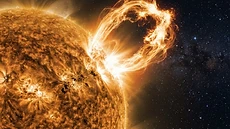
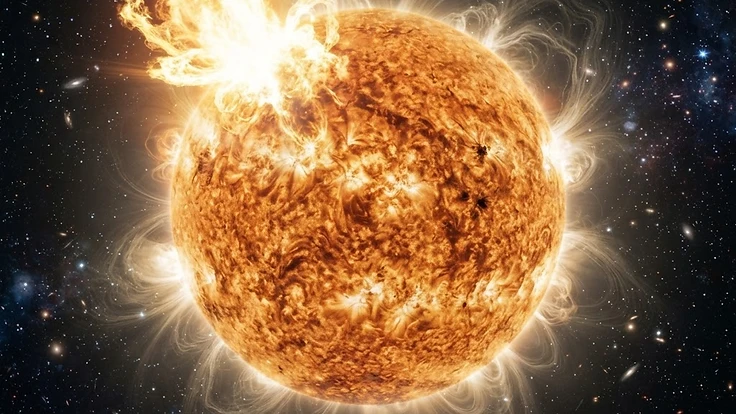
Solar flares are massive bursts of radiation originating from the release of magnetic energy associated with sunspots. These phenomena occur throughout the eleven year solar cycle, a period that began its current phase, Solar Cycle 25, in December 2019.
Live Solar Flare Monitor
Powered by Flarient — embed this on your site →
While we understand the underlying solar patterns that dictate long term activity, predicting the exact timing and magnitude of a single flare remains impossible. Much like weather patterns on Earth, solar activity presents a complex challenge that defies precise day to day forecasting.
The Science Behind It
The sun functions as a giant magnetic dynamo, and its surface is a dynamic environment of shifting fields. When these magnetic lines become twisted and eventually snap, they release energy in the form of a solar flare.
Flares are classified into groups based on their X-ray intensity, starting from the smallest A class and moving through B, C, and M, up to the powerful X class. Each category represents a tenfold increase in energy output.
Scientists monitor the sun using advanced solar imagery, such as coronagraphs, to observe these eruptions as they happen. However, the light from these events travels at roughly 300,000 kilometres per second, meaning we only become aware of the flare the moment it hits us.
While solar flares release electromagnetic radiation, they are often accompanied by coronal mass ejections. These clouds of charged particles travel much slower than light, moving through the solar wind at speeds typically between 400 and 700 kilometres per second.
Real-World Implications
When these charged particles interact with the planetary magnetic field, they trigger geomagnetic storms. These events are measured by the Kp index, which helps classify the intensity of the geomagnetic storm on a scale from zero to nine.
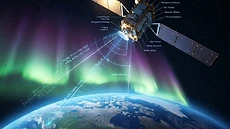
Major storms can interfere with satellite operations, radio communications, and even ground based electrical grids. Satellites orbiting at low altitudes, like those near the 408 kilometre mark where the ISS resides, can experience increased atmospheric drag during solar events.
High energy particles from extreme flares also pose radiation risks to astronauts and can affect high frequency radio transmissions used by aircraft. Understanding these risks is as important as tracking the path of a near-Earth asteroid in our cosmic neighbourhood.
What You Can Do
Preparedness begins with awareness. By tracking current solar data through resources like the NOAA SWPC, you can stay informed about potential space weather events before they impact systems.
If you are interested in the visual result of these interactions, learning [how aurora lights are formed](https://www.flarient.com/blog/how-aurora-lights-are-formed) provides a deeper appreciation for the phenomenon.
For those seeking the best views, you can join guided aurora tours across destinations like Iceland, Norway, Canada, and Sweden.
Developers and hobbyists can also integrate live solar data into their own platforms using embeddable widgets. These tools allow you to keep your community updated on space weather without needing to monitor the data yourself.
Key Takeaways
Solar flares are a natural consequence of the sun's magnetic activity, and they remain inherently unpredictable in their short term manifestations. While we have mastered the art of tracking cycles, the exact timing of individual eruptions keeps the field of heliophysics active.
Technological resilience is our best defence against these events. By staying informed about solar trends and monitoring current conditions, we ensure that our infrastructure remains secure even during high solar activity.
For those curious about historical context, exploring our archive reveals how past solar events have shaped our understanding of the space environment.
Keeping a watchful eye on the sun allows us to better navigate the complexities of our increasingly spacefaring world.
People Also Ask
Can solar flares destroy the internet?+
While an extreme solar event could damage subsea cables and satellite hardware, leading to significant internet outages, it is unlikely to permanently destroy the global internet infrastructure. Modern systems are increasingly hardened against geomagnetic induced currents to mitigate the risks posed by intense solar storms.
What is the difference between a solar flare and a CME?+
A solar flare is an intense burst of electromagnetic radiation, such as X-rays, which travels at the speed of light. A coronal mass ejection is a massive cloud of solar plasma and magnetic field lines that travels through space much more slowly than light.
How often do X-class solar flares occur?+
X-class solar flares occur relatively infrequently compared to smaller C-class flares. During the peak of a solar cycle, there might be several X-class flares per year, whereas during the solar minimum, there may be none at all. Their frequency is directly tied to the 11-year solar cycle.
Continue Reading
Forecast These Questions
View all →Express your probability on these active forecast questions.