Solar Flares Explained
Solar flares are intense bursts of radiation originating from the sun. Understanding these energetic events is crucial for protecting our global technological infrastructure.
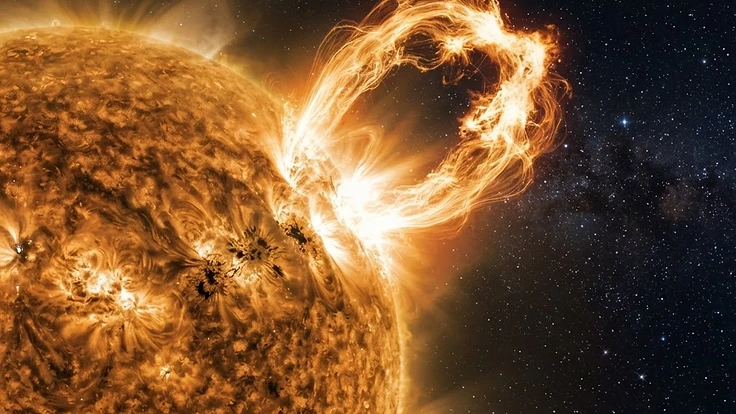
Solar Flares Are Intense Bursts Of Energy
Solar flares represent the most powerful explosions in our solar system. They occur when magnetic energy that has built up in the solar atmosphere is suddenly released.
Live Solar Flare Monitor
Powered by Flarient — embed this on your site →
These events send radiation across the entire electromagnetic spectrum, from radio waves to X-rays and gamma rays. While the sun is constantly active, these flares occur more frequently during the peak of the 11 year solar cycle.
The Science Behind It
The sun is a roiling sphere of charged plasma. Its magnetic field lines are constantly twisted and stretched by the rotation of the sun. When these lines snap and reconnect, they release a tremendous amount of energy.
This process accelerates particles to extreme speeds. Photons released during a flare travel at the speed of light, reaching Earth in about eight minutes. These bursts are categorised by their X-ray brightness using the A, B, C, M, and X classes, where each letter represents a tenfold increase in energy output.
Flares are often associated with coronal mass ejections, which are massive clouds of solar plasma flung into space. While flares are bursts of light, these ejections contain actual matter that can take days to reach our planet. You can view high-resolution solar imagery from orbiting observatories to see these structures in detail.
Real-World Implications
When radiation from a flare hits Earth's upper atmosphere, it creates ionisation. This disrupts radio communications and can affect high-frequency signals used by aviation and maritime industries. Professionals often study the glossary to better distinguish between these immediate electromagnetic effects and the subsequent geomagnetic storms.
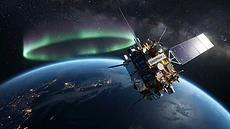
Beyond communications, these events pose risks to satellite operations. Increased atmospheric density caused by X-ray heating creates drag, which can degrade orbital stability for low-Earth orbit satellites. Readers can learn more about how how solar flares disrupt GPS accuracy and satellite navigation to understand the technical challenges engineers face.
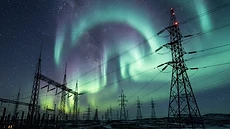
In extreme cases, induced currents on the ground can threaten power grids. While modern infrastructure is more robust than it was during the 1859 Carrington Event, the scale of our current global network makes us uniquely vulnerable. Monitoring the [G-scale](/ #kp) helps grid operators prepare their systems for potential fluctuations.
What You Can Do
Preparedness begins with awareness. By staying informed about the current space weather environment, you can mitigate the impact of solar activity on your technology or travel plans. If you are a webmaster or business owner, you can embeddable widgets on your site to provide your audience with live data.
Those interested in the visual spectacles often triggered by these solar events, known as the [aurora](/ #aurora), should monitor local conditions. If you are planning an expedition to see the lights in destinations like Iceland, Norway, or Canada, consider booking guided aurora tours to improve your chances of success.
These guides possess the local expertise to navigate the complex variables of aurora visibility across various countries.
Key Takeaways
Solar flares are a natural consequence of the sun's magnetic cycle. They remind us that we live in the atmosphere of an active star.
While we cannot stop these solar eruptions, we can improve our ability to predict them and build more resilient systems. By monitoring data and understanding the basic mechanics of solar weather, we can better protect the digital foundations of our modern society. Stay curious about our cosmic neighbourhood and keep watching the skies.
People Also Ask
How often do solar flares occur?+
The frequency of solar flares depends on the solar cycle, which lasts approximately 11 years. During solar maximum, the sun can produce multiple flares every day, whereas during solar minimum, days or weeks may pass without a significant eruption. Current forecasts are based on tracking active regions on the solar disk.
Can solar flares cause the end of the world?+
No, solar flares do not pose an existential threat to humanity. While a massive solar storm could disrupt global power grids, communication systems, and satellites, the Earth's atmosphere and magnetic field provide a robust defence, shielding life on the surface from the most dangerous levels of solar radiation.
What is the difference between a solar flare and a CME?+
A solar flare is a sudden flash of intense electromagnetic radiation, including X-rays and ultraviolet light. A coronal mass ejection, or CME, is a much larger release of actual solar plasma and magnetic field lines. Flares arrive in minutes, whereas CMEs take one to three days to reach Earth.
Continue Reading
Forecast These Questions
View all →Express your probability on these active forecast questions.