Solar Flares Are Proven Scientific Events
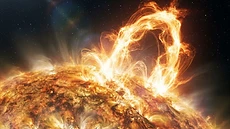
Solar flares are not theoretical, they are powerful electromagnetic events driven by the Sun's magnetic cycles. Understanding their impact is essential for modern technology.
Solar Flares Are Proven Scientific Events
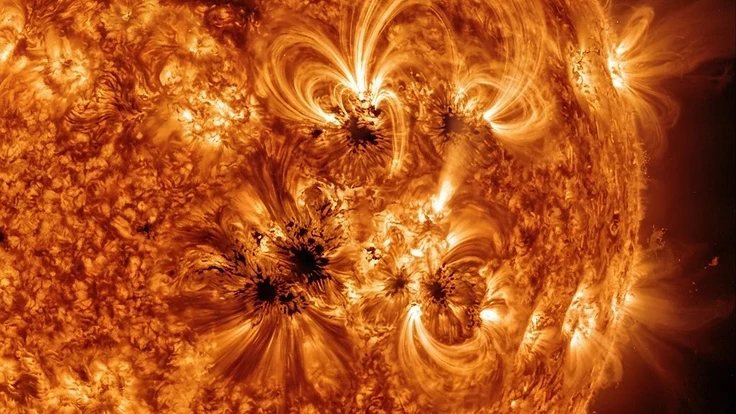
Solar flares are intense, measurable bursts of radiation originating from the Sun, and they represent one of the most powerful forces in our solar system. When magnetic energy builds up near sunspots, it is released in a sudden, explosive manner, sending photons across the spectrum into space.
Live Solar Flare Monitor
Powered by Flarient — embed this on your site →
These events are not mere speculation, they are documented daily by global space agencies. Researching the mechanics of the Sun helps us understand how our nearest star dictates conditions throughout the heliosphere, affecting everything from satellite orbits to long-range radio propagation.
The Science Behind It
The Sun operates on an approximate 11-year cycle, with Solar Cycle 25 having officially commenced in December 2019. During these cycles, the magnetic field lines become twisted and stressed, eventually snapping and reconnecting in a process known as magnetic reconnection.
This release of energy accelerates charged particles to incredible speeds. While electromagnetic radiation travels at light speed of 300,000 kilometres per second, Coronal Mass Ejections, often associated with flares, contain plasma moving at up to 3,000 kilometres per second.
Solar flare intensity is classified using a scale of A, B, C, M, and X, with each class being ten times more powerful than the last. These ratings allow scientists to categorise events and analyse how they might interact with Earth's protective magnetosphere. You can explore solar imagery from the Solar Dynamics Observatory to visualise these magnetic structures in detail.
Real-World Implications
Solar activity directly influences our technological infrastructure, particularly in high-altitude environments. Satellites orbiting well above the 100-kilometre Kármán line must account for increased atmospheric drag caused by solar heating, a topic explored in our study of how the solar cycle dictates radio communication conditions.
Geomagnetic storms, measured by the K-index, are the terrestrial result of these solar events. A strong storm can induce currents in ground-based power grids, potentially affecting global stability as discussed in our analysis on solar flares influence global power grid stability.
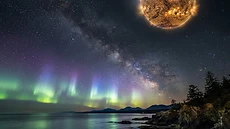
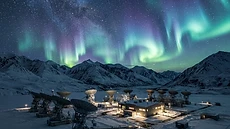
Beyond technical interference, these events trigger the aurora. When solar wind interacts with the Earth's magnetic field, it creates spectacular light displays in the upper atmosphere. If you want to experience this natural wonder, you can book guided aurora tours across prime locations like Iceland, Norway, Alaska, and Finland.
What You Can Do
Staying informed about solar activity is easier than ever with digital tools designed for clarity. You do not need a degree in astrophysics to track these events, as live data is available through a [local aurora forecast]( /#local) that provides visibility insights for your specific coordinates.
If you run a website or community page, consider using embeddable widgets to provide your audience with real-time solar data. Keeping track of the storm leaderboard also helps you understand the historical context of current events, giving you a better grasp of what signifies a major solar weather event versus typical solar activity.
Key Takeaways
Solar flares are real, observable, and scientifically quantified phenomena that play a defining role in our space environment. By understanding the 11-year solar cycle, we gain insight into the rhythm of the Sun and its impact on Earth.
While space weather can sound intimidating, the focus today is on preparation rather than fear. Using reliable data allows us to coexist safely with an active, magnetic star. For those interested in deeper research, our glossary provides definitions of these complex atmospheric terms.
People Also Ask
Can solar flares cause global blackouts?+
While extreme solar flares can induce currents in power grids, modern infrastructure is increasingly designed to mitigate these risks. Minor flares rarely cause widespread issues, but extreme G5-class storms can stress grids and cause localised power instabilities or transformer failures in vulnerable regions.
How do scientists measure solar flare intensity?+
Scientists use X-ray sensors on satellites to measure the peak flux of solar flares. They are categorised into classes A, B, C, M, and X, with X being the most powerful. Each letter represents a tenfold increase in energy output compared to the previous class.
Does a solar flare affect the weather on Earth?+
Solar flares do not change the Earth's daily weather or climate. They affect the upper atmosphere and magnetic field, impacting radio communications, satellite navigation, and power grids, but they do not cause changes to wind, rain, or local temperature patterns on the ground.
Continue Reading
Forecast These Questions
View all →Express your probability on these active forecast questions.