The Impact of Solar Particle Events on Spacecraft and Astronauts
Solar particle events pose risks to satellite hardware and human health in orbit. Understanding these high-energy phenomena is essential as we expand our presence in space.
Solar Particle Events Affect Spacecraft and Astronauts
Space is not a void of empty silence, but a dynamic environment shaped by the volatile behaviour of our nearest star. As human activities move further into orbit, we must recognise that solar particle events are a primary environmental challenge for long term operations.
These bursts of radiation occur when the Sun releases high energy protons and ions. For delicate electronics and living organisms travelling beyond the protection of our magnetic field, these events can be hazardous.
The Science Behind It
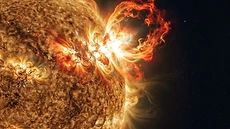
Solar particle events originate from intense solar activity, often associated with solar flares or coronal mass ejections. When the Sun experiences a violent magnetic reconfiguration, it accelerates particles to fractions of the speed of light.
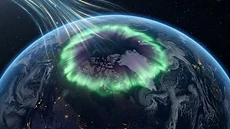
These energetic protons travel across the solar system within minutes or hours. While Earth possesses a magnetic shield that deflects most solar wind, which typically moves at speeds between 400 and 700 km/s, severe events can penetrate this defence.
The intensity of these events often correlates with the solar cycle, an 11 year period of fluctuating activity. Since Solar Cycle 25 began in December 2019, the frequency of these eruptions has climbed as the Sun moves toward its solar maximum.
Real-World Implications
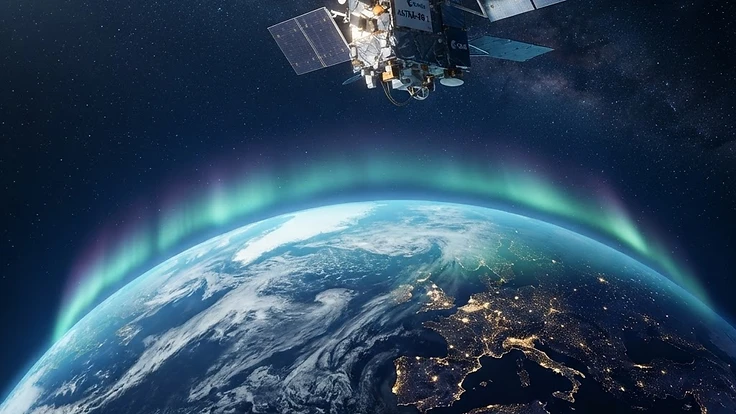
Spacecraft face significant risks when hit by high-energy particles. These impacts can cause single event upsets, which corrupt data in onboard computers or trigger erroneous commands that threaten mission safety.
Hardware degradation occurs through accumulated radiation damage, shortening the lifespan of sensitive instruments. If you look at how solar flares impact modern electronics, you see the fragility of modern satellite architecture.
Astronauts on the International Space Station, orbiting at 408 km, are partially protected by the Earth. However, high-latitude missions or future lunar transit expose crew members to increased radiation doses that demand strict monitoring and shielding protocols.
What You Can Do
Staying informed is the most effective form of protection. By tracking real time data, engineers and enthusiasts can anticipate periods of elevated risk before they arrive at our doorstep.
You can utilise embeddable widgets on your own platform to keep colleagues or partners aware of current space weather status. These tools simplify complex data streams into actionable intelligence.
If you are planning to witness the resulting aurora displays, consider booking guided aurora tours in countries like Iceland, Norway, Canada, or Sweden. These experts provide local context while you observe the visual proof of our Sun interacting with the atmosphere.
Key Takeaways
Solar particle events are a natural consequence of living within the heliosphere. While we cannot stop the Sun from erupting, our ability to monitor these events has reached unprecedented levels of accuracy.
Technological progress in shielding and prediction keeps our infrastructure resilient against even the strongest storms. Understanding the risks remains the foundation for building a sustainable future in space exploration and communication.
People Also Ask
What is the difference between a solar flare and a solar particle event?+
A solar flare is an intense burst of electromagnetic radiation across the spectrum. A solar particle event involves the actual ejection of high-energy protons and ions into space. While flares travel at the speed of light, particles move slower and can pose a more direct physical radiation hazard.
Are astronauts safe from solar radiation?+
Astronauts in low Earth orbit are shielded by the planet's magnetic field. However, during major solar particle events, radiation levels increase significantly. NASA monitors these risks constantly and may instruct crew members to move into better-shielded areas of the space station to minimise their exposure.
How are satellites protected from solar events?+
Satellite engineers use radiation-hardened components, redundant systems, and robust error-checking software to mitigate particle impacts. When a severe event is forecast, operators may temporarily switch off non-essential instruments or put satellites into a safe mode to prevent permanent hardware damage from electrical surges.
Continue Reading
Forecast These Questions
View all →Express your probability on these active forecast questions.