The Mechanics of Asteroid Impacts on Earth
Asteroid impacts are rare yet transformative events in Earth's history. Understanding how these near-Earth objects traverse space and interact with our atmosphere is essential for planetary defence.
The Mechanics of Asteroid Impacts on Earth
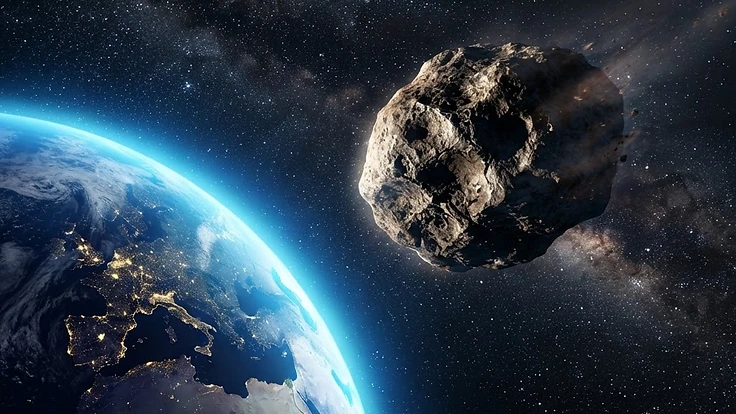
Earth orbits the Sun within a crowded solar system. While most debris remains in predictable paths, occasionally a near-Earth asteroid crosses our orbital trajectory. These encounters are governed by gravitational physics and the chaotic influence of larger planetary bodies.
Near-Earth Asteroid Watch
Powered by Flarient — embed this on your site →
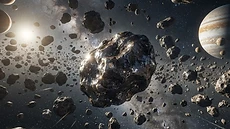
Most asteroids originate from the main belt located between Mars and Jupiter. Perturbations from these massive planets can nudge rocks toward the inner solar system. Over millions of years, these objects may become Earth-crossing bodies, changing the landscape of our planet permanently.
The Science Behind It
Gravity remains the primary driver of orbital changes for any rocky body. As an asteroid enters the inner solar system, its speed increases due to the Sun's massive gravitational pull. This motion is not random but follows precise elliptical paths determined by orbital mechanics.
When a large asteroid approaches Earth, it must contend with our thick atmosphere. Smaller rocks often disintegrate upon entry, creating brilliant streaks of light known as meteors. Only significantly sized objects survive this intense thermal pressure to reach the surface.
Energy transfer is the critical factor during an impact event. The object carries immense kinetic energy based on its mass and velocity. Upon striking the surface, this energy is released instantly as shockwaves, heat, and seismic vibrations.
The Chicxulub asteroid was roughly 10 kilometres wide when it struck 66 million years ago. This impact released energy equivalent to billions of tonnes of TNT. The resulting global climate shift demonstrates the profound vulnerability of our biosphere to cosmic events.
Real-World Implications
Modern society relies on sensitive infrastructure that makes planetary defence a priority. While the risk of a massive impact is low, the consequences of such an event remain extreme. Organisations like NASA CNEOS monitor these objects to provide accurate tracking data.
Space weather, including solar flares and geomagnetic storms, often captures our attention, but asteroids represent a distinct physical threat. Analysing the long-term patterns of these objects helps scientists refine their trajectory modelling. This ensures that any potential risks are identified well in advance.
Understanding these threats allows governments to develop mitigation strategies. Whether through kinetic impactors or gravity tractors, the ability to nudge an object away from Earth is a triumph of modern engineering. Preparing for these rare events requires persistent observation and international cooperation.
What You Can Do
Staying informed about the objects in our celestial backyard is easier than ever before. You can track ongoing monitoring efforts and view the latest orbital data on the Flarient archive to understand past close approaches. Familiarising yourself with scientific data helps distinguish between sensationalised headlines and real astronomical trends.
Tools available today allow amateur astronomers and curious minds to observe the night sky with greater precision. You can also explore accessing reliable real-time space weather data to see how various space-based phenomena interact with our environment. Knowledge is the most effective tool in planetary stewardship.
Key Takeaways
Asteroids serve as a reminder of our place within a dynamic solar system. By studying their paths and composition, we gain insight into the history of our planet and the mechanics of the universe. This pursuit is essential for maintaining our long-term safety.
Continuous monitoring remains the backbone of our defensive strategy. As our technology improves, so does our ability to map and neutralise potential threats. Vigilance and scientific enquiry will continue to define our relationship with the stars for generations to come.
People Also Ask
How do scientists track asteroids?+
Astronomers use ground-based telescopes and space observatories to detect reflected sunlight from asteroids. By measuring their position over time, scientists calculate precise orbits to determine if an object will make a close approach to Earth in the future.
What is the difference between a meteor, meteoroid, and meteorite?+
A meteoroid is a small piece of rock in space. A meteor is the streak of light caused by that object burning up in Earth's atmosphere. A meteorite is the piece of the rock that actually survives the trip and hits the ground.
Can we stop an asteroid from hitting Earth?+
Yes, NASA has demonstrated technology like the DART mission, which uses a kinetic impactor to slightly alter an asteroid's trajectory. By changing the speed and path of an object years before a potential impact, we can ensure it misses the planet entirely.
Continue Reading
Forecast These Questions
View all →Express your probability on these active forecast questions.