The Mechanics of Solar Flare Formation
Solar flares are massive eruptions of energy caused by tangled magnetic fields on the Sun. Understanding these explosive events helps us protect the technology that powers our modern lives.
The Physics of Solar Flare Formation
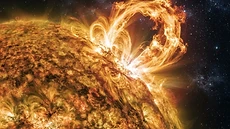
Solar flares are among the most powerful events in our solar system. They occur when magnetic energy that has built up in the solar atmosphere is suddenly released.
Live Solar Flare Monitor
Powered by Flarient — embed this on your site →
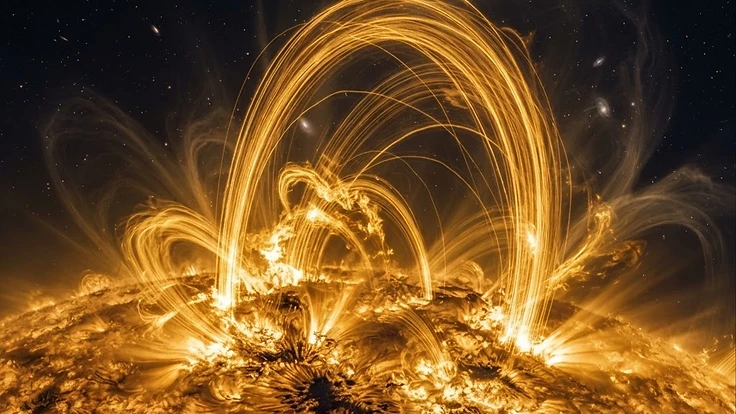
At the centre of this process are sunspots, which are regions where intense magnetic fields poke through the Sun's surface. These fields become twisted and knotted as the Sun rotates, storing immense amounts of energy like a coiled spring.
When these magnetic field lines cross or rearrange, they snap and reconnect in a process known as magnetic reconnection. This event accelerates charged particles to incredible speeds and releases radiation across the entire electromagnetic spectrum.
The energy released during a large flare is equivalent to millions of hydrogen bombs exploding at once. You can observe the visual evidence of this activity through professional-grade solar imagery provided by space agencies like NASA.
Real-World Implications of Solar Activity
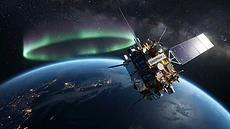
While the Sun is millions of kilometres away, its outbursts have direct consequences for Earth. Flares can disrupt high-frequency radio communications and degrade the accuracy of satellite-based navigation systems.
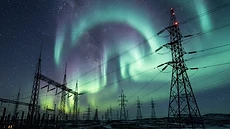
These events are often followed by coronal mass ejections, which send clouds of plasma hurtling toward our planet. When these reach Earth, they can cause a geomagnetic storm that triggers widespread power grid instability.
We categorise these impacts using a G-scale, which helps engineers and scientists assess the risk to infrastructure.
Understanding how these events function is essential for mitigating risks to our global satellite networks, as detailed in our guide on [how space weather influences life on Earth](https://blog/how-space-weather-influences-life-on-earth).
What You Can Do to Stay Prepared
Monitoring space weather is no longer a task reserved for scientists. By tracking current solar data, you can understand how changes in the space environment might affect local technology or communications.
If you are interested in seeing the results of this energy reaching our atmosphere, [guided aurora tours](https://vi.me/HuXHi) in countries like Iceland, Norway, Canada, and Alaska offer the best way to witness the celestial beauty caused by solar particles. These displays occur when incoming energy interacts with our magnetic field to produce a vivid aurora.
You can stay informed by using embeddable widgets on your own website to share live data with your community. These tools make complex information accessible to everyone without requiring a degree in astrophysics.
Analysing the Solar Cycle
Solar activity follows a pattern known as the solar cycle, which lasts approximately 11 years. We are currently observing the progress of Solar Cycle 25, which began in December 2019.
By consulting our archive, you can review past events and compare them with current observations. This historical perspective is vital for predicting how future cycles might behave and how they compare to the strongest storms on record.
If you want to delve deeper into the specific terminology, our glossary provides clear definitions for all the technical terms you might encounter. Continual learning ensures we remain resilient in the face of space weather threats.
Key Takeaways
Solar flares represent the extreme power of our Sun, driven by complex magnetic interactions. While they pose challenges to our technological infrastructure, they also produce the breathtaking displays we see in the night sky.
Staying informed about solar activity helps us protect critical systems and appreciate the dynamic nature of our star. Whether you are a space enthusiast or a professional, understanding the Sun is a key part of navigating our place in the solar system.
Observation note
For readers interested in photographing sunspots or solar imaging, one compact option is Explore a compact capture setup, which outlines a portable astrophotography approach that can be adapted for solar imaging when combined with proper solar filters and safety measures.
Ad · Affiliate link. Flarient may earn a commission if you purchase through this link, at no additional cost to you.
People Also Ask
How long does a solar flare take to reach Earth?+
Light and X-rays from a solar flare travel at roughly 300,000 kilometres per second, reaching Earth in about eight minutes. However, the associated clouds of solar plasma, known as coronal mass ejections, travel much slower and can take between one and three days to arrive at our planet.
What is the difference between a solar flare and a CME?+
A solar flare is an intense burst of radiation caused by the release of magnetic energy on the Sun. A coronal mass ejection is a massive cloud of solar plasma and magnetic field flung into space. While they often occur together, they are distinct physical phenomena with different impacts.
Are solar flares dangerous to humans on Earth?+
No, solar flares are not directly dangerous to humans on the ground. Earth's thick atmosphere and magnetic field act as a natural shield, absorbing the harmful radiation. The primary risks from solar flares and resulting geomagnetic storms involve satellite electronics, radio communications, and high-voltage power grids.
Continue Reading
Forecast These Questions
View all →Express your probability on these active forecast questions.