The Orbital Mechanics Keeping Satellites Above Earth
Discover how physics, velocity, and gravity work in harmony to keep thousands of satellites in stable orbits around our planet.
Satellites Maintain Stable Orbits Through Constant Freefall
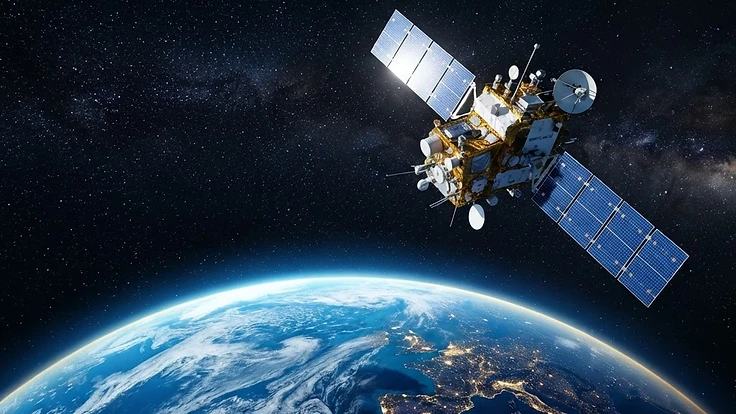
When we look up at the night sky, it is easy to forget that thousands of human made objects are travelling at incredible speeds just above the atmosphere. Satellites do not simply float in space, because they are constantly falling toward Earth. Gravity pulls them inwards, but their forward momentum prevents them from ever actually hitting the ground.
This delicate balance defines orbital mechanics. A satellite must maintain a specific velocity to ensure that its downward fall matches the curvature of our planet. If it moves too slowly, gravity wins and the satellite burns up in the dense atmosphere.
Move too fast, and the object risks escaping Earth's gravitational pull entirely.
The Science Behind It
At the heart of orbit is the concept of a constant state of motion. Sir Isaac Newton famously proposed a thought experiment involving a cannon atop a very tall mountain. If a cannonball is fired at a specific speed, the rate at which it falls towards the Earth's centre is perfectly offset by the rate at which the Earth curves away beneath it.
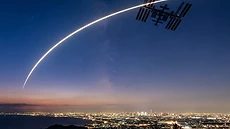
This is why altitude matters so much for stability. The ISS, for instance, maintains an orbit at roughly 408 km above the surface, safely beyond the Kármán line at 100 km where space is defined to begin. At this altitude, it must travel at approximately 7.6 kilometres per second to keep its path circular and stable.
External factors often complicate this perfect dance. Variations in density within the upper atmosphere create drag, which can slow a spacecraft down over time. Solar activity also plays a massive role, as intense events can heat the atmosphere, causing it to expand and increase the friction experienced by low Earth orbit satellites.
Real-World Implications
Our modern lives depend entirely on these mechanical constraints. Precise orbit maintenance is vital for everything from global positioning systems to weather monitoring and satellite television. If a satellite deviates from its calculated path, the services it provides to the ground begin to degrade or fail entirely.
Engineers must constantly adjust these orbits using onboard thrusters. This process, often labelled as station keeping, requires fuel and careful calculation. When fuel supplies run dry, the satellite typically reaches the end of its operational life and eventually decays from orbit.
Environmental challenges in space also affect these paths. We monitor the impact of space weather on spacecraft and astronauts to ensure that intense geomagnetic storms, measured by the Kp index, do not damage sensitive electronics. Understanding these risks is as important as understanding the orbital math itself.
What You Can Do
Staying informed about the environment around our planet is easier than ever. If you are interested in how current solar conditions might influence satellite health or lead to a visible aurora in your region, you can track these metrics in real time. It is helpful to understand the relationship between solar cycles and satellite drag, as explored in articles like Solar Flares Occur Frequently Throughout the Solar Cycle.
If you are keen on tracking space events, you might also find value in using our embeddable widgets to display live data on your own website or dashboard. Learning about these systems helps us appreciate the engineering that powers our global connectivity. Always check the glossary if you encounter technical terms regarding orbital mechanics or space weather terminology.
If reading Kp charts isn't your idea of a holiday, Northern Lights guided tours across Iceland, Canada and Scottish Highlands handle the science so you can simply look up.
Key Takeaways
Satellites stay in orbit because they travel fast enough to fall around the planet rather than into it. This state of perpetual freefall requires constant monitoring to combat atmospheric drag and gravitational shifts. While the physics remains predictable, the environment they travel through is dynamic and often volatile.
By observing the solar and atmospheric conditions that impact these paths, we gain a deeper insight into the fragility of our orbital infrastructure. These objects are more than just hardware, as they serve as the backbone of our digital and communications age. Staying aware of their status is a great way to engage with the science of space.
People Also Ask
Why do satellites not fall to Earth?+
Satellites are actually in a constant state of freefall toward Earth. Because they travel at such high horizontal velocities, the Earth curves away beneath them at the same rate they fall, allowing them to maintain a stable, circular trajectory around the planet without hitting the ground.
How fast does a satellite need to go?+
The required speed depends on the altitude of the orbit. A satellite in low Earth orbit, typically a few hundred kilometres up, must travel at approximately 7.6 kilometres per second. Higher orbits, such as geostationary orbits, require slower speeds because the gravitational pull is weaker at greater distances.
Do satellites ever stop orbiting?+
Yes, all satellites eventually experience orbital decay. Atmospheric drag in low Earth orbit slows them down, causing them to lose altitude over time. Once they are low enough, they enter the thicker atmosphere and burn up during reentry, unless they have enough fuel to perform a final deorbit manoeuvre.
Continue Reading
Forecast These Questions
View all →Express your probability on these active forecast questions.