The Physics Behind the Glow of Noctilucent Clouds
Noctilucent clouds are rare, shimmering displays that haunt the summer night skies. Discover the atmospheric conditions and physical mechanics that allow these icy structures to glow long after sunset.
The Luminous Mystery of Noctilucent Clouds
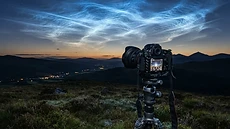
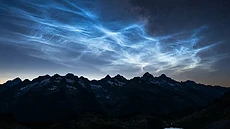
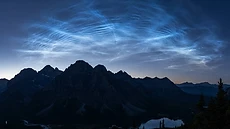
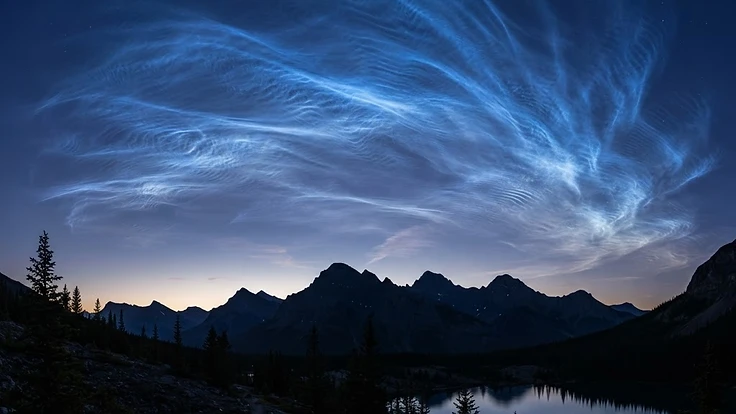
Noctilucent clouds, often called night shining clouds, are one of the most striking sights in the upper atmosphere. They appear as wispy, electric blue filaments that remain visible well after the sun has dipped below the horizon, creating a stark contrast against the dark sky. While they may seem supernatural to the casual observer, these clouds are grounded in the complex fluid dynamics of our mesosphere.
Unlike standard weather patterns that govern our daily lives, these clouds exist at the very edge of space. They form during the brief window of the summer solstice when the upper atmosphere undergoes a bizarre cooling phase. Understanding their formation offers a glimpse into the delicate balance of our planet and how it interacts with the layers of the solar system above us.
The Science Behind It
Noctilucent clouds consist of microscopic ice crystals that form at extreme altitudes of roughly 80 kilometres. They require an incredibly specific set of conditions to manifest, primarily relying on water vapour and freezing temperatures. These conditions are most readily met during the summer months when the mesosphere reaches its coldest point.
Water vapour is lofted into the upper atmosphere through various circulation patterns, where it condenses onto particles of meteor dust. As the sun sinks below the horizon, the curvature of the Earth shields the lower atmosphere from direct light. However, at 80 kilometres up, these clouds remain bathed in sunlight, scattering it toward observers on the ground.
This scattering effect is responsible for their characteristic brilliant blue hue. The process is similar to how light interacts with particles in the air, but the altitude provides the unique geometry required for the glow. You can study these atmospheric interactions further in our glossary to better understand the technical terminology behind these phenomena.
Real-World Implications
While noctilucent clouds are beautiful, they serve as a sensitive barometer for the state of our atmosphere. Changes in their frequency and brightness can indicate long term shifts in the upper air currents and chemical composition. They provide valuable data for researchers modelling how carbon dioxide levels influence temperatures at high altitudes.
Monitoring these clouds also helps scientists understand the influx of space matter into our air. As meteor dust acts as the seed for these ice crystals, tracking them provides a proxy for measuring how much extraterrestrial debris enters our environment daily. This connects to broader studies of how space impacts our world, much like the history of [Earth asteroid impacts](/blog/the-history-and-science-of-earth-asteroid-impacts).
Because they exist so high above the Earth, they are generally unaffected by the same space weather phenomena that influence the auroral oval. They remain a distinct subject of study compared to geomagnetic storms or solar flares. Even so, they represent the complexity of the thin layer of gas that protects our planet.
What You Can Do
If you want to spot these clouds, timing and latitude are your best tools. They are most commonly seen at high latitudes, typically between 50 and 65 degrees north or south, during the months surrounding the summer solstice. Keep an eye on the twilight hours when the sun is between 6 and 16 degrees below the horizon.
For those interested in atmospheric phenomena and general sky watching, using the right tools can make all the difference. You can find essential consumer devices for tracking space weather conditions to stay informed about what is happening above you. While you wait for clear night skies, you can also use our embeddable widgets to keep track of real time data on your own websites.
For travellers who want expertise over guesswork, guided Northern Lights excursions in Sweden, Scotland and Alaska pair you with photographers who read the aurora oval in real time.
Key Takeaways
Noctilucent clouds are a unique intersection of meteorology and space science. They remind us that the atmosphere is not a static shell but a dynamic, changing environment that reacts to global and extraterrestrial inputs. By watching these displays, we gain a deeper appreciation for the physics governing the thin veil separating us from the vacuum of space.
Whether you are a casual observer or an aspiring scientist, learning to identify these clouds is a rewarding pursuit. They serve as a constant reminder that the most spectacular events are often found in the most unlikely places. Continue exploring the wonders of our sky by checking our more articles section for further insights into solar and atmospheric science.
Twilight watch
Noctilucent clouds are best appreciated directly in the summer twilight, where their high-altitude glow meets the darkening sky. For readers who also want to explore other celestial sights, see one way to capture the sky.
Ad · Affiliate link. Flarient may earn a commission if you purchase through this link, at no additional cost to you.
People Also Ask
Can noctilucent clouds be seen from anywhere on Earth?+
No, they are primarily visible from high-latitude regions, generally between 50 and 65 degrees north or south. They appear during the summer months when the sun is positioned just below the horizon, allowing the high-altitude clouds to catch direct sunlight while the observer on the ground remains in darkness.
Are noctilucent clouds related to the aurora borealis?+
No, they are entirely different phenomena. Auroras are caused by solar wind particles interacting with the Earth's magnetic field at high altitudes, often resulting in green or red lights. Noctilucent clouds are purely atmospheric, composed of water ice crystals reflecting sunlight at the edge of the mesosphere.
How do scientists study noctilucent clouds?+
Scientists use ground-based cameras, high-altitude research aircraft, and space-based satellites to observe these clouds. By analysing the way they scatter light and tracking their movement patterns, researchers can infer the temperature, composition, and circulation dynamics of the mesosphere, which is otherwise difficult to access and study directly.
Continue Reading
Forecast These Questions
View all →Express your probability on these active forecast questions.