Understanding the Aurora Veil and Its Impact on Our Atmosphere
The aurora veil is a dynamic, luminous phenomenon marking the boundary where space weather interacts with Earth's magnetic shield. Discover how this atmospheric display functions and why monitoring it is essential for modern technology.
The Aurora Veil as a Magnetic Boundary
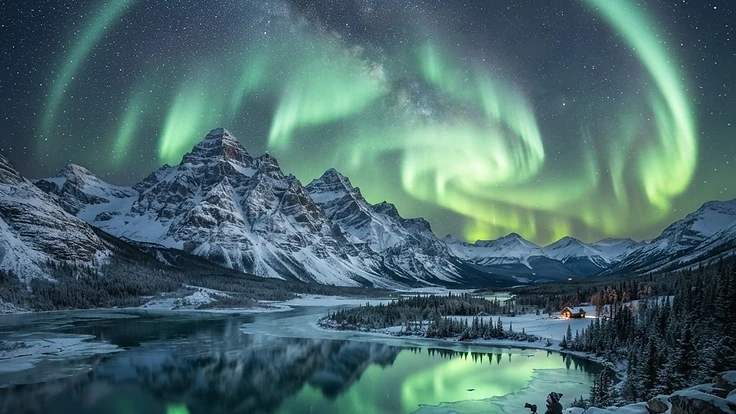
The aurora veil represents the visible manifestation of energy transfer between the solar wind and Earth. When high-speed particles from the Sun encounter our magnetic field, they are funnelled towards the polar regions, creating the shimmering curtains known as the auroral oval. This process is not merely a static light show but a highly energetic exchange that takes place high in our upper atmosphere.
Live Aurora Forecast
Powered by Flarient — embed this on your site →
Understanding this boundary helps us grasp how protected our planet truly is. As the solar wind travels across space, often at speeds between 400 and 700 kilometres per second, it carries magnetic fields that can compress our own magnetosphere. The veil marks the edge where these forces collide and dissipate energy, influencing everything from satellite operations to long-range communications.
The Science Behind It
At its core, the aurora is a collision-driven chemical reaction. Electrons and protons originating from solar flares or coronal mass ejections travel through the vacuum of space before slamming into our nitrogen and oxygen atoms. These collisions excite the gas molecules, which then release energy in the form of photons as they return to their ground state.
The specific colours we observe, such as the common green or rare deep red, depend on the altitude and the type of atom being excited. This display follows the auroral oval, a ring-like zone around the geomagnetic poles that shifts in size based on current geomagnetic storm intensity. For those interested in the underlying physics of solar activity, our The Solar Cycle and the Dynamics of Space Weather provides further context.
Real-World Implications
When the aurora veil expands, it signals that the Earth is under increased electromagnetic stress. Intense auroral activity often corresponds with a lower Dst index, which measures the strength of these global disturbances.
Such events can induce electrical currents in long-distance power grids and cause significant drag on satellites orbiting in the thermosphere.
Modern infrastructure, particularly satellite operators, must account for these fluctuations to prevent data loss or hardware degradation.
You can explore how these forces have impacted our history by visiting our archive of past events.
It is a reminder that while the lights are beautiful, they represent a tangible interaction with the forces of our star.
What You Can Do
Keeping track of space weather doesn't require an advanced degree in astrophysics. You can utilise resources to see the local aurora forecast for your area, helping you time your observations or prepare for potential communication interference. Many enthusiasts also take advantage of guided aurora tours in locations like Iceland, Norway, Canada, and Alaska, where expert local guides use real-time data to find the best viewing spots under the veil.
If you maintain a website or a personal space weather hub, integrating embeddable widgets allows you to display live solar data to your audience. This helps in understanding the broader context of how solar flares impact Earth and our technological infrastructure. Staying informed is the best way to appreciate both the beauty and the complexity of our position in the solar system.
Key Takeaways
The aurora veil serves as a silent, luminous alarm for the intensity of our space environment. By studying its movements and the associated geomagnetic indices, we gain insight into the health of our planetary defence system. While the solar cycle continues its rhythmic 11-year progression, our ability to monitor these events grows more sophisticated.
Whether you are watching the lights for their aesthetic value or monitoring them for their technical significance, understanding the veil provides a unique connection to the wider cosmos. We inhabit a dynamic and often volatile neighbourhood, and the aurora remains our most vivid window into that reality.
People Also Ask
How far down in the atmosphere do auroras occur?+
Auroras typically occur in the thermosphere, roughly 80 to 300 kilometres above the Earth's surface. While the Kármán line marks the official start of space at 100 kilometres, the colourful light displays can extend both slightly below and far above this threshold depending on solar energy.
Does the aurora veil affect GPS accuracy?+
Yes, intense auroral activity can cause ionospheric scintillation, which disrupts the signals used by GPS satellites. During significant geomagnetic storms, this interference can lead to signal loss or degraded precision, particularly for high-frequency radio and satellite navigation systems operating at higher latitudes where the auroral oval is strongest.
Can I see the aurora during a low solar cycle?+
Auroras occur throughout the entire 11-year solar cycle, though they are less frequent and less intense during solar minimum. Even during quieter periods, coronal holes can produce high-speed solar wind streams that trigger minor geomagnetic disturbances, providing occasional opportunities for viewing at high latitudes.
Continue Reading
Forecast These Questions
View all →Express your probability on these active forecast questions.