Understanding the Solar Wind and Its Velocity
The solar wind is a continuous stream of charged particles flowing from the Sun. Understanding its speed and impact is vital for modern technology.
The Dynamics of the Solar Wind
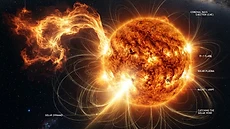
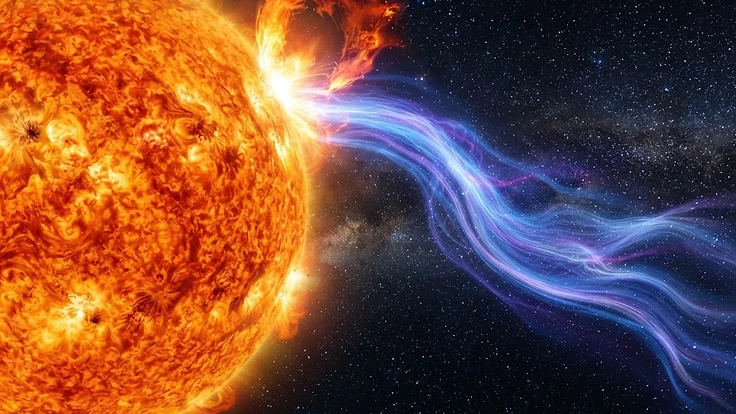
The solar wind is a constant, supersonic stream of plasma emanating from the outer atmosphere of our star. Composed primarily of electrons, protons, and alpha particles, this solar outflow shapes the magnetic environment of the entire solar system.
Live Space Weather Dashboard
Powered by Flarient — embed this on your site →
While the Sun may appear static from Earth, it is effectively shedding its outer layers in a continuous process. This phenomenon ensures that space is not truly empty but filled with a dynamic, electrified gas that influences every planet in its path.
The Science Behind It
Unlike the light that reaches us in about eight minutes at 300,000 kilometres per second, solar wind travels much slower. Typical speeds range between 400 and 700 kilometres per second, though these figures fluctuate based on solar activity.
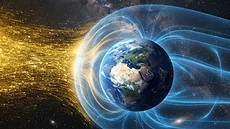
Fast solar wind originates from coronal holes, which are cooler, less dense regions where the solar magnetic field lines open into space. When these particles strike the Earth, they interact with our magnetosphere, often leading to a geomagnetic storm.
In more extreme cases, coronal mass ejections can launch material at speeds reaching 3,000 kilometres per second. You can learn more about how these events develop by reviewing our glossary for key terminology.
Real-World Implications
When high speed streams hit the magnetosphere, they compress the magnetic field and trigger auroral displays. You can monitor the intensity of these events through the Kp index, which indicates potential disturbances.
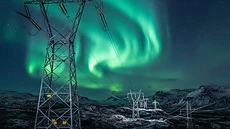
Stronger storms can disrupt satellite operations, global positioning systems, and power grids. Infrastructure planners use historical data to manage these risks, often referring to the archive of past events to better model future impacts.
This atmospheric interaction is not limited to power grids. Solar activity has direct consequences for communications, as detailed in our guide on [predicting HF radio propagation conditions](/blog/predicting-hf-radio-propagation-conditions).
What You Can Do
Staying informed requires tracking live data as it changes. You can use our aurora forecast to see how current wind speeds might influence visibility from your location.
If you are planning to witness the lights yourself, consider joining guided aurora tours across destinations like Iceland, Norway, Canada, Finland, Sweden, and Alaska for the best experience. Experts can help you navigate the nuances of local weather and solar conditions.
For those who manage websites or dashboards, you can use our embeddable widgets to share real time space weather data with your own audience. It is an excellent way to help others understand the environment around us.
Key Takeaways
The solar wind is a fundamental driver of space weather, continuously pushing charged particles through our local neighbourhood. While it is usually harmless, its ability to influence our technology makes monitoring it a modern necessity.
By tracking solar conditions through the ESA Space Weather resources and our own live tools, you can stay ahead of space weather events.
Whether you are a professional researcher or an aurora enthusiast, understanding these cycles provides a deeper connection to the space environment.
People Also Ask
Can solar wind harm humans on Earth?+
No, humans on Earth are protected from solar wind by our planet's atmosphere and magnetic field. While the wind can disrupt satellite technology and power grids, the air and magnetic shield prevent these high-energy particles from reaching the surface in dangerous concentrations.
What is the difference between solar wind and solar flares?+
Solar wind is a constant, continuous flow of plasma from the Sun. Solar flares are sudden, intense bursts of electromagnetic radiation caused by magnetic energy release. While both result from solar activity, one is a steady stream and the other is a short, explosive event.
How do scientists measure solar wind speed?+
Scientists use spacecraft such as the Solar and Heliospheric Observatory and the Parker Solar Probe to measure solar wind. These instruments capture data on particle velocity, density, and magnetic field orientation as the wind passes by, transmitting the information back to Earth for analysis.
Continue Reading
Forecast These Questions
View all →Express your probability on these active forecast questions.