Why Auroras Manifest in Varying Colours
Discover the atmospheric chemistry that creates the stunning reds, greens, and purples of the northern and southern lights.
Auroras Manifest in Varying Colours
The night sky occasionally transforms into a canvas of shifting light, displaying ribbons of emerald, violet, and crimson. This phenomenon, known as the aurora, occurs when charged particles from the sun collide with gases in our upper atmosphere. While many observers admire the aesthetic beauty, understanding why these colours shift reveals the complex interplay between solar energy and our planet magnetic shield.
Live Aurora Forecast
Powered by Flarient — embed this on your site →
The Science Behind It
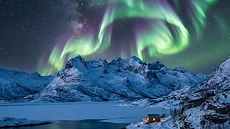
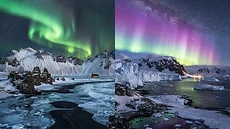
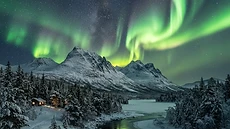
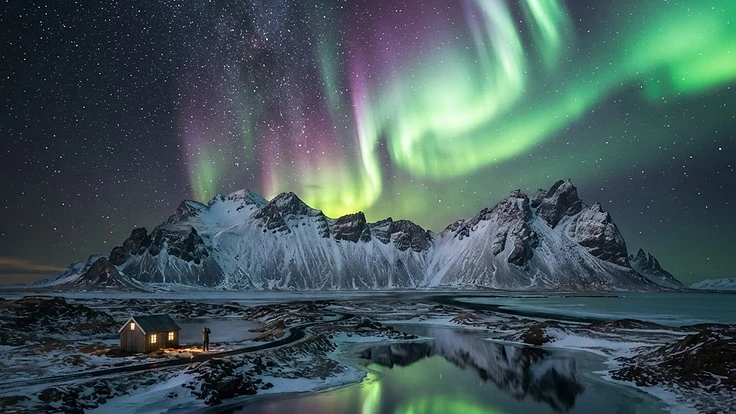
The colours of an aurora are dictated by which gas molecules are being energised and at what altitude the collision occurs. Oxygen is the most common contributor, producing a distinct green glow when excited at altitudes between 100 and 300 kilometres. If the collision happens higher in the atmosphere, often exceeding 300 kilometres, oxygen emits a rarer dark red hue.
Nitrogen molecules create a different visual signature during these encounters. When ionised nitrogen is struck by high energy particles, it emits blue or purple light. You will frequently see these tones fringing the bottom edges of the green curtains, which signifies a more intense geomagnetic event.
Because the atmosphere composition changes with height, the resulting spectrum is essentially a real-time chemical map of our upper sky.
Real-World Implications
While the lights offer a display for photographers, the high-energy particles causing them also interact with the technological infrastructure we rely on daily. These events are measured by the Kp index, a scale used by agencies like the NOAA SWPC to track geomagnetic storm intensity.
During extreme storms, the induced electrical currents can stress power grids and degrade high-frequency radio communication signals.
Spacecraft in low Earth orbit, such as the International Space Station, are also affected by the heating and expansion of the thermosphere during these periods. This expansion increases atmospheric drag, which can alter satellite orbits and force operators to perform complex station-keeping manoeuvres. Understanding how solar wind interacts with our magnetic field helps engineers design more resilient electronics that can withstand the harsh conditions of space weather.
What You Can Do
Staying informed is the best way to ensure you do not miss a significant display. By checking your local aurora forecast, you can gain a better understanding of potential visibility in your specific region before planning an evening under the stars. Whether you are at home or travelling to destinations like Iceland, Norway, Canada, Finland, Sweden, or Alaska, booking guided aurora tours can provide expert insights and access to remote locations away from light pollution.
If you manage a website or a space-focused community, you can also help others track these phenomena. Consider using our embeddable widgets to provide live data directly to your audience. These tools translate complex solar telemetry into digestible information, ensuring your community remains prepared for the next wave of geomagnetic activity.
Key Takeaways
The shifting colours of the aurora reflect the altitude and composition of the gases reacting to solar particles. While these displays serve as a reminder of our planet position in the solar system, they also act as a visible manifestation of space weather that influences modern technology. By monitoring solar activity and tracking storm intensity, we can better appreciate and prepare for the dynamic environment surrounding Earth.
Keep looking up, as the magnetosphere is constantly interacting with the solar wind, ensuring that every aurora display remains a unique event in our planet history.
People Also Ask
What is the most common aurora colour?+
The most common aurora colour is green, which is produced by oxygen atoms reacting with charged particles at altitudes of 100 to 300 kilometres. It is the most visible to the human eye due to our sensitivity to that specific wavelength.
Does solar activity affect the aurora colour?+
Yes, higher solar activity often leads to more intense geomagnetic storms. Stronger energy impacts can reach deeper into the atmosphere and excite different molecules, which can produce more vibrant purples and reds that are not visible during weaker displays.
Why do auroras look different at different altitudes?+
Auroras vary by altitude because the composition of the atmosphere changes as you move higher. Different gases, such as nitrogen and oxygen, respond to solar particle collisions by emitting light at specific wavelengths, effectively creating layers of colour based on the density of the gas at that height.
Continue Reading
Forecast These Questions
View all →Express your probability on these active forecast questions.